
B2B Warehouse Services in Poland: Your Strategic Logistics Hub
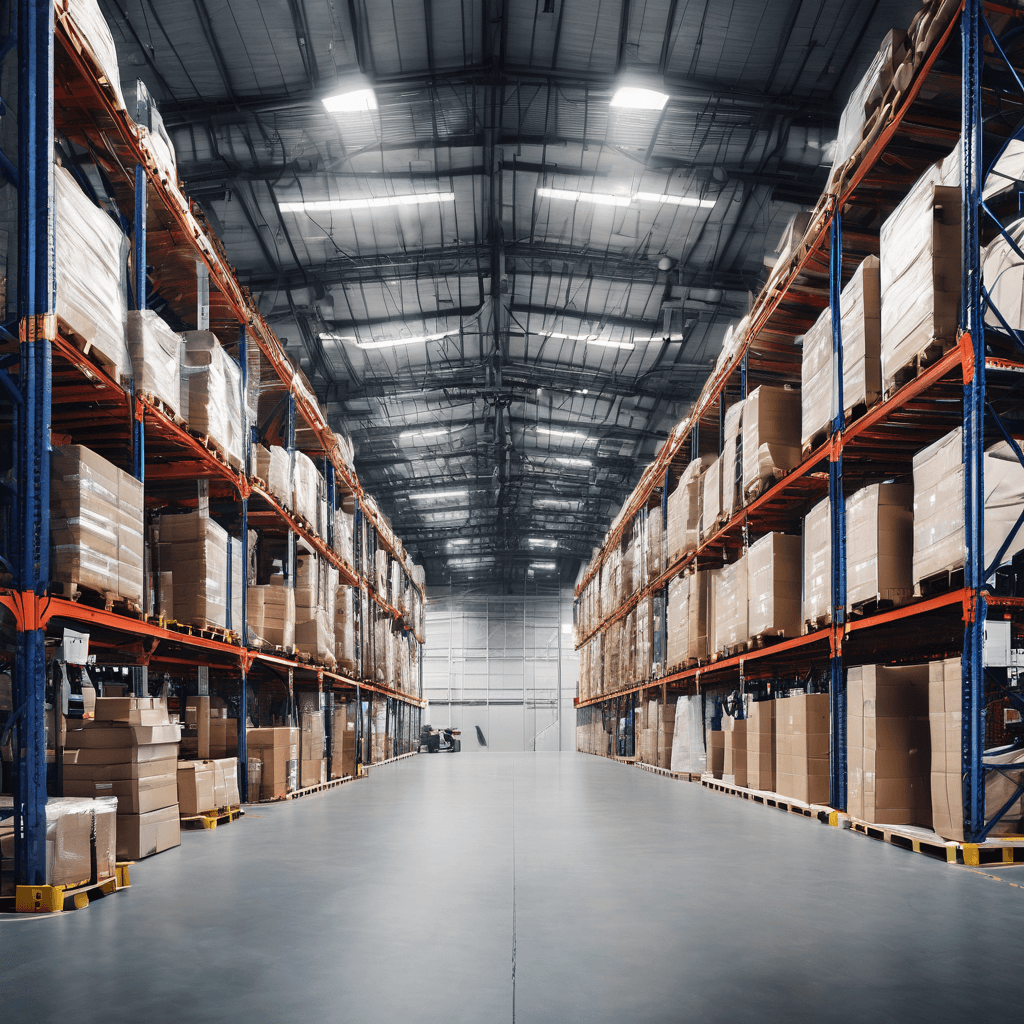
Struggling with warehouse delays that derail your entire European supply chain? You're not alone. Poland's strategic heart of Europe location is revolutionizing B2B logistics, with the warehouse market growing by over 20% last year alone. Imagine a key client in Germany needing a rush order; a partner with a facility in Wrocław can have it delivered in under 24 hours, turning a potential crisis into a showcase of your reliability. This isn't just about storage—it's about gaining a competitive edge through speed and precision. Let's examine how the right Polish logistics partner can transform your operational headaches into your greatest advantage.
Why Poland is a Strategic Hub for B2B Warehouse Services
Strategically positioned at the heart of Europe, Poland has rapidly evolved into a powerhouse for B2B warehouse services, offering international companies a resilient and efficient gateway to the continent. The country's unique combination of geography, economic vigor, and modern infrastructure makes it far more than just a storage location—it's a dynamic logistics platform.
Central European Location & Market Access
Poland’s prime geographic position is its most compelling asset. Within a single day's drive, logistics operations can reach a consumer market of over 500 million people across the EU. This central European crossroads translates into shorter transit times and reduced transportation costs for distribution to key markets like Germany, the Czech Republic, and the Baltic states. In practice, a warehouse in western Poland can service Berlin in hours, while facilities near the eastern border become a strategic launchpad for the growing markets of Ukraine and beyond.
Economic Stability and Growth Potential
A robust and stable economy underpins Poland's logistics appeal. With the largest domestic market in Central and Eastern Europe, it provides a resilient base that can absorb fluctuations in cross-border trade. The economy has shown consistent growth, attracting significant foreign direct investment into manufacturing and retail—sectors that naturally drive demand for sophisticated B2B warehousing. This creates a self-reinforcing cycle: economic growth fuels logistics development, which in turn attracts more business. According to PAIH, Poland's investment agency, the country remains a top destination for shared service centers and industrial projects, directly feeding the warehouse services sector.
Infrastructure and EU Integration
Poland's infrastructure has undergone a transformative modernization, heavily supported by EU funding. The network of highways and expressways now seamlessly connects major logistics hubs. Key ports like Gdańsk (the Baltic's fastest-growing container port) and Świnoujście handle soaring volumes, while modern rail corridors facilitate intermodal transport. Crucially, EU membership ensures standardized customs and trade regulations, eliminating border checks and bureaucratic hurdles for goods moving west. The commitment to development is ongoing, with billions in EU and national funds earmarked for further projects.
| Infrastructure Project | Key Impact | Funding Source |
|---|---|---|
| Central Communication Port (CPK) | Integrated air & rail hub near Warsaw | National & EU |
| Rail Freight Corridors | Enhanced connections to Germany & Scandinavia | EU (CEF) |
| Port of Gdańsk Deepwater Terminal | Capacity for largest Baltic container vessels | EU & private |
This integrated framework means B2B operations in Poland benefit from predictable rules, free movement of goods, and a continuously improving physical network. Companies setting up here aren't just renting space; they're plugging into a high-capacity, future-proofed logistics ecosystem. For more insights on market trends, explore our Blog.
Core B2B Warehouse Services Available in Poland
Poland's strategic location and booming logistics sector make it a powerhouse for B2B warehouse services. Modern providers offer far more than just space; they deliver integrated solutions that streamline the entire supply chain for businesses targeting the European market. The core services available are designed for efficiency, security, and scalability.
Storage and Inventory Management
At the heart of any operation is secure, flexible storage. Modern Polish warehouses offer high-bay racking and multi-temperature zones, all managed by sophisticated Warehouse Management Systems (WMS). This tech is a game-changer. It provides real-time inventory visibility, so you always know your stock levels down to the last pallet or shelf bin. In practice, this means you can track goods from the moment they arrive to the moment they ship, drastically reducing errors and stockouts. For international traders, bonded warehouse facilities are a huge advantage, allowing for deferred customs duties and streamlined VAT handling, which can significantly improve cash flow.
Value-Added Services (VAS)
This is where warehouses add serious value beyond simple storage. Providers handle the tasks that consume your team's time. The standard package includes professional pick and pack, but the real magic happens with kitting (assembling promotional or product bundles), custom labeling (including multilingual options), and light product customization like adding manuals or security tags. Quality control inspections are also commonly bundled here, ensuring only perfect items ship out. And let's not forget returns management—a robust reverse logistics process to handle refunds, restocking, or disposal, which is absolutely critical for e-commerce and retail clients.
Order Fulfillment and Distribution
Once an order is processed, the focus shifts to getting it to the customer fast. Polish hubs excel at both last-mile delivery within the country and cross-border distribution across the EU. Leveraging partnerships with major carriers, they ensure efficient routing to key markets like Germany, France, and the Benelux countries within 2-5 business days. The efficiency here depends on the chosen service level, but the network is robust.
| Distribution Service | Typical Reach (from Poland) | Average Transit Time |
|---|---|---|
| Last-Mile (Poland) | Nationwide | 1-2 days |
| Cross-Border (EU) | Core European markets | 2-5 days |
| International | Wider Europe & UK | 5+ days |
For more insights on optimizing your supply chain, check out our Blog. The combination of these core services allows businesses to outsource their entire logistics operation to a single, reliable partner in the heart of Europe.
Key Benefits of Outsourcing to a Polish 3PL Warehouse
For businesses looking to streamline their European logistics, outsourcing to a Polish third-party logistics (3PL) provider offers a compelling blend of savings, expertise, and strategic advantage. The benefits extend far beyond simple cost-cutting, directly impacting operational agility and long-term resilience.
Cost Efficiency and Scalability
The financial argument is powerful. Poland offers significantly lower operational costs compared to Western Europe, with labor expenses often 30-40% lower than in Germany or the Netherlands, according to Eurostat data. This isn't just about salaries; it includes lower utilities and facility management costs. Crucially, you shift from a fixed capital expenditure model to a variable operational one. You pay only for the space and labor you use, which can be scaled up or down with remarkable speed. Need an extra 5,000 pallet spaces for a seasonal campaign? A good 3PL partner can make that happen in weeks, not months, freeing your capital for core business investments.
Operational Expertise and Technology
Partnering with a Polish 3PL grants immediate access to a pool of skilled logistics professionals and modern infrastructure. These firms invest heavily in industry best practices and technology you might not justify internally. In practice, this means working with warehouses that feature:
- Advanced Warehouse Management Systems (WMS) for real-time inventory tracking.
- Automated sortation and picking systems to boost accuracy.
- Robotics and IoT solutions for dense storage and efficient operations.
You leverage their expertise in optimizing layout, processes, and last-mile carrier negotiations without the headache of recruitment or training.
Risk Mitigation and Compliance
Navigating the regulatory landscape of the EU and Poland is complex. A local 3PL acts as your shield, ensuring full compliance with Polish VAT, customs procedures (like AEO status), and stringent EU safety standards. This deep local knowledge mitigates significant legal and financial risks. Furthermore, outsourcing inherently diversifies your logistics strategy. By leveraging your partner's established carrier networks and multi-client facility footprint, you build supply chain resilience against disruptions, be they geopolitical shifts or regional transport bottlenecks. This strategic flexibility is, for many, the most valuable benefit of all.
For a deeper look at logistics trends, explore our insights on the Blog.
How to Choose the Right B2B Warehouse Partner in Poland
Selecting a B2B warehouse partner in Poland is a strategic decision that directly impacts your supply chain's efficiency and cost. Getting it right means looking beyond just price per pallet spot. Here’s a practical guide to navigating the key considerations.
Assessing Location and Infrastructure
Location is everything. A warehouse near major transport arteries like the A2 (Berlin-Warsaw) or A4 (German-Ukrainian corridor) highways slashes transit times and freight costs to your core European markets. Proximity to growing urban centers like Warsaw, Poznań, or the Upper Silesian region is equally crucial for domestic distribution. In practice, you’ll want to verify the site's direct access to road networks, its capacity for handling your expected volume (with room for growth), and the physical condition of the storage areas. Don't just take their word for it—site visits are invaluable.
Evaluating Technology and Integration Capabilities
Seamless data flow is non-negotiable. Your partner’s Warehouse Management System (WMS) must integrate smoothly with your ERP, whether it’s SAP, Microsoft Dynamics, or another platform. This integration automates order and inventory data exchange, eliminating manual errors and providing real-time visibility. Ask for a demonstration. A modern provider should offer you a client portal for tracking and reporting, and may utilize automation like pick-to-light systems or RFID, which can boost picking accuracy to 99.9% in some cases we've seen.
Reviewing Track Record and Specializations
A provider's past performance is your best indicator of future reliability. Scrutinize their case studies and request references, particularly from companies in your sector. A warehouse experienced with automotive parts understands Just-in-Time sequences, while an FMCG specialist is built for high-velocity, promotional cycles. Certifications provide concrete proof of standardized quality and sector-specific competence.
| Certification | Primary Relevance | What It Ensures |
|---|---|---|
| ISO 9001 | All Industries | Quality Management System standards |
| GDP | Pharmaceuticals, Healthcare | Proper handling of medicinal products |
| IFS Logistics | Food, FMCG | Safety & quality of logistics processes |
Finally, lock down performance expectations in a detailed Service Level Agreement (SLA). This contract should specify measurable targets for order accuracy (e.g., 99.5%), cut-off times for same-day dispatch, and the format and frequency of inventory reports. Clear SLAs align both parties and provide a benchmark for the partnership, ensuring you get the service your business depends on. For more insights on the Polish market, check out our Blog.
Future Trends in Polish B2B Warehousing
The Polish B2B warehousing sector is rapidly evolving, driven by e-commerce demands and a need for greater resilience. Companies are moving beyond basic storage, seeking partners who offer technological edge and strategic value. Here’s a look at the key trends shaping its future.
Automation and Robotics Integration
Labor shortages and the push for faster order cycles are accelerating automation. Beyond traditional AS/RS, we’re seeing a surge in Autonomous Mobile Robots (AMRs) for goods-to-person picking, which can boost operational efficiency by up to 300% in high-volume scenarios. These systems are increasingly modular, allowing for scalable deployment even in existing facilities. In practice, a typical implementation might involve a fleet of AMRs working alongside automated storage systems for small parts, creating a hybrid model that balances high investment with rapid ROI. This isn't just for giants; 3PL providers are offering these technologies as a service, making them accessible to mid-sized businesses.
Sustainability and Green Logistics
Environmental compliance and cost-saving are merging into a core business strategy. Demand is soaring for warehouses with solar panels, EV charging stations, and designs targeting carbon-neutral operations. The government's push for renewable energy, supported by EU funds, makes such investments financially viable. For instance, a modern logistics park might feature over 10,000 sqm of photovoltaic panels, covering a significant portion of its energy needs. This shift is often client-driven, as multinationals require green logistics to meet their own ESG targets. You'll commonly see sustainability specs now weighted equally with location and price in tender documents.
Data Analytics and Supply Chain Visibility
The modern warehouse is a data hub. AI and IoT sensors are used for predictive analytics, forecasting demand spikes, and optimizing inventory placement in real-time. This moves warehousing from a reactive to a proactive function. A practical example is using AI to analyze historical order data and seasonal trends, which can reduce safety stock levels by 15-25% while improving service levels. Real-time tracking via IoT gives clients unprecedented visibility, turning the warehouse into a transparent link in the chain.
| Trend | Key Driver | Example Implementation |
|---|---|---|
| Automation (AMRs) | Labor costs, speed | Goods-to-person picking robots |
| Green Warehouses | ESG mandates, energy prices | On-site solar generation & EV fleets |
| AI-Powered Analytics | Demand volatility | Predictive stock-level algorithms |
Supporting these technological shifts, the physical landscape is adapting. The expansion of multi-client and flexible warehouse spaces allows businesses to scale up or down without long-term risk, a crucial advantage in uncertain markets. Simultaneously, the development of urban logistics centers on the outskirts of cities like Warsaw, Kraków, and Wrocław is critical for supporting same-day and next-day e-commerce delivery promises, putting inventory closer to the end-consumer.
Conclusion: Optimizing Your Supply Chain with Polish Expertise
Poland has cemented its role as the central logistics crossroads of Europe, offering a blend of geographic advantage, economic efficiency, and increasingly sophisticated services that are hard to beat. For businesses looking to streamline operations across the continent, tapping into this ecosystem isn't just an option—it's a strategic move to build resilience and drive growth.
Strategic Summary
The case for Poland rests on a powerful triad. Its central location cuts transit times to major markets like Germany, the Czech Republic, and the Baltics, often by 1-2 days compared to more peripheral hubs. Cost savings remain significant, with warehouse rents and labor costs typically 20-40% lower than in Western Europe, according to local industry reports. But the real game-changer is the service evolution. Modern facilities now offer far more than storage, providing integrated value-added services (VAS) that directly impact your bottom line.
| Key Advantage | Typical Impact | Example Services |
|---|---|---|
| Geographic Position | Reduced lead times, lower transport costs | Cross-docking, consolidated distribution |
| Cost Efficiency | Lower operational expenditure (OPEX) | Competitive storage rates, labor for picking/packing |
| Service Modernization | Enhanced flexibility and product readiness | Kitting, labeling, returns management (reverse logistics) |
Final Recommendations
Choosing the right partner is everything. A top-tier Polish 3PL can transform your logistics from a simple cost center into a genuine competitive edge, offering scalability during peak seasons and the expertise to navigate local regulations. Don't just pick a warehouse provider; select a strategic ally whose capabilities align with your specific business goals, whether you're in e-commerce, automotive, or FMCG.
In practice, due diligence is non-negotiable. Visit facilities, audit their IT integration capabilities, and discuss their roadmap. The market is advancing fast, with leaders investing heavily in warehouse automation, AI-driven inventory management, and sustainable practices like solar-powered facilities—factors that future-proof your supply chain. Leveraging Poland’s expertise is a decisive step toward building a supply chain that isn't just efficient, but agile and resilient for the long haul. For more insights on navigating these choices, explore our Blog.
Frequently Asked Questions (FAQ)
What are the typical costs for B2B warehouse services in Poland?
Typical costs for B2B warehousing in Poland are usually 20-40% lower than in Western Europe. You'll pay a base storage fee, often €4-€8 per pallet per month, plus handling charges for moving goods, which can be around €2-€5 per pallet in/out. Value-added services like labeling or repacking are extra. For a ballpark figure, storing 100 pallets with moderate activity might cost roughly €800-€1,500 monthly. To get the best rate, clearly define your volume, turnover speed, and any special services you need upfront.
How does customs clearance work for goods stored in a Polish warehouse?
Here’s how it works: Your non-EU goods clear customs at the Polish border. If you use a bonded warehouse, you can store them there without paying duties immediately—you only pay when the goods leave for sale in the EU. A good Polish 3PL partner will act as your customs broker, handling all the paperwork and ensuring everything meets EU rules. For example, they’ll manage the necessary declarations so your shipment isn’t delayed. This is especially key post-Brexit for UK goods. Just make sure your chosen warehouse offers this brokerage service.
Can a Polish warehouse handle e-commerce fulfillment for B2B clients?
Yes, absolutely. Many Polish warehouses are fully equipped for B2B e-commerce fulfillment. They specialize in handling bulk pallet shipments to retail stores or other businesses, managing complex order requirements like store-ready assortments or pre-retail labeling. For example, a 3PL might pick and pack 500 different SKUs into 50 separate store orders from a single bulk purchase. It's a core service, so when you're looking, just ask potential partners specifically about their B2B processes and retail compliance experience to ensure a good fit.
What industries most commonly use warehouse services in Poland?
In Poland, the biggest users of warehouse services are typically the automotive sector (for Just-in-Time parts sequencing), FMCG, and booming e-commerce. Pharmaceuticals are also key, as they require special GDP-compliant storage. Thanks to Poland's strong manufacturing base, industries like industrial machinery and electronics are major clients too. If you're in one of these fields, you'll find plenty of specialized logistics partners here ready to handle complex supply chains, especially around major hubs like Warsaw or Poznań.
Is it easy to scale warehouse space up or down in Poland?
Yes, scaling warehouse space in Poland is generally straightforward, especially if you use multi-client warehouses (MCWs). Their contracts are designed for flexibility, so you can increase or decrease your storage area relatively quickly to match seasonal peaks or business growth. With a strong development market, there's plenty of modern space available. For example, you might rent 5,000 sqm and scale to 8,000 sqm within a quarter if needed. The key is to choose a provider that explicitly offers flexible terms from the start.
Related Articles
Understanding the Cost of Warehouse Services in Poland
Navigating warehouse costs in Poland feels like a maze. You're not alone. With e-commerce booming, logistics space is at a premium. Prime warehouse vacancy r...
Central Europe Warehouse Hub: A Strategic Logistics Guide
Struggling with supply chain bottlenecks and soaring costs? You're not alone. The logistics map of Europe is being redrawn, with Central Europe emerging as t...
European Warehouse Services in Poland: Your Strategic Hub
Struggling with warehouse delays and spiraling logistics costs? You're not alone. Poland has rapidly become the beating heart of European distribution, with ...