
Contract Warehousing in Poland: A Strategic Logistics Guide
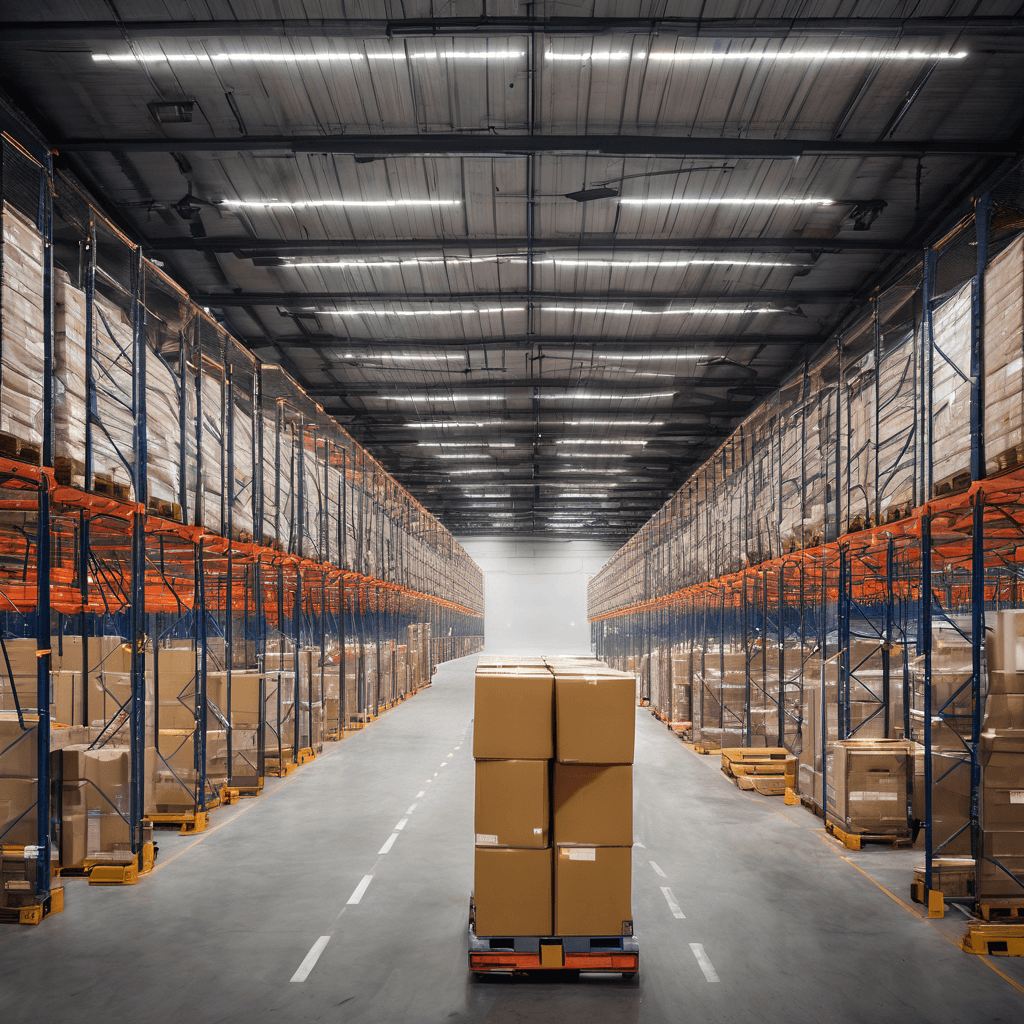
Your Polish warehouse is costing you more than it should. The logistics landscape here is shifting rapidly, with contract warehousing demand surging over 40% in two years. Companies are realizing that owning their own sprawling Silesian facility ties up capital and limits agility. Picture this: a German automotive supplier needs to scale up for a new Eastern European client. Instead of a frantic, costly expansion, they partner with a specialist. Suddenly, their storage, customs handling, and last-mile distribution are seamlessly integrated by experts on the ground. This isn't just outsourcing space; it's about gaining a strategic advantage in Europe's most dynamic growth corridor. Let's examine how the right contract logistics partner can transform your Polish operation from a cost center into a competitive edge.
What is Contract Warehousing? Beyond Basic Storage
At its heart, contract warehousing is a dedicated, long-term partnership where a logistics provider operates a warehouse or a dedicated section of a facility exclusively for one client. Think of it as a middle ground between the rigid commitment of building your own warehouse and the impersonal, shared space of public storage. It’s a strategic collaboration, typically lasting 3 to 5 years, where the provider becomes an extension of your team, managing everything from daily storage to complex supply chain optimization.
Definition and Core Concept
The core concept moves far beyond simple pallet-in, pallet-out storage. It’s a customized, integrated service package. The provider tailors their entire operation—space, labor, technology, and processes—to the client's specific products and business rhythms. This includes specialized storage conditions, custom packaging or kitting, returns management, and deep IT integration for real-time inventory visibility. In practice, you’re not just renting square meters; you’re leasing a fully managed, flexible logistics department.
How It Differs from Public and Private Warehousing
Understanding the distinction clarifies why contract warehousing is a strategic choice, especially in a dynamic market like Poland. Public warehousing offers short-term, pay-as-you-go space but with minimal customization. Private warehousing means total control but also requires massive capital investment and operational burden. Contract warehousing splits the difference, offering tailored services and strategic input without the client owning the bricks and mortar.
| Feature | Public Warehousing | Contract Warehousing | Private Warehousing |
|---|---|---|---|
| Commitment | Short-term (month-to-month) | Long-term (3-5 years) | Permanent (ownership) |
| Cost Model | Variable, operational expense (OpEx) | Fixed + variable, predictable OpEx | High capital expense (CapEx) + fixed OpEx |
| Customization | Standardized, minimal | Highly tailored, flexible | Complete, but rigid to change |
| Scalability | Limited, depends on shared space | High, built into the contract | Very low, requires construction |
| Expertise | Basic storage & handling | Strategic logistics partnership | In-house, self-managed |
This model is ideal for companies with complex or growing needs—like e-commerce brands managing seasonal spikes or manufacturers requiring just-in-time sequencing. By leveraging a partner’s expertise and existing infrastructure in key Polish logistics hubs, companies can scale rapidly, adapt to new EU regulations, and focus capital on their core business. The flexibility is a huge draw; you can adjust space and services quarterly, something simply impossible with a owned facility. According to local industry reports, this scalability is a primary driver for international companies entering the Central European market via Poland.
Why Choose Poland for Your Contract Warehousing Hub?
Poland has rapidly evolved from an emerging market into a non-negotiable logistics powerhouse for companies serving the European continent. Its compelling mix of location, cost, and stability makes it a top-tier choice for establishing a contract warehousing hub.
Strategic Geographic Position in Europe
Sitting at the literal crossroads of Europe, Poland offers unparalleled access. A distribution center here puts you within a 24-48 hour truck drive to major consumer markets like Germany, the Czech Republic, and Scandinavia. This central position is a game-changer for supply chain resilience, allowing you to serve both established Western markets and the high-growth economies of Eastern Europe from a single, optimized location. In practice, this means you can consolidate inventory, reduce transit times, and mitigate border-crossing delays that can plague operations based further west or east.
Economic and Infrastructure Advantages
Beyond location, Poland delivers tangible economic benefits without sacrificing quality. Operational costs, from warehouse leases to utilities, are significantly lower than in Western Europe. The labor market is a particular strength, boasting a large, skilled, and often multilingual logistics workforce with turnover rates that can be more manageable than in tight Western markets.
This economic edge is supported by world-class infrastructure, a result of massive EU-funded investments. The road network is extensive, and key logistics hubs are seamlessly connected.
| Infrastructure Element | Key Example / Data | Impact |
|---|---|---|
| Highway Network | Connection to European corridors like A2 (Berlin-Warsaw) & A4 (Germany-Ukraine). | Enables rapid road freight across the continent. |
| Rail & Intermodal | Major terminals in Poznań, Łódź, and Silesia region. | Provides cost-effective, greener options for long-haul. |
| Air Cargo | Cargo hubs at Warsaw WAW and Kraków KRK. | Supports time-sensitive and high-value logistics. |
EU membership is the final, critical piece. It guarantees regulatory alignment, eliminates customs duties within the Union, and ensures the legal stability that large-scale logistics investments require. This framework makes cross-border trade procedures far smoother than dealing with non-EU neighbors. For a deeper look at market trends, check out our insights on the Blog. Ultimately, choosing Poland isn't just about finding a warehouse; it's about securing a strategic, cost-competitive, and future-proofed gateway to Europe's entire market.
Key Services Offered by Polish Contract Warehousing Providers
To truly grasp the value proposition of modern Polish contract logistics, you need to look beyond simple storage. Providers here deliver a full spectrum of services, seamlessly integrating physical handling with smart technology. This turns a warehouse from a cost center into a dynamic extension of your supply chain.
Core Logistics Operations
This is the essential backbone, executed with impressive efficiency thanks to Poland's skilled logistics workforce and high facility standards. It starts with the meticulous receiving and put-away of goods, where every item is checked and logged into the Warehouse Management System (WMS). Storage solutions are highly flexible:
| Storage Type | Typical Use Case | Key Advantage |
|---|---|---|
| Pallet Racking | Fast-moving goods, full pallet loads | High-density, FIFO/FILO control |
| Shelf Storage | Small items, e-commerce units | Optimal space use, easy access |
| Block Stacking | Large volumes of uniform products | Maximum floor space utilization |
Real-time inventory management provides a single source of truth, often with 99.9% accuracy rates. Then comes order processing: pickers, guided by voice or RF terminals, assemble orders which are then packed to your exact specs—whether that's branded boxing for D2C or secure palletizing for B2B. Many hubs are built for speed, with cross-docking operations that can move goods from inbound to outbound trailers in under 24 hours, slashing lead times. They'll also handle the messy stuff, like returns management, inspecting and processing items back into inventory, which is a huge relief for e-commerce brands.
Value-Added Services (VAS)
This is where providers really differentiate themselves and solve specific client headaches. VAS transforms a static storage unit into a proactive partner. Common services include:
- Product customization: Think labeling for specific markets, re-packaging for promotions, or even light assembly and kitting—like putting together a subscription box.
- Quality control and light manufacturing: Performing final inspections, minor repairs, or assembly tasks right in the warehouse delays value-added tax and saves on transport costs.
- Tech and data integration: The real game-changer. You're not just renting space; you get access to customized IT platforms. These provide dashboards, EDI connectivity, and detailed reports on everything from stock levels to carrier performance. In practice, this tech layer is what gives you that crucial sense of control and visibility over your inventory from afar.
The best partners tailor these services into a cohesive solution, ensuring your products flow smoothly from their Polish hub to the end customer across Europe. For more insights on optimizing these flows, check out our Blog.
How to Select the Right Contract Warehousing Partner in Poland
Selecting a contract logistics partner in Poland is a strategic decision that goes beyond simple price comparison. Getting it right means securing a seamless extension of your supply chain, while a poor fit can lead to operational headaches and hidden costs. The key lies in a structured evaluation that balances your specific needs with the provider’s tangible capabilities.
Defining Your Requirements and KPIs
Start with a brutally honest internal assessment. You need to map out not just your current situation but where you expect to be in 2-3 years. This isn't just about square meters.
- Volume & SKU Profile: Forecast your average and peak monthly volumes (pallets, cartons, units). A provider perfect for 10,000 pallets of full-case goods may struggle with 5,000 different SKUs requiring complex pick-and-pack services.
- Service Level Needs: Define your must-haves. Is it next-day delivery to major Polish cities, specialized cold chain handling, or a returns (RLP) processing rate of under 48 hours?
- Future-Proofing: Consider expansion plans into other Central and Eastern European markets. A partner with a network beyond Poland can be invaluable, a point often highlighted in local industry reports on regional logistics hubs.
Without this clarity, you can’t effectively judge proposals or measure success later on.
Evaluating Provider Capabilities and Fit
With your requirements document in hand, shift focus to vetting potential partners. This stage separates basic storage offers from true logistics partnerships.
Location is non-negotiable. A warehouse near Poznań might be cheaper, but if your main customer base is in Silesia or your containers enter via Gdańsk, you’ll bleed money on transport. Prioritize sites aligned with your primary transport corridors.
Technology and integration are the backbone of visibility. Scrutinize their Warehouse Management System (WMS) and ask for a demo. Can they provide real-time stock levels via EDI or API? Providers still relying on manual updates will create data black holes.
Look beyond the sales pitch. Verify their experience in your sector—handling automotive parts is vastly different from e-commerce fashion. Always ask for and check client references. Financial stability matters too; you don’t want a partner facing insolvency next year.
Finally, assess the human factor. During site visits, gauge communication styles and problem-solving attitudes. In practice, a true partnership depends on cultural alignment and responsive contact persons, not just a signed contract.
The Financial and Operational Benefits of Contract Warehousing
For businesses expanding in Central Europe, the shift from owning or leasing a warehouse to partnering with a contract logistics provider in Poland delivers a powerful financial and operational edge. This model fundamentally transforms how companies manage their supply chain footprint, turning a rigid cost center into a dynamic, strategic asset. Let's break down the core advantages.
Cost Efficiency and Predictability
The most immediate impact is financial. Contract warehousing converts the substantial fixed capital expenditure (CapEx) of building or heavily customizing your own facility into a variable operational expenditure (OpEx). You're not tying up hundreds of thousands in real estate, racking systems, or MHE fleets. Instead, you pay a known monthly fee based on the space you use and services you need, which typically includes everything from utilities to security.
This creates a predictable cost structure governed by a clear service-level agreement (SLA). Your budget isn't blindsided by unexpected repairs, property tax hikes, or sudden spikes in energy costs—these are the provider's responsibility. In practice, companies often see a reduction in total logistics costs by 15-25% in the first year after switching, according to local industry reports, simply by eliminating fixed overhead and gaining operational leverage.
| Cost Factor | Traditional Leased Warehouse | Contract Warehousing in Poland |
|---|---|---|
| Real Estate Risk | Tenant bears full lease liability | Provider's responsibility |
| MHE Investment | Capital outlay for forklifts (~€40k each) | Included in service fee |
| Management Overhead | Requires dedicated on-site team | Handled by the 3PL's experts |
Scalability and Risk Mitigation
Market demand isn't static, and neither should your logistics be. A prime benefit is the ability to rapidly scale storage space and workforce up or down. Facing a seasonal surge? Your provider can allocate additional pallet positions, often with just a month's notice. Need to test a new market? You can start with a small footprint without long-term commitment. This agility is a game-changer.
Furthermore, this model transfers significant risks. The expert provider manages the complexities of Polish labor law, union negotiations, and ever-evolving safety and customs regulations (like AEO). They handle the real estate market volatility and ensure the facility meets all standards. This risk transfer is huge. It allows your internal teams to ditch warehouse management headaches and refocus entirely on core competencies—things like product development, marketing, and sales growth that actually drive the business forward. You get a plug-and-play logistics operation while they handle the gritty details.
Future Trends Shaping Contract Warehousing in Poland
The Polish contract warehousing landscape isn't just growing; it's rapidly evolving to meet the demands of a dynamic European market. Looking ahead, several key trends are set to redefine the standards for logistics partnerships, moving far beyond simple storage to become a critical, integrated component of the supply chain.
Technology and Automation Integration
Driven by a tight labor market and the need for flawless accuracy, operators are heavily investing in smart tech. Advanced Warehouse Management Systems (WMS) are now the baseline, often integrated with IoT sensors for real-time tracking of everything from location to temperature. This data is gold, enabling predictive analytics that optimize everything from restocking cycles to delivery routes. On the floor, automation is accelerating. We're seeing a surge in Autonomous Mobile Robots (AMRs) for goods-to-person picking and Automated Storage and Retrieval Systems (AS/RS) for high-density storage. These solutions directly tackle rising labor costs and can boost operational efficiency by 20-35% in practice, depending on the setup. It's a shift from manual muscle to digital brains.
| Automation Type | Primary Application | Typical Efficiency Gain |
|---|---|---|
| AMRs (Mobile Robots) | Goods-to-person picking, transport | 15-25% faster order fulfillment |
| AS/RS (Shuttle Systems) | High-density pallet/small parts storage | +60% space utilization vs. conventional |
| IoT & Sensor Networks | Real-time condition monitoring (temp, humidity) | Can reduce spoilage/loss by up to 30% |
Sustainability and E-commerce Focus
Sustainability has moved from a nice-to-have to a core requirement for many brands. Modern facilities are increasingly built to certifications like BREEAM or LEED, featuring solar panels, LED lighting, and advanced waste management systems. The electrification of in-house transport is also gaining traction, with a push for EV charging stations and electric forklift fleets. Alongside this green shift, the structural needs of e-commerce continue to shape warehouse design. The demand for omnichannel fulfillment—seamlessly serving both online orders and store replenishment—requires flexible layouts, extensive value-added services (like custom packaging), and scalable space. This has led to the development of sophisticated multi-client campuses, where businesses can share advanced infrastructure and logistics resources through strategic partnerships, creating a more resilient and cost-effective ecosystem for all involved. As noted in local industry reports, over 40% of new speculative warehouse construction in Poland now includes specific e-commerce and green design features as standard.
Conclusion
Ultimately, contract warehousing in Poland transcends a simple cost-cutting exercise. It’s a strategic lever for market expansion and operational excellence, blending the country’s geographic and economic strengths with deep, specialized logistics expertise. This fusion creates a tangible competitive advantage for businesses aiming to dominate in Europe.
Strategic Imperative for Growth
Viewing your warehouse partner as a strategic extension is key. This model delivers the agility to scale operations up or down by 20-30% seasonally, a common need in e-commerce. It builds resilience through diversified infrastructure and tech-driven visibility. Most crucially, it supercharges customer satisfaction; a partner with multiple fulfillment centers across Poland can slash last-mile delivery times to major German or Czech markets to under 48 hours. In practice, this means transforming logistics from a cost center into a growth engine.
Making the Decision
Choosing the right partner demands diligence. It’s not just about square footage. Success hinges on aligning cultures, setting crystal-clear KPIs, and establishing robust communication channels from day one. Consider these critical selection criteria:
| Selection Criteria | Key Considerations | Typical Impact |
|---|---|---|
| Technology Integration | WMS capabilities, API connectivity, real-time data | Can reduce error rates by over 99.5% and provide full supply chain transparency. |
| Scalability & Flexibility | Ability to handle peak seasons, contract terms, add-on services | Enables response to demand spikes without capital investment in own space. |
| Geographic Coverage | Proximity to key transport corridors (A2, A4 highways) and urban centers | Optimizes inland transport costs and is critical for meeting next-day delivery promises. |
For any business optimizing its European footprint, Poland’s contract warehousing landscape offers a compelling, future-proof solution. By leveraging local expertise and infrastructure, companies gain not just a warehouse, but a strategic partner capable of driving efficiency, growth, and superior customer experiences. Explore more insights on European logistics in our Blog.
Frequently Asked Questions (FAQ)
What is the typical contract length for contract warehousing in Poland?
The typical contract length for contract warehousing in Poland is usually between 3 to 5 years. This longer term gives both you and the provider the stability to properly invest in the setup and build an efficient operation. That said, it's not set in stone—if your business needs more flexibility, you can often negotiate shorter terms, like 1-2 years, especially for pilot projects or when starting out. Just know that the standard expectation is for a multi-year partnership.
How does contract warehousing pricing work?
Contract warehousing pricing in Poland typically combines a fixed monthly management fee with variable costs based on your actual usage. You’ll often pay for things like the number of pallet spaces occupied, the hours of forklift work needed, or per order processed. For example, you might pay a €1,000 monthly fee plus €5 per pallet per month and €25 for each order shipped. The key is to ensure all these rates and fees are clearly broken down in your Service Level Agreement (SLA) before you sign, so there are no surprises. Always ask for a detailed cost model upfront.
Can contract warehousing handle e-commerce fulfillment in Poland?
Yes, definitely. Many contract warehouses in Poland are built specifically for e-commerce. They don't just store your goods; they run the whole fulfillment operation. This includes picking and packing individual orders, managing returns, and even adding gift notes. Crucially, they're integrated with platforms like Shopify and major couriers, enabling fast delivery across Poland and the EU. For example, a provider might ship thousands of parcels daily for online shops, handling everything from the warehouse shelf to the customer's door. It's a practical way to scale without building your own logistics.
What are the main regions in Poland for contract warehousing?
If you're looking for contract warehousing in Poland, focus on a few key logistics hubs. Central Poland, especially the Łódź region, is a major crossroads. Upper Silesia around Katowice is ideal for southern Poland and Central Europe. For western European access, the area near Poznań along the German border is perfect. Also, zones near Warsaw, Wrocław, and Poznań itself are big for local and national distribution. Your best pick really depends on whether you're targeting the German market, Poland itself, or other Eastern European countries.
Is my data secure with a contract warehousing provider?
Yes, your data can be very secure with a good provider, but you must verify it. When looking at contract warehousing in Poland, treat data security as a top selection criteria. Ask them directly: "How is my inventory and client data protected in your WMS?" A reputable provider will clearly explain their security protocols, like role-based access controls, regular encrypted backups, and GDPR compliance. Get specific promises written into your contract. For example, ensure they commit to notifying you of any breach within 24 hours. Don't just take their word for it—ask for proof and details.
Related Articles
Understanding the Cost of Warehouse Services in Poland
Navigating warehouse costs in Poland feels like a maze. You're not alone. With e-commerce booming, logistics space is at a premium. Prime warehouse vacancy r...
Central Europe Warehouse Hub: A Strategic Logistics Guide
Struggling with supply chain bottlenecks and soaring costs? You're not alone. The logistics map of Europe is being redrawn, with Central Europe emerging as t...
European Warehouse Services in Poland: Your Strategic Hub
Struggling with warehouse delays and spiraling logistics costs? You're not alone. Poland has rapidly become the beating heart of European distribution, with ...