
3PL Warehouse Poland: Your Strategic Logistics Hub in Europe
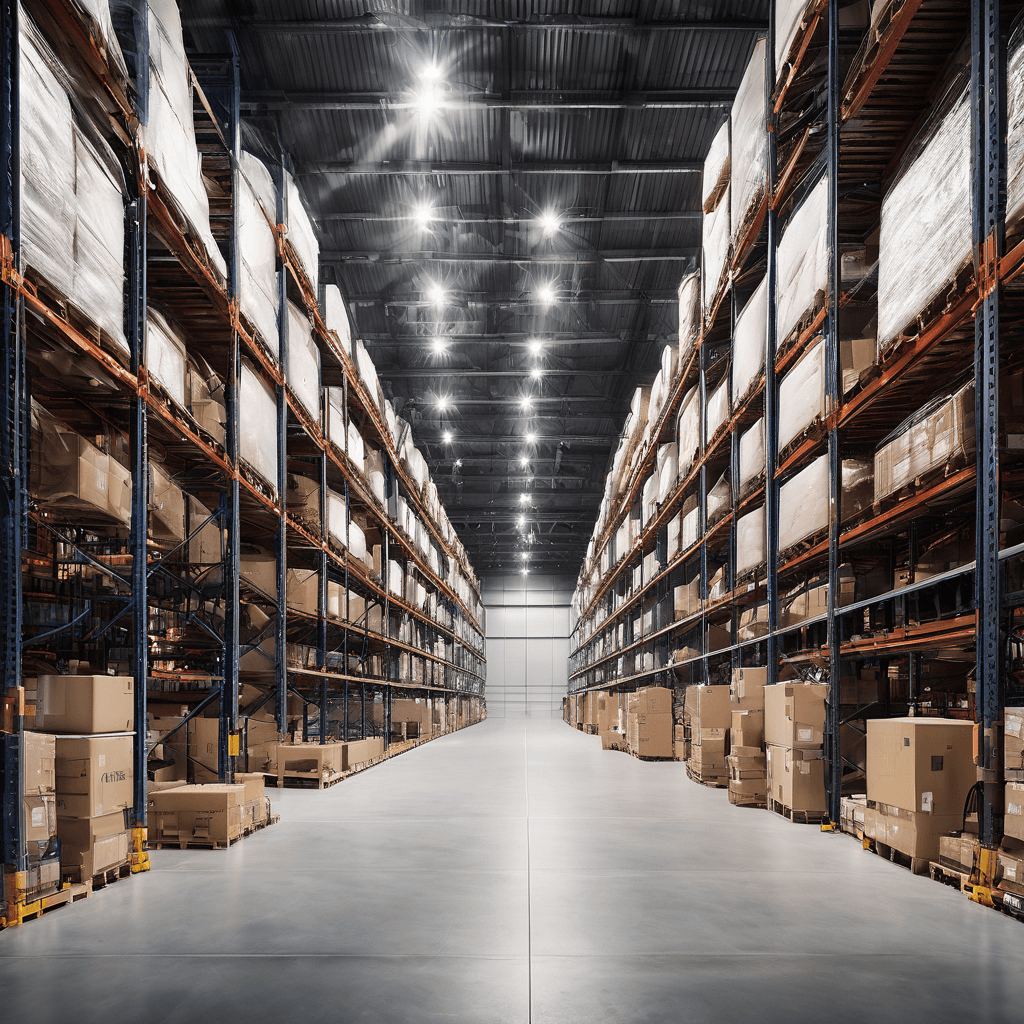
Poland's logistics landscape is shifting underfoot. Are your current warehousing solutions struggling to keep pace with soaring e-commerce demands and complex EU cross-border trade? You're not alone. Recent data shows Poland's warehouse stock has doubled in just five years, fueled by its central European golden location. Imagine a major retailer facing crippling delays during the peak season; a strategic 3PL partner in Wrocław or Poznań could have transformed that chaos into seamless, next-day delivery across the DACH region. It’s no longer just about storage—it's about intelligent distribution as a competitive weapon. Let’s examine how the right Polish 3PL turns geographical advantage into your tangible, bottom-line growth.
Why Poland is a European 3PL Powerhouse
Strategically positioned at the heart of Europe, Poland has emerged as a dominant force in third-party logistics (3PL). Its unique combination of geography, cost efficiency, and modern infrastructure creates an environment where supply chains aren't just supported but actively optimized for growth and resilience.
Central European Location & Market Access
Poland’s geographic advantage is its primary asset. With a well-placed distribution center, companies can reach over 100 million consumers within a 24-hour drive. This puts major markets like Berlin, Prague, and Vienna within a day's reach, while cities in Germany, France, and the Czech Republic are accessible in 24-48 hours. In practice, this drastically cuts lead times and transportation costs compared to operating from Western or Southern Europe, making it a perfect springboard for pan-European distribution.
Cost-Effective Operations & Skilled Labor
One of the most compelling draws is the significant cost advantage, which doesn’t come at the expense of quality. Operational and labor costs remain highly competitive, supported by a large, often multilingual workforce. For instance, warehouse labor costs in Poland can be 30-50% lower than in Germany or France, according to local industry reports. This is paired with a strong educational system producing a steady stream of logistics, engineering, and IT graduates, ensuring 3PL partners have access to both operational staff and analytical talent.
Robust Infrastructure & EU Integration
Poland’s logistics landscape has been transformed by massive investment. A dense and growing network of modern highways (like the A2 and A4 corridors) and rail connections facilitates seamless movement. Major developers like Panattoni and 7R have built vast, state-of-the-art logistics parks near every key city, offering modern, scalable warehouse space. As a full EU member, Poland operates under standardized trade regulations, eliminating customs barriers for intra-EU movement and providing businesses with predictable, seamless trade. This stability, coupled with consistent economic growth, makes the country a reliable, long-term partner for supply chain investment.
| Logistics Factor | Poland's Advantage | Key Example / Data |
|---|---|---|
| Labor Cost | Significantly lower than Western EU | Roughly 30-50% lower than Germany (Industry Reports) |
| Market Reach | Vast consumer base within 24h | Over 100 million people |
| Transit Time | Rapid access to key markets | 48 hours to major German & French hubs |
| Regulatory Framework | Seamless EU trade | No customs tariffs within EU, standardized VAT |
The country’s economic resilience, even during global uncertainties, has proven its mettle. This isn't just a low-cost alternative; it's a strategic, high-performance hub that continues to attract and retain major global brands looking for supply chain certainty. For more insights on optimizing European logistics, explore our Blog.
Core Services Offered by 3PL Warehouses in Poland
Partnering with a third-party logistics (3PL) provider in Poland means tapping into a sophisticated suite of services designed to streamline your supply chain. These operations are far more than just storage; they are dynamic hubs that adapt to diverse product needs and market demands, leveraging Poland's strategic position in Europe.
Warehousing & Storage Solutions
The foundation of any 3PL operation is its storage capability, and Polish providers offer highly flexible options. Standard ambient warehousing is commonplace, but the real expertise lies in specialized areas. Temperature-controlled storage, crucial for pharmaceuticals, food, and cosmetics, maintains strict cool chain integrity, often within ranges of 2-8°C or 15-25°C. For international traders, bonded warehousing is a game-changer, allowing goods to be stored without paying customs duties until they leave the warehouse, which can significantly improve cash flow. In practice, you'll find a mix of short-term and long-term contracts, with space scaling up or down based on your sales cycles.
Order Fulfillment & E-commerce Support
This is the engine room for online sellers. Upon receiving an order, the 3PL's team springs into action with precise pick, pack, and ship services. They handle everything from selecting the correct items and packaging them securely to generating shipping labels and handing parcels over to carriers like DHL, DPD, or InPost. A critical component here is returns management (reverse logistics), where returned items are efficiently processed, inspected, and restocked. This entire process is powered by advanced Warehouse Management Systems (WMS), giving you real-time visibility into stock levels—often down to the single unit—and order status from your own computer.
Value-Added Services (VAS)
To truly customize the supply chain, Polish 3PLs offer a range of VAS that prepare goods for specific retail or market entry. These services transform a warehouse into a light manufacturing or final preparation center.
- Kitting & Assembly: Combining multiple individual items into a ready-to-sell kit (e.g., bundling a charger with a phone).
- Labeling & Repackaging: Applying country-specific labels, price tags, or security tags to meet retailer compliance.
- Product Customization: Simple assembly, engraving, or manual insertion of documentation.
For businesses needing rapid distribution, cross-docking and transshipment services are vital. Goods are unloaded from an inbound truck and directly sorted for outbound delivery, minimizing or even eliminating storage time. This slashes handling costs and speeds up delivery to end customers, a tactic commonly seen during peak sales seasons or for fast-moving consumer goods. According to local industry reports, efficient cross-docking can reduce average storage time from days to mere hours.
Key Benefits of Partnering with a Polish 3PL Provider
Partnering with a third-party logistics (3PL) provider in Poland unlocks a strategic advantage for businesses aiming to streamline their supply chain across Europe. The country's central location, skilled workforce, and modern infrastructure create a powerful logistics hub. Here’s a closer look at the concrete benefits.
Scalability and Flexibility
The ability to scale operations quickly is a game-changer. Instead of being locked into a long-term lease for a warehouse that's half-empty for half the year, you can adjust your storage footprint based on real-time needs. A toy company, for instance, can ramp up from 5,000 to 25,000 pallet spaces for the Q4 holiday rush, then scale back down without penalty. This flexibility extends to services, too—you might add value-added services like kitting or returns management only for specific product launches. In practice, this means your logistics costs directly align with your revenue, protecting your margins during slower periods.
Focus on Core Business & Reduced Overhead
Outsourcing logistics eliminates massive capital investments. You bypass the need for millions in expenditure on warehouse property, state-of-the-art Warehouse Management Systems (WMS), material handling equipment, and a dedicated IT team. You also sidestep the complex and time-consuming process of hiring and training specialized warehouse staff in a competitive labor market. This translates into predictable operational expenditure instead of unpredictable capital outlay. Financially, the difference is stark:
| Cost Factor | In-House Warehouse | 3PL Partnership |
|---|---|---|
| Initial Setup | High Capex (property, racks, IT) | Low to zero initial investment |
| Technology Updates | Your cost & project | Provider's responsibility & cost |
| Labor Management | Your HR overhead & liability | Managed by the 3PL provider |
Enhanced Customer Experience
Today’s customers expect fast, reliable, and transparent delivery. A Polish 3PL directly contributes to meeting these expectations. Their expertise and established networks with carriers often secure better rates and transit times, enabling faster delivery across the EU. For example, shipments from a Polish hub can reach major German markets in 1-2 days and French customers in 2-3 days. Furthermore, professional 3PLs invest heavily in WMS and barcode scanning to achieve order accuracy rates often exceeding 99.5%, drastically reducing costly shipping errors and frustrating customer service calls. This reliability builds brand loyalty. After all, a smooth delivery is the final, and most critical, step in the customer journey.
Beyond these core areas, a seasoned local partner mitigates significant operational risks. They navigate Poland’s evolving labor regulations and EU compliance standards, ensuring your storage and shipping practices are always up to date. This expertise, combined with robust security protocols and contingency planning for disruptions, provides peace of mind. Ultimately, a Polish 3PL acts as a force multiplier, letting you focus on product development and marketing while they handle the complex logistics of getting your goods to market efficiently. For more insights on navigating the European market, explore our Blog.
How to Choose the Right 3PL Partner in Poland
Selecting a third-party logistics (3PL) partner in Poland is a strategic decision that can make or break your supply chain. With the market booming—driven by Poland's central European location and a warehousing space exceeding 25 million sqm according to local industry reports—you have options, but not all are equal. Here’s how to cut through the noise and find a provider that truly fits.
Assessing Your Business Needs & Compatibility
First, get crystal clear on what you need. A provider perfect for slow-moving industrial goods might crumble under the pressure of fast-moving consumer goods (FMCG). Map out your average monthly volumes, peak season spikes (like a 300% increase in December for e-commerce), and any special handling needs, such as climate control or hazardous materials. This clarity lets you immediately filter out providers without the right infrastructure or sector experience. In practice, a mismatch here is the fastest route to operational headaches.
Evaluating Technology & Integration Capabilities
Your 3PL’s Warehouse Management System (WMS) must talk seamlessly to your systems. Ask directly about pre-built connectors for platforms like Shopify, Magento, or your ERP. Real-time data sync on inventory, orders, and tracking isn't a luxury; it's essential for customer satisfaction. A modern provider should offer you a portal or API access. Be wary of those relying on manual updates or batch files—it’s a red flag for scalability.
| Integration Feature | Basic Provider | Advanced Provider |
|---|---|---|
| E-commerce Connectors | Manual upload/export | Native plugins (Shopify, WooCommerce) |
| API Availability | Limited or custom fee | Full REST API included |
| Real-time Sync | Batch processing (hourly/daily) | Live, two-way data flow |
Checking References & Financial Stability
Always visit shortlisted warehouses. Look beyond shiny racks; observe workflow, cleanliness, and staff engagement. Then, dig deeper. Request 2-3 client references from businesses similar in size or sector to yours. Ask about problem resolution and communication. Finally, verify their financial health and insurance. You need a partner that’s built to last, with solid contingency plans for disruptions. A provider's stability is your supply chain's safety net.
For more insights on navigating the logistics landscape, check out our Blog.
Future Trends in Polish 3PL Warehousing
The Polish 3PL warehousing sector is rapidly evolving, driven by technological leaps and shifting global trade patterns. Looking ahead, several key trends are set to redefine efficiency, sustainability, and strategic importance.
Automation and Robotics Integration
Driven by labor shortages and the need for speed, automation is moving from novelty to necessity. We're seeing a surge in Automated Storage and Retrieval Systems (AS/RS) for high-density storage and autonomous mobile robots (AMRs) that collaborate safely with human workers for picking and transport. These systems are increasingly connected by a network of IoT sensors, providing real-time data on inventory location, equipment health, and environmental conditions. For instance, a modern fulfillment center might deploy dozens of AMRs, slashing order processing times by 30-50% compared to traditional manual picking. This tech stack is fundamental for meeting next-day delivery promises.
Sustainability and Green Logistics
Client demand and regulatory pressure are making green logistics a core business pillar, not just a marketing checkbox. New builds often target BREEAM or LEED certifications, incorporating features like:
- Rooftop solar panels to power operations.
- EV charging stations for fleet and employee vehicles.
- Sustainable packaging consolidation and waste reduction programs. Investment in these areas is growing, with some industry reports suggesting that over 40% of new logistics projects in Poland now include significant renewable energy components. This shift reduces long-term operational costs and aligns with the values of many end-consumers.
Nearshoring and Supply Chain Resilience
Poland stands as a prime beneficiary of the nearshoring wave, where companies relocate production and logistics from distant regions to be closer to their core EU markets. Post-pandemic, the need for shorter, more secure supply chains is undeniable. Poland's central European location, developed infrastructure, and skilled workforce make it a top choice. This trend fuels demand for sophisticated multi-client fulfillment centers, especially designed for e-commerce and D2C brands needing agile, scalable storage and distribution. To support this, 3PLs are leveraging advanced data analytics and AI for predictive demand forecasting and dynamic route optimization, turning vast data sets into a competitive advantage for their clients. You can explore more on our Blog.
| Trend | Key Driver | Example Implementation |
|---|---|---|
| Automation (AS/RS/AMR) | Labor costs, accuracy, speed | AMR fleets for goods-to-person picking |
| Sustainability | Client ESG requirements, regulations | Solar panel installations, EV fleet transition |
| Nearshoring | Supply chain risk reduction | Multi-client hubs for EU market fulfillment |
In practice, these trends rarely operate in isolation. A new warehouse might be a solar-powered, nearshoring hub full of robots, all managed by AI. The pace of adoption can vary by client sector and investment cycle, but the direction is clear: smarter, greener, and more strategically vital logistics.
Conclusion: Is a 3PL Warehouse in Poland Right for You?
Deciding whether to partner with a 3PL warehouse in Poland isn't just a logistics choice; it's a strategic move for your European ambitions. The country's central position, competitive operational costs, and integration into the EU single market create a powerful launchpad. For businesses aiming to scale, the question often shifts from "if" to "when."
Strategic Decision for Growth
This model isn't a one-size-fits-all solution, but it excels for specific scenarios. Consider your own growth stage and operational pain points. Are you a scaling e-commerce brand struggling with seasonal demand spikes? Or perhaps a manufacturer needing just-in-time delivery to German automotive plants? The 3PL model truly shines when your internal resources are stretched thin by complexity. The agility gained—often seeing order processing times drop to under 24 hours—can be transformative. You're not just outsourcing storage; you're buying resilience and the ability to pivot quickly, which is invaluable in today's market.
Taking the Next Steps
Thorough due diligence is non-negotiable. You'll want to vet potential partners on their tech stack, industry-specific experience, and scalability. Request hard data on their performance metrics. A quick comparison of typical service bundles can clarify what you're paying for:
| Service Tier | Typical Monthly Cost (for 500 pallets) | Key Inclusions | Best For |
|---|---|---|---|
| Basic Storage | €1,800 - €2,500 | Pallet in/out, basic reporting | Simple stockholding, B2B |
| Standard Fulfillment | €3,000 - €4,500 | Pick & pack, returns handling, carrier management | Growing e-commerce, B2C |
| Advanced Integrated | €5,000+ | Custom IT integration, value-added services, dedicated account management | Complex supply chains, high-growth brands |
Sources like PAIH and local industry reports consistently highlight Poland's logistics sector growth, a trend expected to continue into 2025. In practice, the right 3PL provider becomes a seamless extension of your team. They handle the complexities on the ground, from navigating local regulations to optimizing last-mile delivery networks.
Ultimately, leveraging Poland's 3PL ecosystem is about focusing your capital and talent on core business growth. By streamlining operations here, you can significantly reduce your cost per delivered unit and sharpen your competitive edge across the continent. For many, the real risk isn't in partnering with a 3PL—it's in falling behind competitors who already are. Explore more insights on our Blog to inform your decision.
Frequently Asked Questions (FAQ)
What is the average cost of 3PL services in Poland?
The average cost for 3PL in Poland is generally 20-30% lower than in Western Europe, but it really depends on your needs. You'll typically pay for storage (e.g., €8-€15 per pallet per month), order handling (€3-€8 per pick), and any extra services like labeling. For a rough example, a simple storage and fulfillment operation might cost a few hundred euros monthly for a small volume. The best move is to share your specific requirements—like order volume and storage space—with a few providers to get tailored quotes, as bundled deals can offer better value.
Can a Polish 3PL handle e-commerce fulfillment for the entire EU?
Yes, absolutely. Many Polish 3PLs are built specifically for this. By using Poland as a central hub, they can reach most EU markets in 2-4 days with competitive shipping costs. They handle the complex stuff like integrated carrier contracts, multi-language customer service, and EU returns processing. For example, a company like 2BD picked Poland precisely to serve Germany, France, and the Benelux countries efficiently from one location. If you're selling across the EU, it's a very strategic and cost-effective base to consider.
How does customs clearance work when using a Polish warehouse?
Here’s how it works: When your goods from outside the EU (say, from China or the US) arrive in Poland, customs clearance happens at the port or border. A good Polish 3PL will handle this for you—they either have their own in-house customs brokers or work with trusted partners. They manage all the paperwork and duties, so your shipment clears smoothly and gets transported directly to their warehouse. For example, they’ll submit the import declaration and pay VAT on your behalf if needed. Your main job is just to provide them with the correct commercial invoice and packing details.
What industries most commonly use 3PL warehouses in Poland?
The most common industries using 3PL warehouses in Poland are e-commerce, FMCG (like food and beverages), automotive, electronics, and pharmaceuticals. Poland's central European location is a huge draw for these sectors. For example, e-commerce companies heavily rely on 3PLs for efficient last-mile delivery across the EU. The pharmaceutical and food industries specifically benefit from the widespread availability of temperature-controlled storage facilities. If you're in one of these fields, looking for a 3PL partner in Poland with relevant sector experience is a great practical move.
What's the difference between a 3PL and a 4PL provider?
Think of a 3PL as your hands-on logistics operator. In Poland, they'd run a specific warehouse and handle your daily transport. A 4PL is more like your supply chain brain. They don't own trucks or warehouses but manage the entire strategy. For example, a 4PL would analyze your needs, then select and oversee the best 3PL in Poland, plus manage other partners across Europe. If you need a warehouse, you hire a 3PL. If you need to optimize your whole, complex network, you bring in a 4PL.
Related Articles
Understanding the Cost of Warehouse Services in Poland
Navigating warehouse costs in Poland feels like a maze. You're not alone. With e-commerce booming, logistics space is at a premium. Prime warehouse vacancy r...
Central Europe Warehouse Hub: A Strategic Logistics Guide
Struggling with supply chain bottlenecks and soaring costs? You're not alone. The logistics map of Europe is being redrawn, with Central Europe emerging as t...
European Warehouse Services in Poland: Your Strategic Hub
Struggling with warehouse delays and spiraling logistics costs? You're not alone. Poland has rapidly become the beating heart of European distribution, with ...