
European Warehouse Services in Poland: Your Strategic Hub
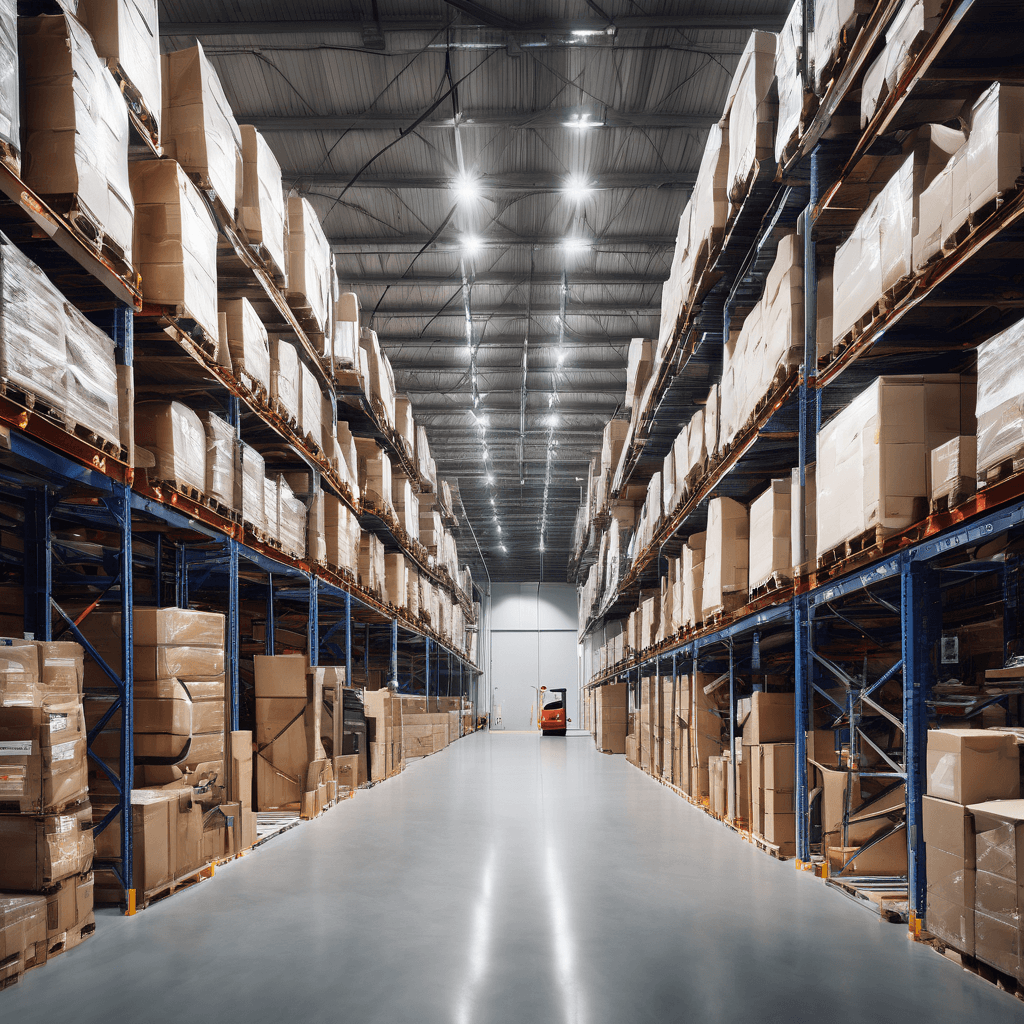
Struggling with warehouse delays and spiraling logistics costs? You're not alone. Poland has rapidly become the beating heart of European distribution, with its warehouse stock growing by over 50% in just five years. Imagine a major e-commerce brand slashing delivery times to Germany by 40%—this isn't a hypothetical; it's the tangible advantage of a strategic Polish hub. The country's central geography, skilled workforce, and modern infrastructure offer a solution that balances cost-efficiency with remarkable speed. But simply having a warehouse there isn't enough. The real game-changer lies in understanding how to leverage these services to outpace your competitors. Let's examine what separates a good location from a truly transformative supply chain asset.
Why Poland is Europe's Premier Logistics Hub
Strategically positioned at the crossroads of Europe, Poland has cemented its status as the continent's premier logistics hub. This isn't just about geography; it's a powerful combination of location, cost efficiency, and robust infrastructure that delivers tangible results for businesses scaling across Europe.
Central European Location & Connectivity
Poland’s central position is its superpower. With a warehouse in Poland, you can reach over 100 million consumers within a 24-hour drive. Major markets like Berlin, Prague, and Vienna are practically next door, while deliveries to Germany, France, and the Czech Republic consistently hit the 24-48 hour window. This central hub is supported by relentless infrastructure investment. The dense network of modern highways (like the A2 to Berlin) and rail connections is complemented by the booming port of Gdańsk, now a key Baltic gateway for deep-sea container traffic enabling seamless multimodal transport.
Cost-Effective Operations
The financial argument for Poland is compelling. Operational costs are significantly lower than in Western Europe, a fact that directly impacts the bottom line. Competitive labor costs in logistics are paired with attractive government incentives for investors, including Special Economic Zones (SEZs) offering tax exemptions. To illustrate the cost differential, consider these typical monthly operational comparisons:
| Cost Factor | Poland | Western Europe (e.g., Germany) |
|---|---|---|
| Warehouse Labor (avg. monthly) | €1,200 - €1,800 | €2,800 - €3,500+ |
| Industrial Space Rent (per m²/month) | €3.50 - €5.50 | €6.50 - €9.50+ |
| Utilities (industrial, approx.) | 20-30% lower | Benchmark |
These savings, confirmed by local industry reports, don’t come at the expense of quality or reliability.
Skilled Workforce & Economic Stability
You’ll find a deep pool of talent here. Poland’s strong educational system, with numerous technical universities and logistics programs, feeds a large, well-educated, and multilingual workforce. This human capital operates within the secure framework of EU membership, which guarantees stable trade regulations, seamless intra-community shipments, and consistent economic growth—Poland's GDP has been on a strong upward trajectory for years, according to Eurostat. In practice, this stability is why global players like Amazon, Procter & Gamble, and Volkswagen have established massive distribution and manufacturing centers here, creating a mature ecosystem for logistics excellence. For more insights on leveraging this market, check out our Blog.
Core European Warehouse Services Offered in Poland
Poland's central European location isn't just a geographic perk—it's the operational backbone for a suite of sophisticated warehouse services that power modern supply chains. Companies leverage these facilities not only for storage but as dynamic hubs that accelerate delivery times across the EU while keeping costs competitive. Let's break down the core services available.
Storage & Inventory Management
At its foundation, Polish logistics providers offer highly secure and scalable storage solutions. You'll find everything from standard ambient warehousing for durable goods to specialized temperature-controlled environments for pharmaceuticals or food, which are increasingly in demand. Crucially, bonded warehousing allows for deferred customs duties, a massive cash-flow advantage for non-EU importers. All this is managed via Advanced Warehouse Management Systems (WMS), providing real-time inventory tracking down to the individual SKU level. This system visibility means you can monitor stock levels from your office in Berlin or Madrid as if you were on-site. For ultra-efficient logistics, cross-docking services are a game-changer; goods are received and immediately sorted for outbound shipment, often reducing storage time to under 24 hours.
Order Fulfillment & E-commerce Support
This is where Polish warehouses truly shine for online sellers. They operate full-service pick, pack, and ship operations meticulously tailored for both B2B pallet shipments and intricate B2C e-commerce orders. Seamless integration with major marketplaces like Amazon or Allegro is standard. In practice, this means an order from your online store can be automatically routed to the Polish fulfillment center, picked from inventory, packed with your branded materials, and dispatched within hours. This streamlined process is a key reason many businesses see a 15-25% reduction in their average delivery times to end consumers in Central Europe, according to local industry reports.
Value-Added Services (VAS)
Beyond basic storage and shipping, Polish 3PLs provide extensive customization to add flexibility. These value-added services transform a warehouse into a light manufacturing or prep center. Common activities include:
- Kitting & Bundling: Combining individual items into ready-to-sell promotional packages.
- Labeling & Repackaging: Applying local language labels or adapting packaging for specific retail chains.
- Product Assembly & Quality Checks: Final assembly or inspection before shipment to the customer.
- Returns Management: Handling the entire reverse logistics process—inspection, restocking, or disposal—which is critical for maintaining customer trust and recovering value.
| Common Value-Added Service | Typical Application | Impact on Lead Time |
|---|---|---|
| Retail-Specific Labeling | Applying price tags & security tags for store-ready goods | Adds 1-2 days, prevents store delays |
| Subscription Box Kitting | Monthly assembly of varied product assortments | Can be scheduled in 24-48 hour bursts |
| Product Customization | Simple engraving or manual configuration | Depends on complexity, often added to standard pick/pack time |
Ultimately, the combination of these core services makes Poland a versatile and strategic partner. It's about more than just renting space; it's about leveraging integrated logistics to create a faster, more resilient, and customer-centric supply chain. For a deeper look at market trends, check out our insights on the Blog.
Key Benefits of Using Polish Warehousing for EU Expansion
Establishing a warehouse in Poland isn't just about finding storage space; it's a strategic move that unlocks significant operational advantages for companies targeting the European market. By positioning your inventory at the crossroads of Europe, you gain a powerful hub that directly addresses the core challenges of modern e-commerce and distribution.
Reduced Lead Times & Shipping Costs
Placing stock in Poland slashes delivery times to key consumer markets. Shipments to Germany, the Czech Republic, or Austria can often be completed in 1-3 business days, a dramatic improvement over longer, more expensive hauls from outside the EU. This speed directly boosts customer satisfaction and can increase conversion rates. The financial impact is equally compelling. Compare typical shipping costs and times from a Polish warehouse versus a non-EU location:
| Destination | From Poland (Cost) | From Outside EU (Cost) | Time Saved |
|---|---|---|---|
| Berlin, DE | €8 - €12 | €18 - €25+ | 2-4 days |
| Prague, CZ | €6 - €10 | €15 - €22+ | 3-5 days |
| Vienna, AT | €10 - €15 | €20 - €28+ | 3-6 days |
These savings and speed enhancements are a game-changer for competitiveness in the DACH and CEE regions.
Scalability and Flexibility
The Polish logistics market is built for growth. You can commonly start with a few hundred pallet spaces and scale up to tens of thousands as demand requires. This elasticity is perfect for handling seasonal peaks—like holiday rushes—or testing new product lines without long-term commitment. In practice, many providers offer flexible contracts that allow you to adjust your occupied space month-to-month, a crucial feature for agile businesses. This means you're not locked into paying for empty square meters during your off-season.
Enhanced Supply Chain Resilience
Relying on a single warehouse, especially one located far from your end customers, is a major risk. A Polish hub diversifies your logistics footprint within the EU, creating a vital buffer against disruptions. If one route is blocked or a facility faces issues, you can reroute flows through alternative channels. This mitigation of single-point-of-failure scenarios makes your entire operation more robust. It’s a strategic move that goes beyond simple cost calculation.
Beyond these core benefits, operating within the EU Single Market eliminates the customs paperwork and VAT complications associated with importing from third countries, cutting a huge administrative burden. You also get a direct line to Poland's own booming domestic market, home to over 38 million consumers with growing purchasing power, as noted by Eurostat. Essentially, a Polish warehouse serves as both an efficient export platform and a launchpad for local sales. For more insights on navigating European logistics, explore our Blog.
Choosing the Right Warehouse Partner in Poland
Before you even start looking at providers, get crystal clear on what you actually need. This isn't just about square meters. Break it down into specifics: your average and peak storage volume (e.g., 1,500 pallet positions with a 50% surge in Q4), the exact value-added services you’ll use daily like relabeling or kitting, and your primary shipping destinations. A partner perfect for e-commerce fulfillment across the EU might struggle with bulky B2B shipments to Ukraine. Defining this upfront saves everyone time and money.
Defining Your Logistics Requirements
Start by mapping your operational flow. Ask yourself:
- Volume & Scalability: What’s your average inventory and peak season requirement? Can the warehouse handle a quick scale-up?
- Services Needed: Do you require pick-and-pack, returns handling (reverse logistics), or custom packaging?
- Market Focus: Are you shipping mainly within the EU, or to the UK and Eastern Europe? This dictates customs expertise.
Evaluating Location & Infrastructure
Location is about connectivity, not just a dot on a map. Prioritizing hubs like Warsaw, Poznań, or Wrocław gives you direct access to the country's dense motorway network and key rail terminals. For instance, a warehouse in the Panattoni Park Poznań hub can reach 80% of the Polish consumer market within a day’s drive, according to local industry reports. Visit the shortlisted sites. Check the dock door ratio, clear height, and overall housekeeping—it tells you more than any brochure.
| Location Cluster | Key Advantage | Ideal For |
|---|---|---|
| Central (Warsaw) | National & international multimodal connectivity | Pan-European distribution, high-value goods |
| West (Poznań/Wrocław) | Direct access to German market | E-commerce, just-in-time manufacturing supply |
| South (Upper Silesia) | Industrial expertise, dense population | B2B, regional distribution, heavy industry |
Assessing Technology & Compliance
A modern warehouse runs on its Warehouse Management System (WMS). You need to verify its capabilities and how seamlessly it integrates with your own ERP or e-commerce platform via API or EDI. Ask for a demo. On the compliance side, necessary certifications are non-negotiable. For general goods, ISO 9001 and 14001 are standard. Handling specific products? You must have GDP for pharmaceuticals or HACCP for foodstuffs. In practice, a provider’s deep understanding of EU safety, labeling, and customs regulations is as critical as the certificate on their wall. Finally, do your homework: check their client references and, if you can, get a feel for their financial stability. A good partner is a stable one.
Future Trends in Polish Warehouse Logistics
The landscape of warehouse services in Poland is rapidly evolving, driven by technological leaps and shifting market demands. Companies are no longer just seeking storage space; they require dynamic, intelligent logistics hubs that can adapt to future challenges. The trends shaping this transformation are fundamentally redefining efficiency, sustainability, and service scope.
Automation & Robotics Integration
Manual processes are giving way to sophisticated automation. The adoption of Automated Storage & Retrieval Systems (ASRS) and Autonomous Mobile Robots (AMRs) is accelerating, particularly for repetitive tasks like picking and transporting goods. In practice, this isn't about full human replacement but creating hybrid environments where robots handle bulk movement and employees manage complex exceptions. A modern fulfillment center might deploy a fleet of 50-100 AMRs to navigate the floor autonomously, slashing walk times and boosting pick rates by over 30%. Smart warehousing, powered by IoT sensors and Warehouse Management Systems (WMS), provides real-time visibility into every pallet and parcel, turning data into actionable insight.
Sustainability Initiatives
Environmental, Social, and Governance (ESG) goals are now a core part of warehouse development. The focus is on constructing and retrofitting facilities to minimize their carbon footprint. You'll commonly see:
- Rooftops covered with solar panels, with some new parks aiming for 100% of operational energy from renewables.
- EV charging stations installed for both fleet and employee vehicles.
- A strong push towards sustainable packaging solutions, reducing plastic use and optimizing material sizes.
According to local industry reports, developers are increasingly targeting BREEAM or LEED certifications, which can translate into tangible cost savings on utilities and strengthen a brand's market appeal.
The Growth of Omnichannel Fulfillment
The rigid separation between B2B and B2C logistics is dissolving. Modern Polish warehouses are evolving into omnichannel hubs, seamlessly processing full pallet shipments to retailers alongside individual e-commerce orders from the same aisle. This flexibility is crucial for brands selling everywhere. It demands highly adaptable layouts, intelligent inventory allocation software, and packing stations that can switch between carton sizes in seconds. The efficiency gains are significant, but the real win is in customer satisfaction—ensuring stock visibility and delivery promises are met regardless of the sales channel.
Supporting this omnichannel shift is the strategic development of last-mile delivery hubs within urban areas like Warsaw, Poznań, and the Tri-City. These compact, highly automated facilities are the final piece of the puzzle, enabling the rapid sortation and dispatch needed for same-day and next-day delivery promises. Coupled with advanced data analytics for demand forecasting and route optimization, Poland's warehouse sector is positioning itself not just as a storage location, but as the central nervous system for modern European commerce. For more insights on the market, check out our Blog.
Conclusion: Positioning Your Business for Success
Poland has cemented its role as the beating heart of European logistics, offering a compelling blend of cost efficiency, strategic location, and modern infrastructure. For businesses aiming to thrive in the EU, leveraging Polish warehouse services isn't just an option—it's a powerful lever for competitive advantage. The combination of lower operational costs and proximity to major consumer markets translates directly into faster delivery times and improved customer satisfaction.
Strategic Summary
Think of Poland as a triple-threat solution. Geographically, you're within a 1,000 km radius of most major European capitals, a fact that slashes transit times. Financially, the cost savings are substantial, with warehouse rental and labour costs often 30-50% lower than in Western Europe, according to local industry reports. Operationally, the market is rapidly adopting technology, with automated storage and retrieval systems (AS/RS) and advanced WMS platforms becoming standard in new facilities. This isn't about cheap storage; it's about smart, scalable logistics that fuel growth.
| Key Advantage | Typical Benefit in Poland | Impact on Your Business |
|---|---|---|
| Geographic Position | Central within EU's 300-million consumer base | Reduced last-mile costs & 1-3 day delivery to DACH, CEE |
| Operational Cost | Warehouse labour ~ €8-12/hour (PAIH, 2024) | Significant reduction in total logistics spend |
| Infrastructure Quality | High proportion of modern, A-class logistics parks | Fewer operational headaches, better compliance |
Next Steps for Businesses
Success hinges on choosing the right local partner. Don't just pick the biggest provider; find one whose capabilities align with your specific needs—be it e-commerce fulfilment, heavy industrial storage, or value-added services like kitting. In practice, the best partnerships are built on shared growth trajectories and clear communication. Start with a deep dive into your own data: forecast demand, map your ideal delivery lanes, and be clear on required tech integrations.
The landscape is dynamic, with sustainability and robotics shaping new developments. Your due diligence should cover these future trends. Visit shortlisted facilities, talk to their current clients, and scrutinize their scalability plans. Once you’ve done the groundwork, you can move forward with confidence. Establishing your logistics hub in Poland is a strategic, long-term investment that positions your entire European operation for resilience and success. For ongoing insights, explore our Blog.
Frequently Asked Questions (FAQ)
What are the main advantages of using a warehouse in Poland over Germany?
The main advantages are lower costs and a central EU location. Labor and warehouse space in Poland can be 20-30% cheaper than in Germany. For example, you might pay €4-5 per sqm in Poland versus €6-8 in parts of Germany. Geographically, Poland is a great hub for serving both Western Europe and the growing Eastern markets. This makes it a smart, cost-effective base if you're looking to streamline your EU logistics without sacrificing connectivity.
How does VAT work when storing goods in a Polish warehouse for EU sales?
Here’s the simple breakdown. If you store goods in a Polish warehouse, it creates a VAT obligation in Poland. You must register for VAT there, typically using the non-Union OSS scheme. When you sell those goods to customers in another EU country (like Germany), you charge the German VAT rate, but report and remit it all through your Polish VAT return. For example, selling a product for €100 to a German customer means charging 19% German VAT, but declaring it in Poland. It keeps things centralized. Get a good local tax advisor to handle the registration.
Can Polish warehouses handle e-commerce fulfillment for the UK post-Brexit?
Yes, absolutely. Polish warehouses are a popular choice for UK fulfillment post-Brexit, but you must plan for customs. The key is using a fulfillment partner there that handles UK VAT and customs declarations seamlessly. Shipments from Poland to the UK now require customs clearance, which adds a day or two to transit times and some paperwork. For example, many providers offer consolidated "bulk Brexit" shipments to streamline this and keep costs down. Just ensure your warehouse partner has proven UK experience—it makes the process smooth for you and your customers.
What types of products commonly use bonded warehouses in Poland?
In Poland, bonded warehouses are super common for electronics, high-value goods, and anything with excise duty—think imported smartphones, tobacco, or alcohol from outside the EU. They're also perfect for companies importing components for assembly, as you delay VAT and duty until the goods actually leave the warehouse. For example, a tech distributor might store thousands of non-EU laptops there, only paying taxes when they're shipped to Polish or EU customers. It's a key tool for managing cash flow on imported inventory.
How quickly can a warehouse in Poland deliver to major German cities?
From a warehouse in Poland, delivery to major German cities is usually very fast. For example, shipments from Poznań to Berlin often arrive within 1–2 business days. To Frankfurt, you can typically expect delivery in 2–3 business days. These are realistic transit times for standard road freight, assuming customs clearance is already handled. For the fastest service, always confirm the exact schedule with your logistics provider, as specific cut-off times and service levels can make a difference.
Related Articles
Understanding the Cost of Warehouse Services in Poland
Navigating warehouse costs in Poland feels like a maze. You're not alone. With e-commerce booming, logistics space is at a premium. Prime warehouse vacancy r...
Central Europe Warehouse Hub: A Strategic Logistics Guide
Struggling with supply chain bottlenecks and soaring costs? You're not alone. The logistics map of Europe is being redrawn, with Central Europe emerging as t...
Supply Chain Warehousing in Poland: A Strategic Guide
Poland’s warehouses are bursting at the seams. With over 26 million square meters of modern logistics space now operational, the market is booming. Yet, secu...