
Understanding the Cost of Warehouse Services in Poland
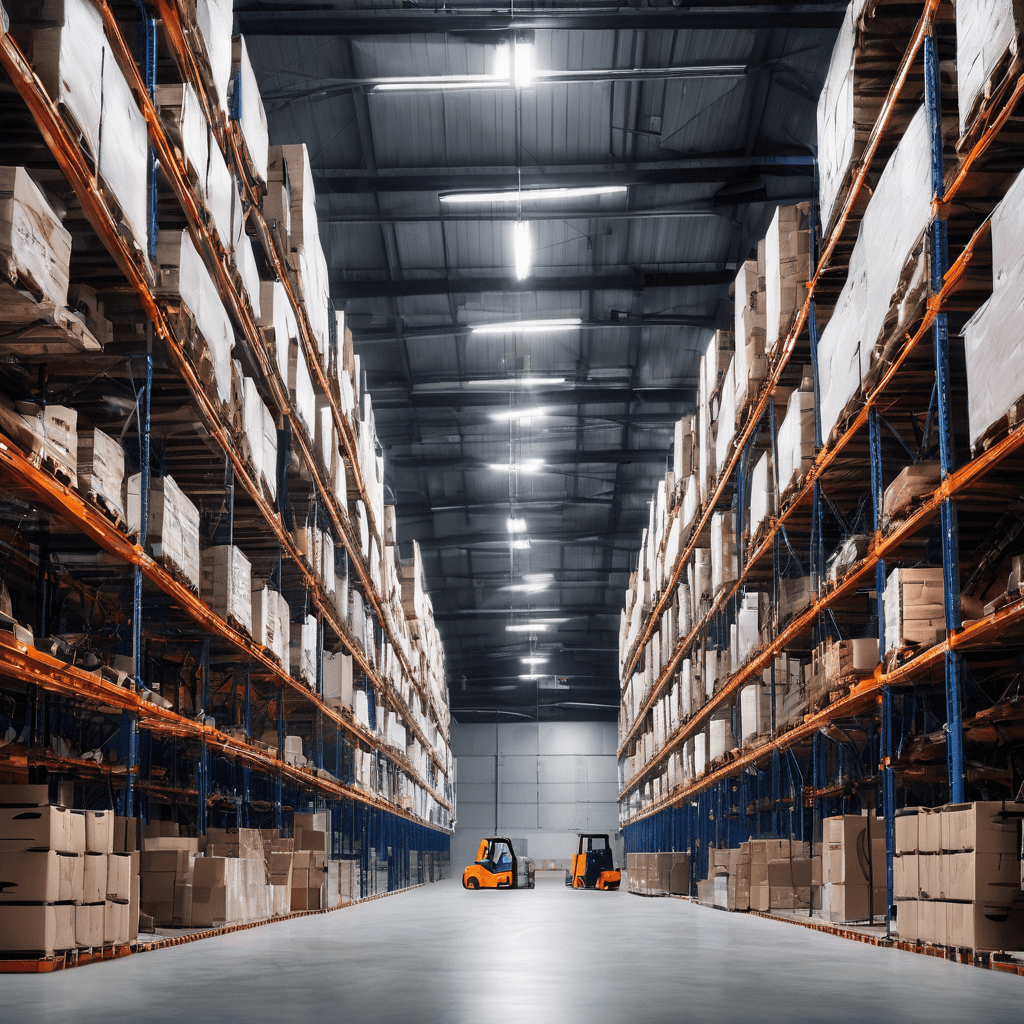
Navigating warehouse costs in Poland feels like a maze. You're not alone. With e-commerce booming, logistics space is at a premium. Prime warehouse vacancy rates have plummeted to a record low of 4.5%, pushing prices upward. Imagine securing a seemingly good lease, only to be hit with unexpected service charges that blow your budget. It's a common trap. But here's the thing: the total cost of occupancy isn't just about square meter rates. It's a complex equation of location, fuel surcharges, and labor costs in a tightening market. Let's break down that equation and reveal where you can actually find leverage.
Key Factors Influencing Warehouse Service Costs
Understanding the cost of warehouse services in Poland requires looking beyond a simple price per square meter. The final quote you receive hinges on a complex interplay of location, facility quality, and contract terms. While you might find basic storage for as low as €2.5-3.5/m²/month in some regions, premium logistics hubs can easily command €5.5-7/m²/month or more. Here’s a breakdown of the key drivers.
Location and Accessibility
Geography is the single biggest cost factor. Prime logistics corridors near major cities and transport nodes carry a significant premium due to high demand and superior connectivity. For instance, the Central Poland region (Łódź, Warsaw) and the strategic "Big Three" in the west—Poznań, Wrocław, and the Upper Silesian Metropolitan Area—are consistently the most expensive. In practice, a warehouse near the A2 motorway outside Warsaw will cost substantially more than a similar-sized unit in a less developed eastern region. Proximity to international airports, like those in Warsaw (WAW) or Katowice (KTW), further elevates prices for time-sensitive operations.
Type and Specification of the Warehouse
Not all square meters are created equal. A traditional, low-bay storage hall is the baseline, but modern logistics demands more. Facilities offering cross-docking capabilities, high-bay storage (over 12m), or built-to-suit specifications for e-commerce come at a higher price. The level of technology and certification is a major differentiator. A warehouse with a sophisticated Warehouse Management System (WMS), advanced fire protection, 24/7 security with biometric access, and specialized certifications like Good Distribution Practice (GDP) for pharmaceuticals will impact the final rate. You're paying for reduced risk and operational efficiency.
Scale and Duration of Contract
Landlords and operators favor stability. Committing to a large area for a long period is the most effective way to secure a favorable rate. Long-term leases (3-5+ years) typically offer rates 15-25% lower than flexible, short-term agreements. The scale of operation also matters—leasing an entire module or hall provides better leverage in negotiations compared to a few hundred square meters. For a clear picture, consider the approximate monthly cost ranges (excluding service charges) for different locations as of late 2024, based on local industry reports:
| Region / City | Approx. Monthly Rate (€/m²) | Market Characteristic |
|---|---|---|
| Warsaw / Central Poland | €5.5 - €7.0 | Highest demand, prime logistics corridors |
| Poznań, Wrocław, Upper Silesia | €4.8 - €6.5 | Strong industrial & e-commerce hubs |
| Secondary Cities (e.g., Lublin, Bydgoszcz) | €3.5 - €5.0 | Growing availability, cost-competitive |
| Eastern Poland | €2.5 - €4.0 | Most affordable, lower transport density |
Ultimately, the "right" cost balances your need for accessibility, facility specs, and operational flexibility. A deep dive into these factors, rather than just the headline rate, will reveal the true value of your warehouse investment. For more insights on the Polish market, explore our Blog.
Breaking Down the Pricing Models
When budgeting for warehouse space in Poland, you'll encounter a mix of fixed and variable costs. The headline figure is usually the rent, but the real picture only emerges after adding operational and handling fees. Let's unpack the typical pricing models so you can avoid surprises.
Rental Rates (Price per m²)
This is your core fixed cost, quoted monthly per square meter (PLN/m²/month). The rate is heavily influenced by location, with major logistics hubs commanding premium prices. Modern facilities in cities like Warsaw, Poznań, or Wrocław are at the top end, while spaces in eastern or less industrialized regions offer significant savings. According to local industry reports for 2024, the spectrum is broad:
| Region | Average Monthly Rate (PLN/m²) | Notes |
|---|---|---|
| Major Cities (Warsaw, Tri-City) | 25 - 45 PLN | Prime logistics parks with high specifications. |
| Central & Western Poland | 18 - 30 PLN | Well-developed industrial zones like Łódź or Poznań. |
| Eastern & Southern Poland | 14 - 22 PLN | More cost-effective, with growing infrastructure. |
These rates typically cover the bare shell; everything else is extra.
Service and Handling Fees
These variable costs cover the physical movement of your goods. Providers charge for each touchpoint, so your total depends heavily on activity volume.
- Receiving & Put-away: A fee for unloading and storing incoming pallets, often 5-15 PLN per pallet.
- Picking & Packing: This is labor-intensive. Simple pallet picking is cheaper, while piece-picking (each individual item) can cost 1-3 PLN per item.
- Shipping: Coordinating dispatch with carriers, usually a flat fee per order.
A contract might quote a low rental but have high handling fees. Always model these costs against your forecasted turnover.
Additional and Hidden Costs
This category is where budgets can unravel. Key charges to scrutinize include:
- Utilities: For standard storage, a small fee may apply. Climate-controlled spaces for pharmaceuticals or electronics, however, can add a substantial surcharge—sometimes 20-30% on top of base rent.
- Property Tax (opodatkowanie nieruchomości): Landlords frequently pass this directly to the tenant, an often-overlooked line item.
- Insurance: You'll need to insure your stored goods, and the landlord may require you to contribute to the building's insurance.
- Peak Surcharges & Minimums: Flexible contracts, while attractive, often have clauses for peak season surcharges (e.g., during Christmas) or a minimum monthly service fee guaranteeing the operator a certain revenue even if your activity drops.
In practice, the most cost-effective deal isn't the one with the lowest base rent. It's the one with a transparent, all-in fee structure that aligns with your specific operational flow. Scrutinize the service level agreement (SLA) and ask for a detailed cost simulation based on your data. For more insights on the Polish market, check out our Blog.
Comparing Different Types of Warehouse Services
Understanding the distinct cost profiles of different warehouse services in Poland is crucial for making a smart, budget-aligned decision. The market offers everything from bare-bones space to fully outsourced supply chain solutions, each with its own financial implications.
Self-Storage vs. Full-Service Logistics
At one end, self-storage or basic dry storage provides a low-entry-cost option. You're essentially renting square meters, often for as low as €3-€7 per m²/month in regional hubs, excluding utilities and insurance. The catch? You handle everything else—labor, equipment, logistics, and management. This can work for archiving or bulk goods with very low turnover.
Full-service 3PL/4PL providers charge a comprehensive fee that bundles services. You pay for the integrated solution, not just the space.
| Service Component | Typical Cost Model (3PL) | Key Consideration |
|---|---|---|
| Storage | Per pallet position per week/month (e.g., €2-€5) | Cheaper for long-term, premium for fast-moving goods. |
| Handling | Per pallet in/out (e.g., €3-€8) | Volume discounts apply; complex picks cost more. |
| Value-Added Services | Hourly rate or per-unit fee (e.g., labeling, kitting) | Directly adds to unit cost but saves internal CAPEX. |
In practice, while the base storage rate might seem higher, the efficiency and scalability often justify the cost for businesses focused on growth rather than logistics.
Bonded Warehouses and Customs Services
Bonded warehouses add a specialized financial layer. Goods stored here are not subject to customs duties or VAT until they leave for the Polish market. This can defer tax payments for months, offering a serious cash flow advantage. You'll pay a premium for this service—often a 10-25% markup on standard storage fees plus customs administration charges. For importers holding high-value goods or managing EU-wide distribution from Poland, this upfront cost is easily offset by the financial flexibility gained.
E-commerce Fulfillment Specialization
E-commerce fulfillment centers operate on a dynamic, activity-based model. Costs are tightly tied to order volume and complexity, moving far beyond simple storage. A typical fee structure includes:
- A small monthly storage fee per pallet or shelf.
- A per-order pick-and-pack fee (€1.5-€3.5 is common).
- A pre-negotiated carrier rate for last-mile delivery.
- Specific fees for returns processing (often €3-€6 per item), which is a critical and costly part of the e-commerce equation.
The choice ultimately hinges on your business's operational DNA. A startup might lean on self-storage for its low fixed cost, while a scaling e-commerce brand will find the variable, per-order cost of a fulfillment center essential. For companies dealing with international goods, the bonded warehouse's financial engineering often trumps the higher service fee. Assess your capital, internal logistics capability, and where you want your team's focus to be. For more insights on navigating the Polish market, explore our Blog.
How to Optimize Your Warehouse Spending in Poland
Optimizing your warehouse spending in Poland isn't just about finding the cheapest rate per pallet. It's a strategic exercise in aligning your operational needs with smart financial decisions. A proactive approach can unlock significant savings while maintaining, or even improving, service quality.
Negotiating Contracts and SLAs
The foundation of cost control is a watertight contract. Instead of vague promises, insist on clearly defined Service Level Agreements (SLAs) with measurable Key Performance Indicators (KPIs). Tie costs directly to performance. For instance, you might negotiate a lower base handling fee but include penalties for the warehouse if their order picking accuracy falls below 99.5% or if loading times exceed the agreed window. This shifts the focus from pure cost to value. Regularly audit your invoices against this contract—a step many companies skip. Discrepancies in storage fees, handling charges, or ancillary services are commonly seen and can quietly erode your budget.
Implementing Technology for Efficiency
Manual data entry is a hidden cost driver, leading to errors, delays, and extra labor. Investing in seamless integration between your e-commerce platform or ERP and the warehouse’s WMS via API or EDI is non-negotiable. This automates order and inventory data flow, slashing manual work and mis-picks. The initial setup cost is quickly offset by reduced error correction, faster order cycles, and more accurate inventory forecasting. In practice, companies that integrate deeply with their 3PL often see a 15-25% reduction in administrative and corrective labor costs.
Considering Regional Alternatives
While major hubs like Warsaw, Poznań, and the Upper Silesian region offer excellent connectivity, their premium rates reflect high demand. For many businesses, especially those serving the national market or EU cross-border trade, secondary cities present a compelling alternative. Locations such as Lublin, Bydgoszcz, or Wrocław's outskirts offer modern logistics parks with excellent transport links, often at considerably lower rates. According to local industry reports, average storage costs in these areas can be 10-20% lower than in the primary hubs. A hybrid model using a central warehouse for bulk storage and a smaller, decentralized facility near a key city can optimize last-mile delivery costs versus a single-location strategy.
| Warehouse Strategy | Typical Advantage | Potential Trade-off |
|---|---|---|
| Single Centralized (e.g., near Poznań) | Economies of scale, simpler management | Higher last-mile costs to eastern regions |
| Single Decentralized (e.g., in Lublin) | Lower real estate & labor costs, good EU access | Possibly narrower labor pool for specialized skills |
| Hybrid Model (Central + satellite) | Balances bulk storage cost with delivery speed | Increased coordination complexity |
Ultimately, treat your warehouse partnership as a dynamic element of your supply chain. Revisit these strategies annually as your sales channels and customer geography evolve. For more insights, explore our Blog.
Conclusion: Making an Informed Decision for Your Business
Selecting the right warehouse partner in Poland is about far more than just finding the lowest monthly rate. A smart decision balances immediate costs with long-term operational stability and growth potential, turning your logistics operation into a genuine competitive edge.
Weighing Cost Against Value and Reliability
The cheapest warehouse service can become a costly mistake. A provider with rock-bottom pallet storage fees might hit you with hidden charges for receiving, relabeling, or weekend dispatches. Worse, unreliable systems or labor shortages lead to delayed shipments and lost sales. In practice, the true cost includes the risk of disrupting your customer experience. Use the detailed cost breakdown from this article as a core checklist for your RFQs. This forces transparency and allows for a real comparison, like the example below showing how headline rates can be misleading.
| Service Component | Provider A (Base Rate) | Provider B (All-Inclusive) | Notes |
|---|---|---|---|
| Pallet Storage (month) | €8 | €11 | |
| Inbound Handling (per pallet) | €3.50 | Included | A's fee adds up fast. |
| Order Picking (per line) | €1.20 | €0.85 | B is cheaper at volume. |
| Estimated Monthly Cost (500 pallets) | ~€4,750 | ~€4,200 | B offers better value. |
Partner with operators who clearly explain their pricing model and show flexibility. Can they easily handle a 25% surge in your volume? That scalability is priceless.
The Importance of Future-Proofing Your Strategy
Your warehouse choice should support your business for years. Poland’s stable economy and continuous infrastructure investment, backed by agencies like PAIH, make it a long-term logistics hub for Europe. You’re not just renting space; you’re anchoring your supply chain in a region with growing connectivity. A strategic partner acts as an extension of your team, offering insights and technology that streamline your entire operation. This enhances your speed to market across the EU.
Ultimately, a well-chosen warehouse in Poland is a strategic asset. It safeguards your operations, allows you to scale confidently, and lets you compete effectively. For more insights on navigating the Polish market, explore our Blog.
Frequently Asked Questions (FAQ)
What is the average cost of renting warehouse space in Poland?
The average cost for warehouse space in Poland really depends on the location and quality. For modern, big-box logistics space in major hubs like Warsaw or Poznań, you can expect roughly €3.50 to €5.50 per square meter per month. In smaller regional cities, prices often range from €2.50 to €4.00. Remember, this is just the base rent. Your total cost will include service charges (utilities, security) which can add €0.50 to €1.50 more. It's best to check specific online listings or contact a local agent for the most current quotes in your target area.
Are warehouse services in Poland more expensive than in Western Europe?
Generally, no—warehouse services in Poland are significantly less expensive than in most of Western Europe. While exact costs vary by location and service level, you can often expect savings of 30-40% compared to Germany or the Netherlands, especially for labor and utilities. For example, prime logistics space near major cities like Warsaw might cost around €4-5 per sqm/month, which is very competitive. This cost advantage is a major reason so many companies are nearshoring there. It's wise to get quotes for your specific needs, as prices in western Poland can be closer to German rates.
What are the typical extra fees in a warehouse service contract?
Beyond the base rent, watch for a few common extras. You'll almost always pay a service charge (czynsz administracyjny) for common area maintenance, which can be 5-15% of your rent. Utilities, especially electricity for lights and machinery, are typically billed separately based on usage. If your goods require specific conditions, climate control can add a significant cost. Always ask for a detailed breakdown of the service charge and clarify if there are fees for receiving shipments outside of standard hours or for handling pallets beyond your allotted storage space.
How does the location within Poland affect warehouse prices?
Location makes a huge difference. Prime hubs near major cities like Warsaw or along the A2 motorway command the highest prices due to high demand and perfect connectivity. For significant savings, look at regional cities like Lublin or Bydgoszcz, where rates can be 20-30% lower. The trade-off is slightly longer transit times to Western Europe. If your supply chain isn't extremely time-sensitive, a secondary location can offer excellent value without sacrificing modern facility standards.
Can I get flexible, short-term warehouse contracts in Poland?
Yes, absolutely. Flexible, short-term warehouse contracts are available in Poland and are perfect for testing a market or handling seasonal peaks. You can often find offers for 3, 6, or 12-month commitments, sometimes even month-to-month. For example, you might secure a small space (say, 50 m²) in a shared logistics hub near Warsaw or Poznań for as low as 4-6 EUR/m²/month, plus handling fees. The key is to search for "flexible warehouse space" or "logistics hub" and be clear about your short-term need from the start. Many providers now cater specifically to this demand.
Related Articles
Central Europe Warehouse Hub: A Strategic Logistics Guide
Struggling with supply chain bottlenecks and soaring costs? You're not alone. The logistics map of Europe is being redrawn, with Central Europe emerging as t...
European Warehouse Services in Poland: Your Strategic Hub
Struggling with warehouse delays and spiraling logistics costs? You're not alone. Poland has rapidly become the beating heart of European distribution, with ...
Supply Chain Warehousing in Poland: A Strategic Guide
Poland’s warehouses are bursting at the seams. With over 26 million square meters of modern logistics space now operational, the market is booming. Yet, secu...