
Central Europe Warehouse Hub: A Strategic Logistics Guide
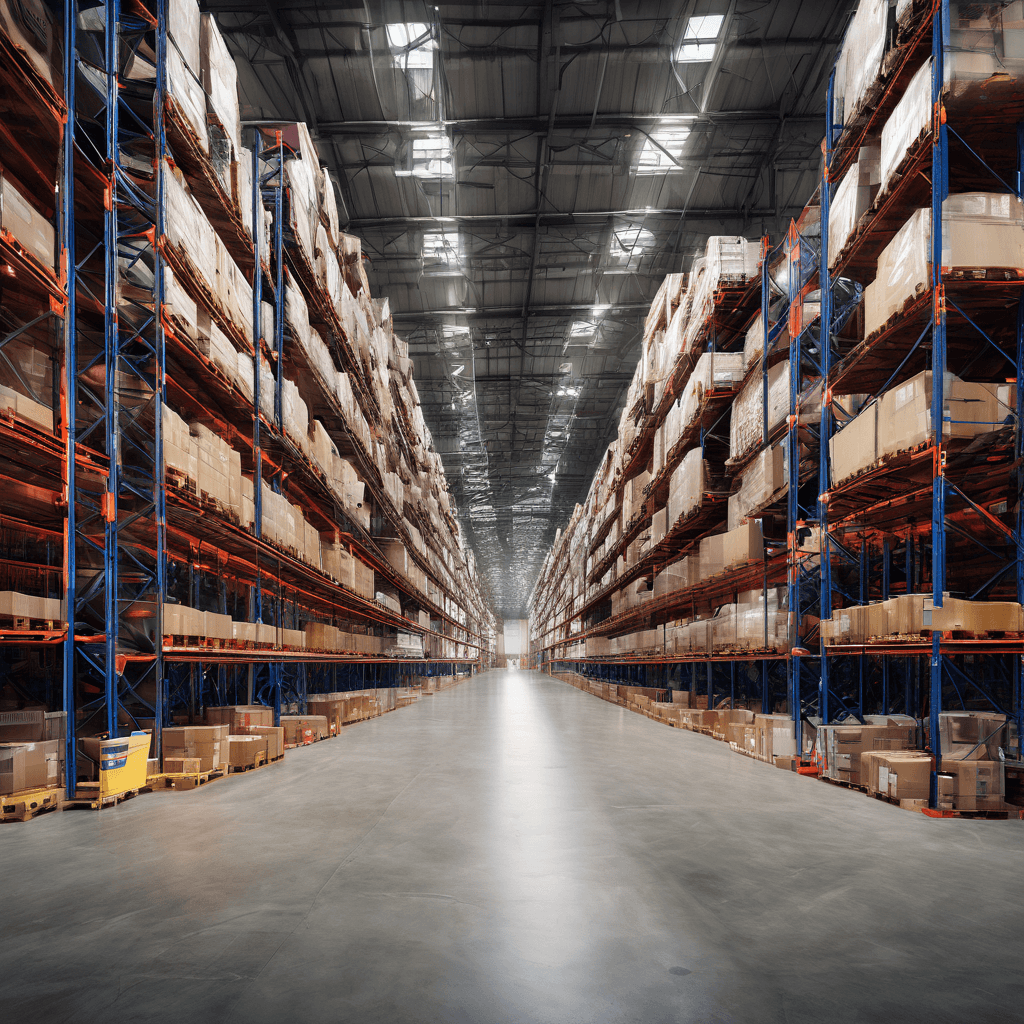
Struggling with supply chain bottlenecks and soaring costs? You're not alone. The logistics map of Europe is being redrawn, with Central Europe emerging as the undeniable winner for strategic distribution. A recent industry report highlights a 40% surge in warehouse leasing activity in Poland, the Czech Republic, and Slovakia last year alone. Imagine a major automotive manufacturer slashing delivery times to German factories by two full days simply by shifting its regional hub to Wrocław. This isn't just a trend; it's a fundamental realignment of how goods flow across the continent. The race for prime space is heating up, and where you locate your next distribution center could define your competitive edge for the next decade. Let’s examine what makes this region the new operational heart of Europe.
Why Central Europe is a Premier Warehouse Hub
Strategically positioned at the heart of the continent, Central Europe has evolved into a powerhouse for logistics and distribution. Its rise isn't accidental; it's the result of a powerful combination of location, investment, and economic pragmatism that offers businesses a compelling alternative to saturated Western hubs.
Strategic Geographic Crossroads
The region’s primary advantage is its unparalleled location. Placing a distribution center in, say, Poland or the Czech Republic puts you within a 24-48 hour truck drive to major consumer markets like Germany, Austria, and Italy. This central position drastically cuts last-mile delivery times and transportation costs for a market of hundreds of millions. In practice, a shipment from Warsaw can reach Berlin faster than one from northern Germany, making it a true nexus for pan-European supply chains.
Economic and Infrastructure Advantages
Strong economic growth, fueled by EU cohesion funds, has translated into world-class infrastructure. Modern highway networks like Poland’s A4 corridor and extensive rail connections are continuously upgraded. Coupled with this is a significant cost advantage in skilled labor. While automation is rising, the availability of well-educated logistics managers, engineers, and warehouse operatives at competitive rates is a key draw.
| Cost Factor | Central Europe (e.g., Poland, Czechia) | Western Europe (e.g., Germany, Benelux) |
|---|---|---|
| Average Warehouse Labor Cost (monthly) | €1,200 - €1,800 | €2,500 - €3,500+ |
| Prime Logistics Rent (per sqm/month) | €4 - €6.5 | €7 - €12+ |
| Typical Time to Major EU Markets | 1-2 days | 1-3 days |
Data sourced from local industry reports and Eurostat comparisons, 2024.
A Gateway to EU and Eastern Markets
This hub functions as a cost-effective bridge. It provides seamless access to the predictable, high-volume markets of Western Europe under uniform EU trade regulations. Simultaneously, it’s the perfect springboard for emerging economies further east, like Ukraine or the Balkans. Companies commonly use Central European facilities to consolidate goods before distributing them across the entire European continent, simplifying customs and inventory management. Political stability and EU membership further de-risk operations, ensuring that trade rules won’t change overnight. For more insights on optimizing supply chains, explore our Blog.
Key Countries and Logistics Hotspots
The Central European warehouse landscape is dominated by a few key players, each offering distinct advantages for logistics and manufacturing operations. While the region functions as a cohesive unit, understanding the specific strengths of each country is crucial for making an informed location decision.
Poland: The Undisputed Leader
Poland stands as the region's logistics giant, boasting the largest market and most extensive network of modern facilities. Its central geography and massive workforce are major draws. Key hotspots include:
- Warsaw: The capital is the primary market for national distribution, with high demand and a dense concentration of big-box warehouses.
- Łódź: Often called the logistics "heart" of Poland, its central position at the crossroads of major motorways makes it ideal for pan-European distribution.
- Upper Silesia (Katowice region): This industrial powerhouse offers a deep talent pool for manufacturing and is a key hub for southern Poland and Czech/Slovak crossover.
- Wrocław: A gateway to Western Europe with strong connections to Germany, supporting advanced manufacturing and e-commerce.
The scale is impressive, with total modern warehouse stock exceeding 30 million sqm according to local industry reports, and new developments are constantly coming online.
Czech Republic & Slovakia: Industrial Powerhouses
These neighbors excel in high-value manufacturing, particularly automotive. The logistics infrastructure is built to support precision, just-in-time production.
Czech Republic: The focus is on the triangle between Prague, Brno, and Pilsen. Prague handles national distribution and headquarters functions, while Brno is a center for tech and automotive R&D. The country's industrial vacancy rates are often among the lowest in Europe, highlighting strong demand.
Slovakia: Per capita, it's one of the world's largest car producers. Bratislava benefits from proximity to Vienna, but the industrial base stretches east along the Danube corridor. This strategic position offers excellent multimodal transport options for heavy industry.
| Country | Core Strength | Primary Logistics Hubs | Typical Sector Focus |
|---|---|---|---|
| Poland | Scale & Location | Warsaw, Łódź, Upper Silesia | E-commerce, FMCG, General Manufacturing |
| Czech Republic | Advanced Manufacturing | Prague, Brno, Płzeň | Automotive, High-tech, Engineering |
| Slovakia | Integrated Automotive | Bratislava, Žilina, Košice | Automotive, Metal Processing |
Hungary & Beyond: Expanding the Network
Hungary's logistics scene is firmly centered on Budapest, which absorbs the vast majority of warehouse demand. The city's developed ring road and airport infrastructure make it a natural consolidation point. Increasingly, companies look to Eastern Hungary for larger, cost-effective manufacturing sites with strong road and rail links to Ukraine and Romania.
Looking past the core four, emerging opportunities are clear. Romania offers significant cost advantages and a growing consumer market, with cities like Bucharest and Timișoara gaining traction. Slovenia is a premium gateway to the Balkans with exceptional intermodal connections via the port of Koper. Austria, though higher-cost, provides unparalleled stability and high-tech logistics services, particularly around Vienna and Graz, acting as a western anchor for the entire CE region. In practice, many companies now use a multi-hub strategy across these countries to optimize their regional network. For more insights on regional trends, check out our Blog.
Benefits of Using a Central European Warehouse
Establishing a logistics hub in Central Europe isn't just about geography; it's a strategic move that delivers tangible advantages for businesses scaling across the continent. The region offers a compelling blend of economic benefits and operational agility that directly impacts the bottom line and customer satisfaction.
Cost Efficiency and Operational Savings
Compared to Western European hubs, Central Europe presents significant savings. Real estate costs in cities like Wrocław or Budapest are substantially lower than in Munich or Rotterdam. Labor costs, while rising, remain competitive, and overall operational expenses for utilities and services add to the savings. This allows for greater investment in technology or inventory. For a clear picture, consider these typical monthly cost comparisons for a 5,000 sqm warehouse space:
| Cost Factor | Western Europe (e.g., Germany) | Central Europe (e.g., Poland) |
|---|---|---|
| Warehouse Rent (per sqm) | €5.5 - €7.5 | €3.5 - €4.5 |
| Gross Average Wage (Logistics) | €3,200 - €3,800 | €1,400 - €1,800 |
| Industrial Electricity (per MWh) | €180 - €220 | €130 - €160 |
Figures based on Eurostat and local industry reports for 2024.
Enhanced Supply Chain Resilience
Relying on a single distribution center is a major risk. A Central European hub diversifies your logistics nodes, mitigating disruptions from port strikes, border delays, or localized events. It creates a flexible network. You can reroute shipments through Baltic or Adriatic ports if needed, avoiding single-point failures that can paralyze a supply chain. This kind of resilience is no longer a luxury; it's essential for modern business continuity.
Improved Customer Service and Delivery Times
Positioning stock in the heart of Europe drastically cuts last-mile delivery times to a dense consumer base of over 100 million people. From a Polish hub, you can reach Berlin, Vienna, or Prague in 1-2 days, often with next-day delivery options. This speed is a game-changer for customer satisfaction and competitiveness against marketplaces. Faster delivery slashes shipping costs and can boost conversion rates, something we commonly see in practice.
Beyond core storage, the region's advanced 3PL providers offer the flexibility to scale operations up or down without massive capital investment. They provide crucial value-added services like kitting, custom labeling, and efficient returns management—turning a cost center into a streamlined, customer-centric operation. For more insights on optimizing European logistics, explore our Blog.
Choosing the Right Location: Key Factors
Selecting the optimal warehouse hub in Central Europe isn't just about finding cheap land. It's a strategic puzzle where the right piece can slash costs and turbocharge your supply chain. Getting it wrong, on the other hand, can lead to persistent logistical headaches. The decision hinges on a careful balance of several critical factors.
Proximity to Your Target Markets
Start by mapping your primary customer bases. A hub that minimizes the final delivery leg is golden, especially for e-commerce or fast-moving goods. For instance, a warehouse in Wrocław, Poland, places you within a 500km radius of major German cities and the Czech Republic, covering tens of millions of consumers. Compare that to a location in eastern Hungary, where reaching Berlin adds significant time and fuel costs. The goal is to centralize your inventory to serve multiple markets with short, efficient sprints rather than long hauls.
Infrastructure and Connectivity Analysis
Top-tier infrastructure is non-negotiable. You need to evaluate the quality of road and rail networks, the proximity to intermodal terminals, and airport cargo capacity for high-value or urgent shipments. In practice, the Czech Republic and Poland boast some of the densest and most modern highway networks in the region. Key logistics corridors like the A2 in Poland or the D1 in Slovakia are perpetually busy for a reason. Consider this snapshot of major intermodal hubs:
| Location | Key Rail Connections | Notable Feature |
|---|---|---|
| Dunajská Streda (SK) | Direct routes to Koper, Hamburg | Major hub for Asian imports via Adriatic |
| Ostrava (CZ) | Strong links to Poland, Austria | Industrial heartland with multimodal access |
| Poznań (PL) | West-East European corridor | Central position within Poland's road network |
Local Regulations and Business Climate
Understanding the on-the-ground business environment is crucial. This includes labor market flexibility, corporate tax rates, and the tangible efficiency of local authorities. Poland's Special Economic Zones (SEZs), for example, offer significant tax incentives—sometimes up to 70% off income tax—for new investments, as cited by PAIH. Meanwhile, countries like the Czech Republic have highly skilled workforces, but labor costs can be higher. The bureaucratic process for permits can vary wildly; some parks offer "ready-to-invest" plots with utilities already in place, while greenfield projects might face delays. It's a factor that can make or break your project timeline.
Beyond these core factors, assess the availability of suitable property. The market can be tight, so exploring both existing facilities and build-to-suit options with a reliable developer is key. Finally, tap into existing industry clusters—like the automotive sector in South Moravia (CZ) or Upper Austria—for access to specialized suppliers and talent. For more insights on navigating these regional dynamics, check out our latest analyses on the Blog.
Trends Shaping the Future of the Hub
The Central European warehouse market isn't just growing; it's being fundamentally reshaped by powerful, converging forces. Driven by relentless e-commerce demand and a strategic shift in global supply chains, the region's logistics hubs are rapidly evolving in capability and sophistication. Here’s a look at the key trends defining their future.
The E-commerce and Omnichannel Revolution
Explosive online sales growth is the primary engine, creating unprecedented demand for modern fulfillment centers and cross-docking facilities. Consumers now expect next- or same-day delivery, pushing retailers and logistics providers to decentralize inventory. The result? A massive need for strategically located warehouses that can handle both bulk storage and rapid, small-order picking. In practice, this means a surge in multi-tenant logistics parks near major cities like Warsaw, Prague, and Budapest, designed specifically for last-mile efficiency. According to local industry reports, e-commerce could account for over 30% of all new warehouse demand in the region by 2025.
Automation and Smart Warehouse Adoption
Meeting the speed and accuracy demands of modern logistics is impossible without technology. Implementation of Warehouse Management Systems (WMS) is now table stakes. Beyond that, we're seeing accelerated adoption of robotics for picking and sorting, autonomous guided vehicles (AGVs) for material movement, and IoT sensors for real-time tracking of goods and equipment. This tech stack slashes operational costs and error rates. For example, a well-implemented WMS can boost inventory accuracy to over 99%, while automated sortation systems can process tens of thousands of parcels daily.
| Technology | Common Application | Typical Efficiency Gain |
|---|---|---|
| Warehouse Management System (WMS) | Inventory control, order routing | 15-25% increase in productivity |
| Mobile Robots (AGV/AMR) | Pallet transport, goods-to-person | Up to 2x picking speed |
| IoT & RFID | Real-time location tracking, condition monitoring | ~30% reduction in search times |
Sustainability as a Core Priority
Green standards are moving from a nice-to-have to a non-negotiable. Developers are now routinely targeting BREEAM or LEED certifications for new builds, incorporating features like high-efficiency lighting, better insulation, and water recycling. On the operational side, the shift is toward electric vehicle fleets for last-mile delivery and significant investments in on-site solar energy generation. The business case is clear: sustainable buildings often have lower operating costs and attract premium tenants. This focus aligns with broader "friend-shoring" trends, as companies seek partners in regions with strong environmental regulations and cleaner energy grids.
These trends are deeply interconnected. The push for speed (e-commerce) drives automation, which in turn must be powered sustainably. Simultaneously, the geopolitical shift of nearshoring is bringing more manufacturing and storage closer to European end-markets, further fueling demand for flexible, tech-enabled, and green logistics space offered by specialized 3PL and 4PL providers. The future hub is not just a shed; it's a resilient, intelligent, and efficient nerve center for modern commerce. For more insights on the regional market, check out our Blog.
Conclusion
The narrative has decisively shifted. Central Europe is no longer a secondary option but a fundamental pillar for any robust pan-European supply chain. Its consolidation into a primary logistics hub reflects a strategic realignment, driven by the need for agility and security in a volatile global trade environment.
Strategic Imperative for Modern Supply Chains
Choosing Central Europe is a direct investment in supply chain resilience. The region’s core strength lies in its powerful convergence of advantages. You get a strategic location with access to over 500 million consumers within a single day’s drive, modern transport networks, and a highly skilled yet cost-competitive labor pool. This blend is hard to match elsewhere. For instance, while warehouse rents in Western capitals can be prohibitive, Central European hubs offer significant savings, as seen in the table below.
| Location | Avg. Prime Warehouse Rent (Q1 2024, €/m²/month) | Proximity to DACH Region |
|---|---|---|
| Warsaw, Poland | €4.2 - 4.8 | ~1-2 days by truck |
| Prague, Czechia | €5.5 - 6.2 | Direct border |
| Budapest, Hungary | €4.0 - 4.5 | ~1 day by truck |
| Munich, Germany | €8.5+ | N/A |
Sources: Local industry reports, Eurostat.
In practice, this means companies can de-risk operations from single points of failure, reduce lead times to key markets, and maintain healthier margins. It’s a tangible response to the disruptions of recent years.
Final Recommendations for Businesses
To capitalize on this, a generic approach won’t cut it. Success hinges on tailored action.
- Conduct hyper-localized analysis. The region isn’t monolithic. Labor costs and incentives can vary dramatically between, say, western Poland and eastern Slovakia. Your site selection must be data-driven, weighing your specific product flows, customer locations, and growth plans against local factors like real estate vacancy rates, which remain tight in many areas according to PAIH.
- Lean on local expertise. Navigating legal frameworks, permitting, and cultural nuances is where many stumble. Partnering with an established regional 3PL or a consultant with boots on the ground is a common shortcut to efficiency. They handle the complexities while you focus on your core business.
- Think long-term. View this not as a simple real estate transaction but as building a strategic asset. The right location in Central Europe doesn’t just solve today’s logistics puzzle; it creates a platform for scalable growth across Europe for years to come.
Ultimately, establishing a footprint in the Central European warehouse hub is a clear move towards a more resilient, efficient, and competitive future. For more insights on navigating these dynamic markets, explore our Blog.
Frequently Asked Questions (FAQ)
Which country in Central Europe is best for warehousing?
Poland is usually the top pick because it's the biggest, has a central location, and over 26 million square meters of modern warehouse space. It's a powerhouse for reaching all of Central and Eastern Europe. But if your main customers are in Germany or Austria, then the Czech Republic might be a smarter, more cost-effective choice. Honestly, the "best" country depends on where your exact target market is. Start by mapping where your customers are, then look at warehouse locations and costs in that specific country.
What are the main advantages of a Central European logistics hub?
The main perks are location, cost, and talent. Being in the heart of Europe, like in Poland or the Czech Republic, means you can reach major markets like Germany or Italy a full day faster than from further out. You'll see warehouse and labor costs often 30-40% lower than in Western Europe. Plus, there's a large pool of skilled, multilingual workers. If you're shipping across the continent, placing your stock here cuts transit times and saves real money.
How does Central Europe compare to Western Europe for warehouse costs?
If you're comparing warehouse costs, Central Europe is generally much cheaper than Western Europe. For example, costs for space, labor, and utilities in countries like Poland, Czechia, or Hungary are often 30–50% lower than in major hubs like Germany, France, or the Benelux. So, you get significant savings without moving too far from your core EU market. It’s a practical option if you want to reduce overhead while keeping solid logistics connections. Definitely worth getting some local quotes to see the exact difference for your needs.
Is Central Europe suitable for e-commerce fulfillment?
Yes, Central Europe is excellent for e-commerce fulfillment. Its central location is the big advantage—you can reach major markets like Germany, Poland, Austria, and Italy incredibly fast, often within 1-3 days. This makes it a real hub for serving the EU's vast consumer base efficiently. For example, many companies use warehouses in the Czech Republic or Slovakia to cut down on delivery times and costs. If you're looking to streamline your EU logistics, setting up a fulfillment center there is a very practical move.
What should I look for in a Central European 3PL partner?
When picking a 3PL partner in Central Europe, start by checking their real experience with companies like yours—ask for a case study. Their tech stack is key; ensure their WMS can integrate with your systems without a major headache. Look for a partner with multiple sites, say in Poland, Czechia, and Hungary, so you can scale or shift as needed. Finally, deep local knowledge is non-negotiable for customs and last-mile delivery. Don't just take their word for it—request references from a current client in your sector.
Related Articles
Understanding the Cost of Warehouse Services in Poland
Navigating warehouse costs in Poland feels like a maze. You're not alone. With e-commerce booming, logistics space is at a premium. Prime warehouse vacancy r...
European Warehouse Services in Poland: Your Strategic Hub
Struggling with warehouse delays and spiraling logistics costs? You're not alone. Poland has rapidly become the beating heart of European distribution, with ...
Supply Chain Warehousing in Poland: A Strategic Guide
Poland’s warehouses are bursting at the seams. With over 26 million square meters of modern logistics space now operational, the market is booming. Yet, secu...