
Supply Chain Warehousing in Poland: A Strategic Guide
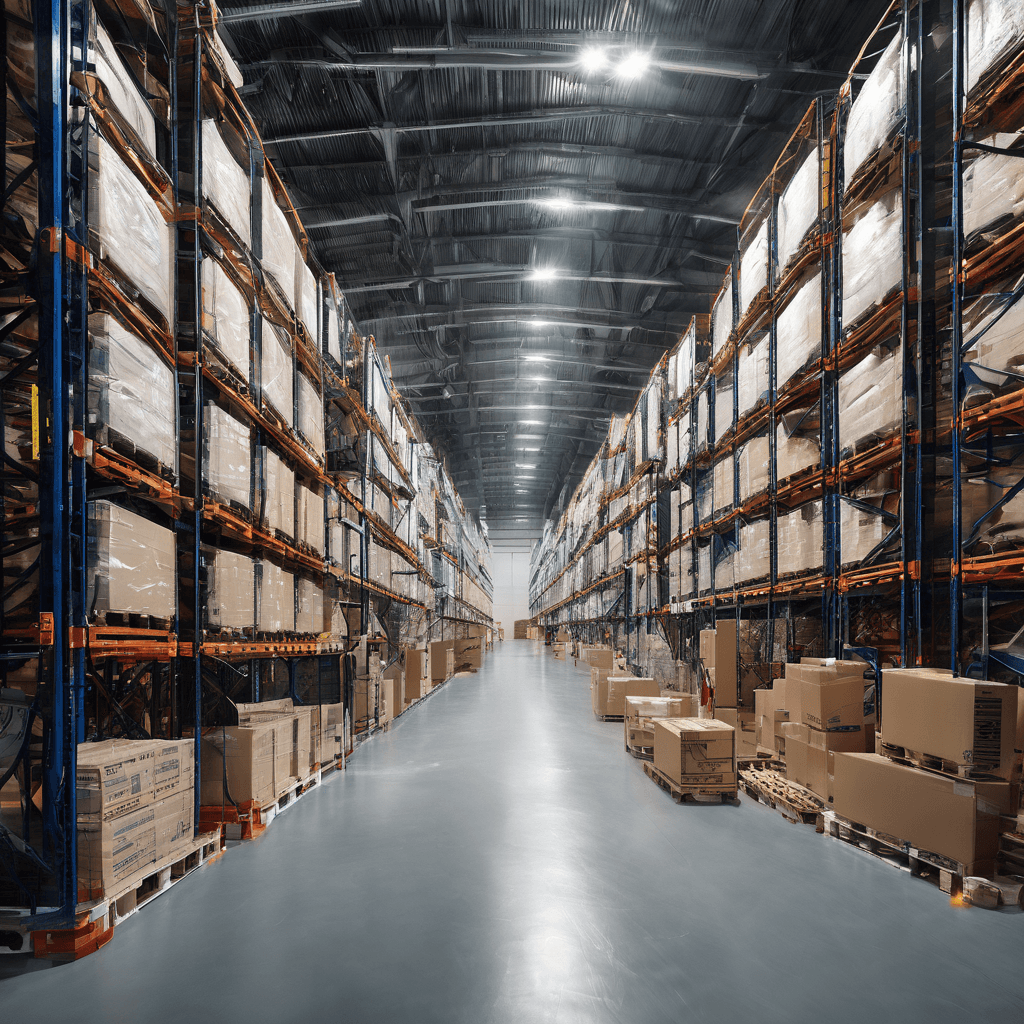
Poland’s warehouses are bursting at the seams. With over 26 million square meters of modern logistics space now operational, the market is booming. Yet, securing the right location and partner feels like a high-stakes gamble. Imagine launching a new product line for the EU, only to have it stuck in a congested facility outside Warsaw. Delays cascade, customers complain, and your competitive edge dulls overnight. This isn't just about storage; it's about strategic positioning in Europe's most dynamic crossroads. The real question isn't if you need a Polish logistics hub, but how to navigate its complex landscape to unlock resilience and growth. Let's explore what separates the market leaders from those left waiting at the gate.
Why Poland is a European Supply Chain & Warehousing Hub
Strategically positioned at the heart of Europe, Poland has transformed into an indispensable logistics nexus for companies targeting the continent. Its rise as a premier warehousing hub isn't accidental; it's the result of a powerful combination of geography, economic policy, and sustained infrastructure investment. For businesses, this translates into faster market access, lower operational costs, and a resilient supply chain base.
Strategic Geographic Location
Poland’s prime location is its foundational advantage. Within a single day's drive, warehouses in Poland can serve a market of over 100 million consumers in key regions. Major logistics clusters around cities like Warsaw, Poznań, and Wrocław are perfectly situated for east-west and north-south distribution flows. In practice, this means a truck leaving a Polish fulfillment center can reach Berlin in under three hours, Prague in five, and the Baltic states within a day. This centrality drastically cuts transit times and fuel costs compared to operating from Western Europe, making it a favorite for companies serving the DACH region, Central Europe, and Scandinavia.
Economic and EU Advantages
As a full member of the European Union and the Schengen Area, Poland offers seamless market access. Goods move tariff-free across the EU's single market, and the absence of internal border checks with Schengen neighbors streamlines road freight. This legal and economic integration eliminates a mountain of red tape that can still hinder operations elsewhere. Coupled with this is a significant cost advantage. While wages are rising, operational expenses remain highly competitive.
| Cost Factor | Poland (Approx.) | Western Europe (e.g., Germany) |
|---|---|---|
| Average Warehouse Rent (Prime) | €4.0 - €5.5 / sqm/month | €6.5 - €9.0+ / sqm/month |
| Logistics Labor Cost | €10 - €15 / hour | €18 - €25+ / hour |
| Utilities & Services | Generally 20-30% lower | Benchmark |
Robust Infrastructure Development
Poland’s infrastructure has seen massive upgrades, funded by both EU cohesion funds and national investment. The crucial A2 (Berlin–Warsaw) and A4 (German–Ukrainian border) motorways form the backbone of road transport. Rail and intermodal connections are expanding rapidly, with key terminals in Małaszewicze (Europe’s busiest eastern rail gateway) and Sławków enhancing multimodal options. The game-changing project on the horizon is the Central Communication Port (CPK), a planned integrated air, rail, and road hub near Warsaw set to solidify Poland’s role as a global logistics player by the 2030s. This network is supported by a large, skilled workforce—young, well-educated, and often multilingual—readily available in urban centers and near major logistics parks. For a deeper look at logistics trends, you can explore our Blog.
Key Warehousing Hubs and Logistics Clusters in Poland
Poland's strategic position in Europe is amplified by its network of highly developed logistics hubs, each with distinct advantages. Choosing the right location depends heavily on your target markets, supply chain structure, and industry sector.
Central Poland (Łódź, Warsaw)
This region is the undisputed logistics heart of Poland. Its primary strength is unmatched multimodal connectivity, sitting at the crossroads of the country's road and rail networks. The A2 motorway (East-West) and the A1 (North-South) intersect here, providing rapid access to all borders. Łódź, in particular, has transformed into a mega-hub, home to Panattoni's massive parks like the Panattoni Park Łódź Central (over 200,000 sqm) and Panattoni Park Stryków near Warsaw. These facilities serve as ideal national and regional distribution centers (NDCs/RDCs) for pan-European operations, with delivery trucks reaching over 90% of the Polish population within a day. In practice, this area is saturated with e-commerce, retail, and general logistics tenants.
Southwest Poland (Wrocław, Upper Silesia)
Defined by its proximity to Germany and the Czech Republic, this cluster is the industrial and automotive powerhouse of the country. The A4 motorway forms its backbone, linking major manufacturing centers. Wrocław offers a balanced mix of manufacturing and distribution, while the dense, populous Katowice region (Upper Silesia) is a traditional industrial base now modernizing its logistics stock. Key drivers here include:
- Serving as a supply chain extension for German and Czech automotive giants.
- Supporting local manufacturing with just-in-time (JIT) and production-linked warehousing.
- High demand for modern, big-box facilities, with vacancy rates often among the nation's lowest.
Western Poland (Poznań) and the Tri-City
These two hubs serve very different, but equally critical, logistics functions.
Western Poland, centered on Poznań, is a major transit corridor on the shortest land route from Berlin into Poland and beyond. It's a premier location for companies serving the German market and for cross-docking operations. The warehouse market is mature and competitive.
The Tri-City (Gdańsk, Gdynia, Sopot) is Poland's maritime gateway. It handles the majority of the country's container traffic and is crucial for intermodal logistics. Deep-water ports like DCT Gdańsk connect Poland to global shipping lanes, while extensive rail connections distribute goods inland. This hub is essential for businesses importing from Asia or exporting via the Baltic Sea.
| Hub | Primary Advantage | Key Industries Served | Sample Major Developer Project |
|---|---|---|---|
| Central (Łódź) | Central location & connectivity | E-commerce, Retail, FMCG | Panattoni Park Łódź Central |
| Southwest (Wrocław) | Proximity to DACH & manufacturing | Automotive, Industrial, Manufacturing | Panattoni Park Wrocław Logistics South |
| Tri-City (Gdańsk) | Maritime & intermodal access | Maritime, Import/Export, Chemicals | Panattoni Park Gdańsk |
Meanwhile, Eastern Poland (Lublin, Rzeszów) is gaining attention as a growing frontier. While infrastructure is still developing compared to western hubs, its potential for future trade with Ukraine and other Eastern markets is significant, with new investments gradually appearing. For more insights on regional trends, check out our Blog.
Types of Warehousing and Logistics Services Available
Poland's warehousing landscape has evolved far beyond simple storage sheds. Today, it offers a sophisticated, tiered ecosystem of facilities and services designed to meet the complex demands of modern supply chains. The market is characterized by high-quality, sustainable infrastructure and deep operational expertise, making it a central logistics hub for Europe.
Modern Logistics Parks & Big-Box Warehouses
The backbone of the market is its modern logistics parks, concentrated around major cities like Warsaw, Poznań, Wrocław, and the Central Poland (Łódź) region. These are not just warehouses; they are integrated business parks with excellent transport links. Developers are heavily investing in state-of-the-art, BREEAM-certified facilities, a clear sign of the focus on sustainability and energy efficiency. High-bay storage systems, sometimes exceeding 25 meters in height, maximize cubic capacity and density. According to local industry reports, the total modern warehouse stock in Poland surpassed 30 million sqm in 2024, with a significant portion comprising these big-box, speculatively developed units ready for immediate occupation.
Specialized Storage Solutions
For products with specific requirements, Poland provides robust specialized storage. This includes:
- Cold Chain Logistics: A network of facilities with temperature-controlled environments, crucial for the FMCG and pharmaceutical sectors.
- Hazardous Materials (HAZMAT) Warehousing: Secure, compliant storage for chemicals and flammable goods, adhering to strict EU and national regulations.
- E-commerce Fulfillment Centers: Designed for high-velocity order processing, these facilities feature extensive picking zones and are often located near urban centers for last-mile efficiency.
Value-Added Services (VAS)
The real competitive edge often lies in the comprehensive suite of Value-Added Services offered by 3PL providers. These services transform a static warehouse into a dynamic extension of your production or sales line. Common VAS include:
- Kitting & Light Assembly: Combining components into ready-to-sell kits or performing final product customization.
- Labeling & Packaging: Applying country-specific labels, retail-ready packaging, and promotional materials.
- Returns Management (Reverse Logistics): Handling product returns, inspections, refurbishments, and restocking, which is a critical capability for e-commerce businesses.
Flexibility is a key selling point. Companies can opt for Built-to-Suit (BTS) facilities designed to their exact specifications, lease space in speculative developments, or engage in short-term contracts for seasonal needs. Underpinning all this is advanced technology. The integration of Warehouse Management Systems (WMS) is now standard, and automation—from automated guided vehicles (AGVs) to robotic picking systems—is increasingly common in larger hubs to ensure pinpoint inventory control and operational speed. In practice, the level of automation can vary significantly depending on the tenant's volume and investment.
Critical Factors for Choosing a Warehouse Partner in Poland
Selecting the right warehouse partner in Poland is a strategic decision that can make or break your supply chain efficiency. Getting it right means balancing hard logistics data with the softer, but equally critical, factors of partnership and future-proofing.
Location and Connectivity Analysis
This is your non-negotiable starting point. Proximity to your end customers directly impacts delivery speed and cost. For serving the DACH region or Scandinavia, warehouses in Western Poland (e.g., near Wrocław or Poznań) offer a clear advantage. Serving Central and Eastern Europe often makes locations around Łódź or Upper Silesia more strategic. Crucially, you need direct access to Poland’s dense network of motorways (like the A2 and A4) and, for heavier flows, rail sidings. A site just 5km from a motorway interchange is far superior to one 15km away, a difference that adds up fast in daily fuel and driver hours. Don't forget suppliers—being close to your manufacturing base in Poland can streamline inbound logistics dramatically.
Technical Specifications and Compliance
The building itself must fit your operation today and tomorrow. Key specs to scrutinize include:
| Specification | Typical Modern Standard | Why It Matters |
|---|---|---|
| Clear Height | 12m or more | Maximizes vertical storage, crucial for high-bay racking. |
| Floor Load | > 5 tons/m² | Supports heavy palletized goods and high-density storage systems. |
| Dock Doors | Ratio of 1 door per 1,000 m² | Reduces truck waiting times, especially during peak seasons. |
Beyond these, modern tenants increasingly demand strong ESG credentials—look for BREEAM or LEED certifications, LED lighting, and EV charging points. Advanced fire safety systems, like ESFR sprinklers, are a must for high-value or sensitive inventory.
Partner Reputation and Financial Stability
A great building run by a shaky operator is a major risk. Dig into the developer or logistics operator’s portfolio. Have they delivered similar projects on time? Do they have long-standing clients? Financial health is paramount for ensuring the partner can invest in maintenance and upgrades over your lease term, which could be 5-10 years. In practice, a reputable local player with a solid track record often provides more responsive service than an international giant stretched thin.
Finally, two often-underestimated factors are scalability and people. Can you easily expand your space within the same park if you grow? Is the contract flexible enough for seasonal peaks? And critically, can the local labor market support your needs? Areas with high competition for warehouse workers might struggle with staff turnover, impacting your operation. Checking with local Blog resources or agencies for regional wage and availability trends is a smart move.
Trends and Future Outlook for Polish Warehousing
The Polish warehousing sector is rapidly evolving, driven by both global pressures and local innovation. While the market has matured, its future is anything but static, shaped by a potent mix of technology, sustainability demands, and shifting global trade patterns. Companies that adapt to these converging trends will secure a significant competitive edge in the Central European logistics landscape.
Technology and Automation Adoption
Gone are the days of purely manual storage. To tackle labor shortages and skyrocketing efficiency demands, operators are investing heavily in smart solutions. Robotics, particularly automated guided vehicles (AGVs) and robotic picking arms, are becoming commonplace in large distribution centers, slashing processing times. Meanwhile, IoT sensors provide real-time visibility on everything from location to temperature, virtually eliminating lost pallets. Perhaps the biggest game-changer is AI, crunching vast datasets for hyper-accurate demand forecasting and dynamic route optimization. This tech stack isn't just futuristic; it's a practical response to the need for speed and precision, especially for e-commerce giants.
Sustainability (ESG) as a Standard
Green is no longer a niche selling point—it's a market expectation and often a lease requirement. Developers are racing to obtain certifications like BREEAM or LEED, with sustainable construction materials now the baseline. On-site energy generation, primarily through extensive rooftop solar panel installations, is standard practice for new facilities. You'll also find EV charging stations in most new park designs and sophisticated waste management systems. Tenants, particularly international brands, actively seek these features to meet their own ESG targets, making sustainable warehousing a critical factor in investment decisions.
Nearshoring and Supply Chain Resilience
Geopolitical tensions and pandemic-era disruptions have fundamentally altered sourcing strategies. Poland is a prime beneficiary of the massive nearshoring trend, where companies relocate production and storage from Asia to be closer to the EU market. Its central location, strong infrastructure, and skilled workforce make it an ideal hub. This shift isn't just about risk mitigation; it translates to dramatically shorter lead times—often from weeks to just days—and greater flexibility. The demand for manufacturing and logistics space from companies seeking this resilience continues to fuel record development, particularly in regions like Upper Silesia and Central Poland.
Supporting these macro-trends are two key physical adaptations. In land-constrained urban hubs like Warsaw and Poznań, multi-story warehouses are rising to meet demand, a concept once rare in Poland. Concurrently, the e-commerce boom necessitates a dense network of last-mile urban logistics centers, smaller facilities located within city limits to enable same-day or next-day delivery. These compact hubs are becoming as crucial as the massive regional distribution centers, completing the modern supply chain puzzle. For more insights on market dynamics, check our Blog.
Conclusion: Strategic Imperatives for Success
Poland's position as a central logistics hub isn't just holding steady—it's becoming more entrenched. For companies looking to optimize their European supply chain, a strategic approach to warehousing here is no longer optional; it's a core component of resilience and efficiency.
Poland's Enduring Competitive Edge
The fundamentals remain compelling. Poland sits at the literal crossroads of Europe, with direct access to major markets. This geographic advantage is backed by a cost profile that, while rising, still offers significant savings compared to Western Europe. The real game-changer, however, has been the relentless infrastructure development. Modern warehouse stock now exceeds 30 million sqm, with key markets like Warsaw, Central Poland (Łódź), and Upper Silesia offering state-of-the-art facilities. Major road and rail projects, often co-funded by the EU, continuously improve connectivity. In practice, this means your goods can reach Berlin in under 5 hours from western Poland or serve the huge consumer markets of Central and Eastern Europe with ease.
Making the Right Location Decision
Choosing a city based solely on the lowest price per square meter is a common pitfall. The strategic choice depends entirely on your primary supply chain flows. Are you serving the DACH region, the Baltic states, or the domestic Polish market? Each corridor has an optimal hub.
| Primary Market | Recommended Polish Hub | Key Advantage |
|---|---|---|
| Germany / Western Europe | Western Poland (e.g., Poznań, Wrocław) | Proximity to German border, fastest transit west |
| Poland / CEE | Central Poland (Łódź) or Warsaw | Demographic center, excellent domestic distribution |
| Nordic & Baltic States | Tri-City (Gdańsk) | Direct port access, Baltic shipping routes |
Building a Future-Proof Partnership
Your warehousing partner is an extension of your operation. Look beyond the four walls. Scalability is critical—can they flex space up or down as your business evolves? Technology integration, from a basic WMS to advanced automation, directly impacts visibility and accuracy. Shared values, particularly around ESG (Environmental, Social, and Governance), are increasingly non-negotiable. This means partnering with developers who invest in solar panels, EV charging, and BREEAM-certified buildings. Staying ahead of regulations, like those stemming from the EU Green Deal, is also part of a forward-thinking partnership; it mitigates future risk and aligns with consumer expectations.
Ultimately, a well-planned warehousing strategy in Poland acts as a powerful lever for your entire European network. It cuts costs, slashes transit times, and builds the agility needed to handle market disruptions. For deeper insights on navigating the local landscape, explore our Blog. The opportunity is clear, but capturing its full value requires a deliberate, informed approach.
Frequently Asked Questions (FAQ)
What are the main advantages of using Poland for warehousing?
Poland's main advantages are its central European location and cost-effectiveness. It's a perfect hub for reaching both Western and Eastern EU markets quickly. Labor and operational costs are lower than in Western Europe, saving you money. The infrastructure is modern, with great road and rail connections to major ports like Gdańsk. For example, you can reach Berlin in under 3 hours by truck from western Poland. It's a smart, practical base to streamline your supply chain without breaking the bank.
Which city in Poland is best for warehousing?
The "best" city really depends on your target market. For pan-European distribution, Łódź is a top choice because it's centrally located with great highway and rail links to Germany and beyond. If you're focusing on Western Europe, Poznań or Wrocław are fantastic gateways to Germany. For serving southern Poland and Czech/Slovak markets, the Katowice region is ideal. For a balanced, central hub with a massive labor pool and infrastructure, the area around Warsaw is unbeatable. Start by mapping your primary shipping routes.
How much does warehousing cost in Poland?
Warehousing costs in Poland are significantly lower than in Western Europe. For a modern warehouse, you might pay around €3–4.5 per sqm per month in a major logistics hub. This often includes the base rent and basic services. On top of that, expect service charges (utilities, security) of €0.5–1.5 per sqm. Labor is a big saving, with gross monthly wages for warehouse staff around €1,200–1,600, roughly half of German rates. For a clear picture, get quotes from a few local operators, as location and building specs greatly affect the final price.
What is the process for leasing a warehouse in Poland?
Here’s a practical rundown. First, define your needs: size, location (e.g., near Poznań for logistics hubs), and budget. Use a local real estate agent—they know the market and speak the language. They’ll help find options and negotiate. Legally, you’ll need a Polish company or a branch to sign a lease. A lawyer should review the contract, focusing on service charges, maintenance duties, and lease length (typically 3-5 years). Finally, factor in a security deposit, usually 3-6 months’ rent. It’s a process, but a good local partner makes it smooth.
How is technology changing warehousing in Poland?
Technology is rapidly modernizing Polish warehouses. Automation, like automated guided vehicles (AGVs) and robotic picking systems, is becoming common to tackle labor shortages and boost speed. For example, Prologis reports that over 30% of new large facilities now plan for some automation. Alongside this, cloud-based Warehouse Management Systems (WMS) and IoT sensors are standard for real-time tracking, improving inventory accuracy. This shift means companies can handle more e-commerce orders faster and with fewer errors. If you're looking at space, prioritizing a warehouse with a modern WMS and high-speed internet is now a must.
Related Articles
Understanding the Cost of Warehouse Services in Poland
Navigating warehouse costs in Poland feels like a maze. You're not alone. With e-commerce booming, logistics space is at a premium. Prime warehouse vacancy r...
Central Europe Warehouse Hub: A Strategic Logistics Guide
Struggling with supply chain bottlenecks and soaring costs? You're not alone. The logistics map of Europe is being redrawn, with Central Europe emerging as t...
European Warehouse Services in Poland: Your Strategic Hub
Struggling with warehouse delays and spiraling logistics costs? You're not alone. Poland has rapidly become the beating heart of European distribution, with ...