
Fulfillment Center Poland: A Strategic Hub for European E-commerce
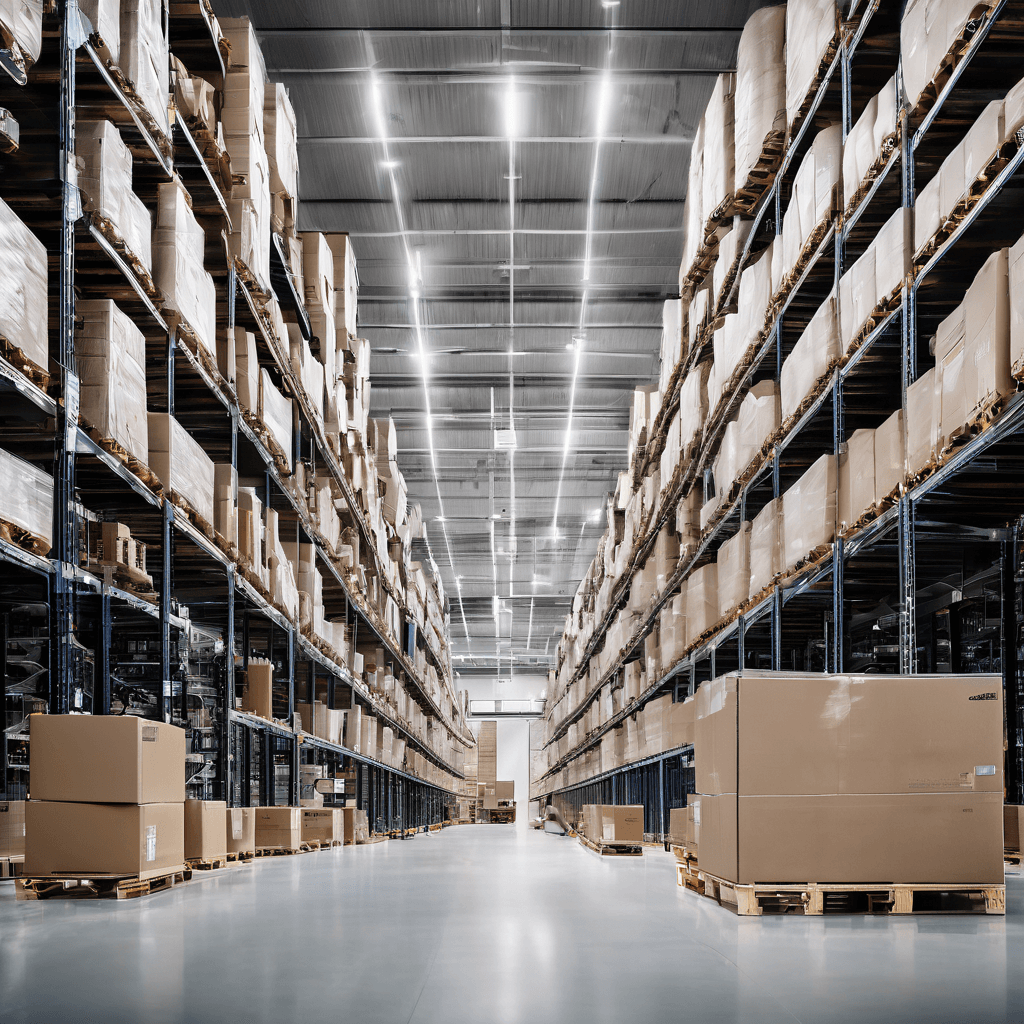
Struggling to balance speed and cost in your European supply chain? You're not alone. Poland has rapidly emerged as the beating heart of Central European logistics, with over 20 million square meters of modern warehouse space now operational. Imagine a major e-commerce brand slashing delivery times to German customers by two full days, simply by shifting its hub from Western Europe to Wrocław. This strategic pivot isn't just about geography; it's about accessing a dynamic talent pool and unbeatable cost efficiency without sacrificing EU market access. The real question is no longer if you should consider Poland, but precisely how its unique advantages can be configured to solve your specific distribution challenges. Let's examine the blueprint.
Why Poland is a Strategic E-commerce Fulfillment Hub
Strategically positioned in Central Europe, Poland has emerged as a powerhouse for e-commerce fulfillment, offering a compelling blend of location, cost efficiency, and modern infrastructure. For brands targeting the European market, establishing logistics here translates into a direct competitive edge.
Geographic Advantage at the Heart of Europe
Poland’s central coordinates are its biggest logistical selling point. A fulfillment center located in Poland, particularly in the western or central regions, places inventory within a 2-4 day delivery window to hundreds of millions of consumers. Major markets like Germany, France, and the Benelux countries are easily accessible, while the growing economies of Eastern Europe are right next door. This central hub model drastically cuts down last-mile delivery times and costs compared to shipping from peripheral locations.
Cost-Effective Operations and Skilled Workforce
Operating costs remain a decisive factor, and Poland shines here. When stacked against Western European counterparts, savings on labor and warehouse space are significant—often ranging between 20% to 40% according to local industry reports. But it’s not just about lower costs; it’s about skilled value. The country produces a high number of logistics, engineering, and language graduates annually. In practice, this means fulfillment centers can staff teams that are not only operationally proficient but also linguistically adaptable, smoothly handling customer service in German, English, and Slavic languages.
Robust Infrastructure and Logistics Networks
Poland’s infrastructure has seen transformative investment, fueled by EU funds and foreign direct investment. Modern, high-ceiling warehouse facilities are plentiful, especially along the A2 and A4 motorway corridors. The extensive and growing road and rail network is complemented by major international cargo airports.
| Infrastructure Asset | Key Example | Primary Role in Fulfillment |
|---|---|---|
| International Airports | Warsaw (WAW), Kraków (KRK), Wrocław (WRO) | Express parcel handling, air freight for high-value goods |
| Road Networks | A2 (East-West), A4 (North-South) | Primary ground transport arteries for EU-wide trucking |
| Rail Freight | CL Cargo, PKP Cargo | Cost-effective bulk transport and intermodal solutions |
This ecosystem, combined with strong economic stability and EU membership, creates a predictable environment for long-term logistics investment. Brands leveraging Polish fulfillment find they can scale operations reliably while maintaining high service levels across the continent. For more insights on optimizing European logistics, explore our Blog.
Core Services of a Modern Polish Fulfillment Center
Modern fulfillment centers in Poland have evolved far beyond simple storage sheds. They act as dynamic, tech-driven extensions of your business, handling the entire operational backbone of e-commerce. This allows companies, from scaling startups to established brands, to focus on product development and marketing while experts manage the logistics chaos.
Warehousing and Inventory Management
The foundation is secure, scalable storage. Modern facilities offer far more than just shelf space. You'll find climate-controlled zones for sensitive items like electronics or cosmetics, dedicated bulk storage areas, and secure cages for high-value goods. The real magic, though, happens in the software. Integration with a robust Warehouse Management System (WMS) is non-negotiable. This provides real-time, 99.9%+ inventory accuracy, tracks stock levels across multiple sales channels, and automates replenishment alerts. In practice, this means you can see exactly what you have, where it is, and when to reorder, all from a single dashboard.
Order Processing and Last-Mile Delivery
When an order hits, the center springs into action. Efficient pick-and-pack processes, often guided by voice or light-directed systems, get items from shelf to dispatch rapidly. Custom packaging and kitting services let you maintain brand presence in the box. Then comes shipping. Polish hubs are deeply integrated with major carriers, creating a competitive landscape that benefits you. A typical center's integration matrix looks something like this:
| Courier Service | Common Use Case | Speed (Domestic PL) |
|---|---|---|
| InPost | Parcel lockers, cost-effective e-commerce | 1-2 business days |
| DPD | Reliable home delivery, cross-border | 1-3 business days |
| DHL | Express international, premium B2B | Next-day EU possible |
This network, combined with local postal services, allows for optimized last-mile delivery tailored to your customer's preference and your budget.
Value-Added Services for Brand Growth
The top-tier centers provide services that directly fuel growth. Returns management (reverse logistics) is handled professionally—inspecting, restocking, or processing refunds to turn a cost center into a recovery opportunity. Other common services include:
- Product labeling and re-labeling for compliance or market entry.
- Quality control checks before shipment to reduce errors.
- Subscription box assembly, which can be a complex monthly operation handled seamlessly.
These services transform a logistics partner into a growth enabler. By leveraging Poland's strategic location and these advanced capabilities, brands can reliably serve the booming Central European market, which according to Eurostat, saw e-commerce growth of over 15% in recent years. For more insights on navigating this landscape, check out our Blog.
Key Benefits of Outsourcing to a Polish 3PL
Outsourcing your logistics to a third-party logistics (3PL) provider in Poland isn't just about moving boxes; it's a strategic lever for transforming your business model. The benefits extend far beyond simple storage, offering a direct path to greater agility, reduced overhead, and a stronger competitive position in the European market.
Scalability and Flexibility for Business Growth
The ability to scale operations on demand is a game-changer. Instead of being locked into a five-year warehouse lease for space you might not need, a Polish 3PL allows you to adjust storage volume and staffing based on real-time sales data. This is perfect for handling seasonal spikes, launching new products, or testing the European market without massive upfront risk. You can ramp up from handling 500 to 5,000 orders per day almost overnight, with the 3PL managing all the labor, training, and peak-time logistics. In practice, this flexibility lets you experiment and grow at your own pace.
Reduced Operational Costs and Capital Expenditure
This model converts fixed costs into variable ones. You eliminate major capital expenditures (CapEx) like warehouse racking systems, forklifts, and warehouse management software (WMS) licenses. Instead, you pay a predictable fee per item stored and per order processed. This frees up significant capital—often tens of thousands of euros—that can be reinvested into marketing, product development, or other core business areas. A typical cost breakdown for using a 3PL versus an owned warehouse might look like this:
| Cost Factor | In-House Warehouse | 3PL Partnership |
|---|---|---|
| Monthly Base Rent | Fixed, e.g., €4,000 | Variable, based on pallet positions used |
| Labor & Management | Salaries, benefits, recruitment | Included in pick/pack fees |
| Technology (WMS) | High upfront license/implementation | Leveraged as part of service |
| Carrier Contracts | Limited volume, higher rates | Bulk discounts from 3PL's network |
Enhanced Customer Experience and Market Reach
Poland's central European location is a massive advantage for EU-wide distribution. Shipping from a Polish fulfillment center can slash last-mile delivery times and costs to major markets like Germany, France, and the Czech Republic. This means you can offer customers faster, cheaper delivery options—a key driver for conversion and satisfaction. According to Eurostat, over 90% of online shoppers in the EU consider delivery cost and speed critical. Furthermore, using a local Polish address and invoicing builds immediate trust with consumers in the booming Central and Eastern European (CEE) region, a move that's commonly seen as essential for building brand loyalty. You effectively gain a local presence without the legal and administrative complexity of establishing your own entity.
By leveraging a 3PL's established infrastructure and expertise, you're not just outsourcing logistics; you're acquiring a powerful, scalable extension of your own team. For more insights on navigating the European e-commerce landscape, explore our Blog.
Choosing the Right Fulfillment Partner in Poland
Selecting a fulfillment partner in Poland is a strategic decision that directly impacts customer satisfaction and your bottom line. A rushed choice can lead to hidden costs and logistical headaches, so a methodical evaluation is your best bet.
Defining Your Business Requirements and Goals
Start by looking inward. Your product's characteristics dictate warehouse needs and costs. Bulky items require more space, fragile goods need specialized packing, and high-seasonality products demand scalable labor. Be brutally honest about your current and projected order volumes. A provider perfect for 500 monthly orders might struggle with 5,000. Also, confirm their network aligns with your target markets. A partner with a strong EU focus is ideal for selling within the bloc, while those with global parcel expertise are better for worldwide shipping.
Evaluating Technology Integration and Transparency
Your warehouse management system (WMS) must be an invisible, efficient bridge to your store. Seamless integration with platforms like Shopify, Magento, or WooCommerce is non-negotiable—it automates order flow and inventory sync. Beyond connection, demand transparency. You need a real-time dashboard showing stock levels, order status, and key performance indicators. Clear SLAs on picking accuracy (e.g., 99.9%) and shipping times set expectations. Proactive communication about delays or issues is what separates a true partner from a basic vendor.
| Integration Feature | Basic Provider | Advanced Partner |
|---|---|---|
| Platform Connectors | Manual uploads or limited plugins | Native, automated integrations for major platforms |
| Inventory Updates | Batch updates, several times a day | Real-time sync across all sales channels |
| Reporting Depth | Standard pick/pack reports | Customizable dashboards with COGS, shipping analytics |
Assessing Service Specialization and Client References
Industry-specific experience matters. A fulfillment center adept at handling cosmetics will have processes for MSDS sheets and lot tracking, while an electronics specialist will be savvy about battery regulations. Don't just take their word for it. Ask for case studies from clients in your sector and request testimonials. Look into their operational history and financial stability; a well-established player with a track record, possibly backed by organizations like PAIH, offers more security. In practice, a provider that openly discusses past challenges and solutions is often more reliable than one promising perfection.
Navigating Customs and VAT for International Sellers
Choosing Poland as your EU fulfillment hub unlocks massive market access, but getting your goods across borders smoothly hinges on mastering customs and VAT. Getting it wrong means delays, fines, and unhappy customers. Getting it right streamlines your entire European operation.
Understanding Intra-EU Trade and VAT Obligations
When you store inventory in a Polish warehouse and sell to customers across the EU, you’re engaging in intra-community trade. This triggers specific VAT obligations. The critical threshold is the €10,000 EU-wide distance selling threshold. Exceed it, and you must register for VAT in your customer’s country—or use the simplification scheme, the Import One-Stop Shop (IOSS).
- IOSS is your friend for cross-border sales under €150. It lets you collect VAT at the point of sale and remit it in a single quarterly return to one EU member state.
- A major advantage of a Polish fulfillment center is its potential to act as your VAT ‘fixed establishment’. This centralizes your VAT liability in Poland, sparing you from registering in multiple other countries until you hit their individual thresholds. In practice, this simplifies reporting and can cut down on local representative fees.
| Compliance Scenario | Key Mechanism | Primary Benefit |
|---|---|---|
| Sales within Poland | Local Polish VAT return | Standard compliance for the local market. |
| EU-wide sales under €150/order | IOSS scheme | Single VAT return for all eligible EU sales. |
| EU sales exceeding country thresholds | Multi-country VAT registration or Polish ‘fixed establishment’ | A Polish 3PL as your base can consolidate obligations. |
Managing Imports from Outside the European Union
Bringing goods from, say, Asia or the US into your Polish warehouse is a customs procedure, not just a freight move. Your chosen 3PL must be adept at handling clearance. They’ll typically act as your declarant, but you remain legally responsible for providing accurate data.
Two documents are king here: the Commercial Invoice and the Packing List. The most common snag is incorrect HS code classification. An error here can lead to wrong duty calculations, seizures, and weeks of delay. For example, misclassifying a smart gadget as a simple electronic component could swing the duty rate by 10% or more. Always work with your supplier and a customs broker to nail this down. According to local industry reports, clearance delays in Poland often stem from inconsistent origin documentation or undervalued goods.
Partner with a fulfillment provider that either has in-house VAT/compliance experts or strong partnerships with local fiscal representatives. They’ll guide you on securing an EORI number and managing customs guarantees. This support is non-negotiable for scaling smoothly. For more insights on operational best practices, explore our Blog.
Future Trends Shaping Fulfillment in Poland
The landscape of fulfillment in Poland isn't just growing; it's rapidly evolving, driven by technology and shifting market demands. Companies are future-proofing their operations to stay ahead, transforming Polish logistics hubs into some of the most advanced in Europe.
Automation and Robotics for Enhanced Efficiency
Gone are the days of purely manual picking. To tackle labor shortages and skyrocketing order volumes, Polish fulfillment centers are deploying Autonomous Mobile Robots (AMRs) and sophisticated automated sorting systems at an impressive pace. These aren't just futuristic concepts—they're practical solutions live in warehouses today. AMRs work collaboratively with human staff, fetching shelves and transporting goods, which can boost picking productivity by 20-40% depending on the setup. Major developers are now designing built-to-suit facilities with higher ceilings and reinforced floors specifically to accommodate this automation, a clear sign this trend is here to stay.
Sustainability as a Competitive Advantage
Eco-consciousness is now a core business requirement, not a niche concern. Brands and their customers are pushing for green logistics, and Polish centers are responding. The shift is visible across the chain:
- A strong move away from plastic void fill to recycled paper and cardboard.
- Offering carbon-neutral shipping options, often calculated and offset via integrated software.
- Investing in energy-efficient facilities featuring LED lighting, solar panels, and smart building management systems. In practice, leading 3PLs are marketing their green credentials heavily, understanding that sustainability directly influences B2B and B2C purchasing decisions.
The Rise of Cross-Border and Omnichannel Fulfillment
Poland’s strategic location is being leveraged in new ways. Following the war in Ukraine, Polish hubs have become critical logistics gateways for aid and, increasingly, for commercial goods entering the recovering Ukrainian market. This cross-border expertise is expanding to serve other growing Eastern European e-commerce markets. Simultaneously, to meet local demand, omnichannel strategies are taking root. Retailers are integrating their physical stores with online backends, enabling services like BOPIS (Buy Online, Pick Up In-Store) and using stores as mini-fulfillment centers for ship-from-store. This slashes delivery times and costs, a key advantage in competitive urban markets.
| Future Trend | Key Driver | Example Impact in Poland |
|---|---|---|
| Automation & Robotics | Labor optimization, accuracy demands | AMR deployments increasing by 30% annually (local industry reports) |
| Sustainable Operations | Consumer/Brand pressure, ESG goals | New facilities targeting BREEAM Excellent/Outstanding certifications |
| Cross-Border Expansion | Geopolitical shift, market growth | Polish centers now handling +15% of EU-Ukraine e-commerce logistics (estimates) |
This activity is fueled by massive continued investment in logistics real estate. Developers are racing to build modern, scalable facilities in key hubs like Central Poland (Łódź), Upper Silesia, and near major cities like Warsaw, Poznań, and Wrocław. The result is a market that’s not just keeping up with European standards but is actively setting new ones for efficiency and resilience. For more insights on the local logistics scene, check out our Blog.
Conclusion
Poland has firmly established itself as a powerhouse for European logistics, offering a blend of advantages that are tough to beat. For businesses aiming to scale in Europe, the decision to locate fulfillment operations here isn't just about logistics—it's a strategic growth move.
Poland: A Compelling Choice for European Growth
The country's appeal boils down to a powerful trio. Its central location within the EU provides unparalleled access to major consumer markets, often enabling 2-4 day delivery to most European capitals. This geographic edge is matched by cost efficiency, where warehouse rents and labor costs remain highly competitive compared to Western Europe. Crucially, this doesn't come at the expense of quality. Poland boasts a modern, rapidly expanding infrastructure network and a skilled, tech-adaptable workforce. The numbers speak for themselves, as seen in the consistent growth of the logistics sector, supported by data from PAIH and local industry reports.
| Factor | Poland's Advantage | Typical Western Europe Comparison |
|---|---|---|
| Warehouse Space Cost | €4-6/sqm/month | Often €8-12/sqm/month |
| Labor Cost | Competitive, with high skill level | Significantly higher base rates |
| Market Reach | 500 million+ consumers within a 1000km radius | More limited regional reach from peripheral locations |
Partnering with a specialized Polish 3PL transforms these national advantages into direct business benefits. You offload operational complexity—from navigating VAT to managing peak-season staffing—onto experts. This lets you focus on product development and marketing while they handle the intricacies of storage, picking, packing, and last-mile delivery. The result? Faster shipping times, lower operational costs, and a dramatically improved customer experience that drives loyalty and repeat purchases.
Next Steps for Your Business
Success hinges on choosing the right partner. A provider perfect for a high-volume fashion retailer might struggle with a niche electronics brand requiring complex kitting. In practice, you need a 3PL whose capabilities align with your specific needs.
Start your evaluation by clearly defining your requirements:
- Current and projected order volumes.
- Specific product handling needs (e.g., temperature control, high-value goods).
- Target delivery timelines and key markets.
- Required technology integrations (like your e-commerce platform).
Then, engage in detailed discussions with shortlisted providers. Ask about their real-world scalability during Black Friday, their damage rate metrics, and how they handle returns—a critical aspect of customer satisfaction. By taking these steps, you leverage Poland's strengths to build a resilient, scalable, and customer-centric supply chain, positioning your business for sustained growth across the European continent. For more insights, explore our Blog.
Frequently Asked Questions (FAQ)
What are the main advantages of using a fulfillment center in Poland over Germany?
The biggest advantage is cost. Poland offers significantly lower warehouse and labor expenses—often 20-30% cheaper than Germany. While Germany is central, Poland is a fantastic gateway to both Western Europe and the growing Eastern EU markets. For example, shipping to the Czech Republic or Baltic states is faster and cheaper from Poland. If you're looking to save on operational costs while still reaching the core EU market efficiently, Poland is a very strong, practical choice.
How much does fulfillment in Poland typically cost?
Fulfillment costs in Poland typically break down into three parts. You'll pay a receiving fee to check in your goods (often around €15-€25 per pallet). Monthly storage is usually €5-€12 per pallet. Then, there's a pick & pack fee per order, roughly €1.50-€3. Your final cost really depends on your product size, order volume, and how long items sit in storage. To get the best deal, get quotes from a few centers and clearly share your monthly sales forecast and average order details.
Can a Polish fulfillment center handle returns for my EU customers?
Yes, absolutely. A Polish fulfillment center is a strategic choice for handling EU returns. Its central location means faster and cheaper return shipping for your customers across the EU. A good partner will process returns directly: they inspect the item, update your inventory, and handle restocking or disposal based on your rules. For example, many centers can process returns within 48 hours of receipt, getting sellable items back on your virtual shelf quickly. Just confirm their software gives you clear visibility into each return's status.
Do I need a Polish company or VAT number to use a fulfillment center there?
You don't necessarily need a Polish company to use a fulfillment center there. However, if you store goods in Poland, you'll likely trigger a VAT obligation. This means you'll need a Polish VAT number (which you can register for as a foreign business). For example, if you're an EU seller and your stock in Poland exceeds the distance selling threshold (currently €160,000 annually for Poland), registration is required. The best move is to check directly with the fulfillment center and a tax advisor for your specific situation.
What e-commerce platforms do Polish fulfillment centers integrate with?
Most Polish fulfillment centers integrate with all the major e-commerce platforms. You'll commonly find ready connections for Shopify, Amazon, Magento, WooCommerce, and Allegro (which is huge in Poland). The key is API connectivity, which lets your store and the warehouse sync orders and inventory in real-time. For example, when an order comes through your Shopify store, the fulfillment center gets it instantly and can start packing. Always ask a potential provider for their specific integration list to confirm it matches your tech stack.
Related Articles
Understanding the Cost of Warehouse Services in Poland
Navigating warehouse costs in Poland feels like a maze. You're not alone. With e-commerce booming, logistics space is at a premium. Prime warehouse vacancy r...
Central Europe Warehouse Hub: A Strategic Logistics Guide
Struggling with supply chain bottlenecks and soaring costs? You're not alone. The logistics map of Europe is being redrawn, with Central Europe emerging as t...
European Warehouse Services in Poland: Your Strategic Hub
Struggling with warehouse delays and spiraling logistics costs? You're not alone. Poland has rapidly become the beating heart of European distribution, with ...