
Manufacturing Costs Poland vs Germany 2025: A Strategic Guide
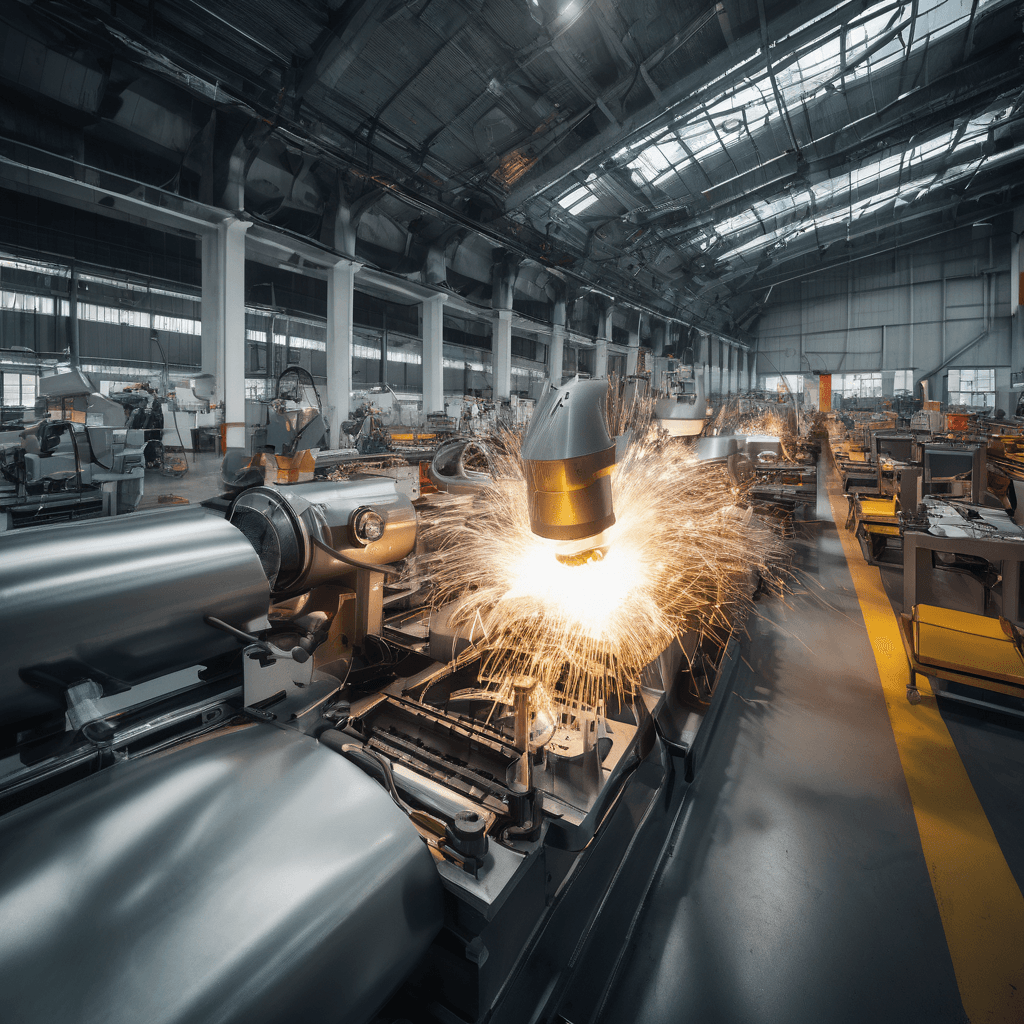
Choosing a European manufacturing base feels like a high-stakes gamble. The gap is narrowing fast. While Germany's reputation for precision is unmatched, Poland's operational costs are projected to be 30-40% lower next year. Consider a mid-sized automotive supplier: rising energy prices in Germany are squeezing margins to the breaking point, while Polish industrial parks offer competitive long-term rates and a deep, skilled talent pool. This isn't about cheap labor anymore; it's about strategic value. The 2025 calculation has fundamentally changed, forcing a complete rethink of the classic cost-quality trade-off. Let's examine the real numbers behind the headlines and see where the smart money is going.
Direct Cost Breakdown: Wages, Materials, and Energy
Looking at the direct costs of making things in Poland and Germany, the story for 2025 is one of converging pressures and distinct strategic advantages. While a gap persists, the dynamics are shifting fast.
Labor Costs: The Evolving Gap
Poland's headline labor cost advantage remains significant, but it's narrowing. Average gross monthly wages in Polish industry are forecast to be around €1,800-€2,100, while German counterparts often exceed €4,000. That's a stark difference. Dig deeper, though, and you see nuances. Skilled technicians and engineers in Poland's western industrial hubs command salaries growing at 8-10% annually, shrinking the differential with Germany for critical roles. Germany's Mindestlohn (minimum wage), expected to reach at least €13 per hour in 2025, pushes up the entire wage floor, especially affecting labor-intensive sectors. Poland doesn't have a national minimum wage at that level, but fierce competition for workers in tight markets like logistics and assembly drives pay up organically. In practice, the unskilled labor cost gap is still wide, but for skilled talent, it's getting tighter every year.
Energy and Utility Costs Post-Crisis
Energy is where the tables turn somewhat. Germany's aggressive renewable transition, while laudable for decarbonization, comes with high grid fees and backup costs, keeping industrial power prices elevated—forecasts suggest €120-€150 per MWh for new contracts in 2025. Poland, historically reliant on coal, is diversifying fast with new nuclear commitments, offshore wind, and LNG imports. This, combined with lower network costs, should see Polish industrial energy prices stabilize below €100 per MWh. For energy-hungry factories in glass, chemicals, or metal processing, that difference is a massive deal. It can literally make or break a facility's profitability.
Raw Material and Component Sourcing
Both nations benefit from the EU single market, eliminating tariffs and simplifying logistics for European-sourced steel, plastics, or sub-components. Sourcing from a German supplier might be faster for a Bavarian plant, but a Polish factory often has lower inbound logistics costs due to cheaper local trucking and warehousing. The real challenge is global sourcing. While Polish ports like Gdańsk are expanding, Germany's established northern ports like Hamburg and Bremerhaven offer greater frequency and capacity for containerized goods from Asia. This can lead to slightly longer lead times or higher final-mile transport costs for Polish manufacturers relying on deep-sea imports. Many firms get around this by building stronger regional supplier networks.
Automation is the great equalizer. Facing high wages, German manufacturers are leaders in advanced robotics, using it to protect their high-value production. Polish companies, aware of their wage inflation, are now investing heavily in automation too—not just to cut labor costs, but to boost quality and consistency to German levels. This trend blurs the old cost-quality trade-off and reshapes the competitive landscape entirely.
Indirect and Operational Costs: The Hidden Factors
When looking beyond direct labor and materials, the indirect cost landscape reveals a more nuanced picture. Poland's advantages are significant but come with operational trade-offs that can catch firms off guard.
Logistics, Infrastructure, and Supply Chain
Poland has invested heavily in its road and rail networks, yet gaps remain compared to Germany's dense, high-capacity infrastructure. Major Polish highways like the A4 are excellent, but last-mile connections to eastern regions or smaller industrial parks can be less reliable. Germany's integrated rail system offers superior connectivity for heavy cargo, a real advantage for industries like automotive. For intra-EU distribution, Polish ports like Gdańsk are growing fast, but northern German ports (Hamburg, Bremerhaven) still handle vastly greater volume and offer more frequent sailings. In practice, lead times from Polish factories to Western European customers can be longer, potentially offsetting some wage savings.
Regulatory Compliance and Administrative Burden
Here, the contrast is stark. Poland's headline 19% Corporate Income Tax rate undercuts Germany's 29-30% significantly. The real kicker? Poland's extensive Special Economic Zones (SEZs) offer tax exemptions of up to 70% for qualifying investments, sometimes for over a decade. The catch? Bureaucracy. While improving, permit processes and customs formalities generally move slower than in Germany's more streamlined system. Navigating local interpretations of EU rules adds a layer of complexity that requires on-the-ground expertise.
Productivity and Workforce Skill Levels
Productivity metrics tell a compelling story. German workers generate significantly higher output per hour worked, a direct result of the renowned dual-education Ausbildung system that creates a steady pipeline of highly skilled technicians. Poland's vocational schools have modernized but can struggle with keeping curricula aligned with fast-moving industry needs. The result? Polish labor is cheaper but often requires more upfront training investment. For highly automated, complex manufacturing, Germany's productivity edge can balance its higher wage bills. For more labor-intensive assembly, Poland's model is fiercely competitive.
Looking ahead to 2025, EU Green Deal regulations will pressure both nations. Germany is pushing ahead aggressively with implementation, which can mean higher upfront costs for energy efficiency and reporting. Poland, more reliant on coal, is on a slower adaptation path, but will face rising carbon costs and potential transitional levies. Finally, real estate costs still favor Poland. Prime industrial space near major cities like Wrocław or Poznań typically leases for 30-50% less than equivalent space in German industrial hubs like Leipzig or Stuttgart, a major saving for large-footprint operations.
Sector-Specific Analysis: Where Each Country Excels
Looking ahead to 2025, the manufacturing landscapes of Poland and Germany are set to complement each other brilliantly. While Germany retains its crown in high-value, complex engineering, Poland has cemented its role as a cost-competitive and increasingly sophisticated production hub. The smart play for many multinationals involves splitting operations to leverage the unique strengths of each location.
Automotive and Advanced Engineering
Germany’s undisputed edge remains in premium automotive R&D, prototyping, and final assembly of high-margin vehicles. Think of the engineering clusters in Stuttgart and Munich, where billions are poured into next-generation drivetrains and autonomous systems. Poland, meanwhile, is a powerhouse for component manufacturing and assembly. It’s not just about lower labor costs, which can be 40-50% below German levels; it’s about a deep, skilled supply chain. The country is now a central player in the electric vehicle revolution, hosting massive investments in EV battery gigafactories from companies like LG Energy Solution and a dense network of suppliers for wiring harnesses and electronics. A car might be designed and prototyped in Germany, but a significant portion of its key components are efficiently built in Poland.
Electronics and Appliance Manufacturing
For high-volume consumer electronics and appliance assembly, Poland’s value proposition is tough to beat. The combination of a technically proficient workforce, strong logistics links to Western Europe, and competitive operational costs makes it a preferred base. Companies like Samsung and LG have run large-scale production facilities there for years, churning out everything from TVs to washing machines. In practice, you see a lot of final assembly and testing happening in Polish plants, while German sites might focus on the development of embedded control systems or premium niche products. The scale and efficiency for volume production simply pencil out better in Poland.
Food Processing and Chemical Industries
Here, the divergence is stark. Germany dominates in capital-intensive, high-precision sectors. Its chemical parks, like those in Ludwigshafen, are global leaders in specialty chemicals and pharmaceuticals, where R&D spend and process patents drive value. Similarly, Germany is a powerhouse for building the high-precision machinery that other factories, including those in Poland, depend on. Poland’s strength lies in food processing and more standardized chemical production, leveraging its strong agricultural sector and cost-effective labor for export to the EU market. A telling case study is the furniture sector: global giants like IKEA or Nobia commonly design high-end product lines and complex fittings in Germany, while sourcing vast volumes of flat-pack furniture and components from their highly efficient, integrated manufacturing networks in Poland. This split perfectly captures the 2025 dynamic.
Strategic Implications and Future Outlook for 2025 and Beyond
The stark labor cost advantage Poland has enjoyed is narrowing, but it remains significant. Expect total manufacturing costs in Poland to be 25-35% lower than in Germany for standard processes in 2025. That gap isn't just about salaries; it's energy, real estate, and overall operational overhead. Germany, on the other hand, justifies its premium through unparalleled engineering depth, a dense supplier network for high-tech components, and a culture of rigorous innovation. The choice isn't just about price tags—it's about what you're building and where your core intellectual property lives.
Choosing Between Cost and Innovation Proximity
Go for Poland when your strategy is cost-driven and volume-focused. Think high-volume assembly, machining, or fabrication of components where margins are tight. Producing 100,000 units of a standardized automotive sub-assembly? Poland's ecosystem is built for that. Choose Germany for products requiring intense collaboration between R&D and production, especially in fields like specialty chemicals, advanced optics, or prototype-scale precision engineering. If your product requires constant tweaking by PhD-level engineers on the shop floor, the higher cost is often non-negotiable.
The Hybrid Manufacturing Model
This is where the real magic happens for many EU-based firms. We're seeing a smart split: keep your R&D, prototyping, and pilot lines in Germany to leverage that innovation cluster, then scale up volume production in Poland. This "nearshoring" within the EU mitigates supply chain risk—it's a lot easier to manage than a factory in Asia. A common setup involves a German headquarters designing a sophisticated sensor system, with the Polish plant manufacturing the housing, cabling, and final integration. You get the best of both worlds without the transcontinental logistics headache.
Long-Term Risks and Opportunities
Geopolitical shifts and the push for supply chain resilience are huge factors. Further EU enlargement eastward could deepen Poland's integration. But watch for wage convergence and potential political friction. On the flip side, digitalization is a game-changer. As Polish factories aggressively adopt Industry 4.0—think AI-driven predictive maintenance and advanced robotics—the pure cost gap will keep shrinking. The differential will shift from "cheap labor" to "smart efficiency." A fully automated Polish smart factory and a German one will have surprisingly similar operational profiles, with location then decided by logistics and talent niches.
So, what's the final word? For most established manufacturers, a rigid either-or choice is outdated. The savvy approach is a portfolio strategy. Use Germany for your innovation lighthouse and most complex products. Use Poland as your competitive volume engine and for supply chain resilience. This dual-track model balances cost, innovation, and risk, future-proofing your operations against whatever 2025 throws at the market.
Conclusion: Making the Data-Driven Decision for 2025
The 2025 manufacturing landscape in Central Europe presents a clear, yet nuanced, strategic choice. Poland continues to deliver compelling direct cost advantages, with average manufacturing labor rates roughly 60-70% lower than Germany's. For high-volume, labor-intensive production—think textile assembly or basic electronic components—these savings are transformative. Germany, on the other hand, counters with its unparalleled ecosystem for innovation, engineering precision, and the inherent brand value of "Made in Germany," a critical asset for premium machinery or automotive components. The "best" location isn't a universal truth; it hinges entirely on your product's complexity, required skill level, and whether your target market values low cost or premium provenance.
In practice, the smartest move is to look beyond simple wage and rent comparisons. A product requiring constant collaboration with R&D teams might flounder in a low-cost but distant Polish plant, while a standardized good could see its margins evaporate under German overhead.
Key Takeaways for Executives
- Cost vs. Value: Poland wins on measurable operational costs; Germany wins on intangible value, innovation speed, and proximity to high-end clients.
- Product is Paramount: Complex, IP-heavy, or low-volume/high-mix production leans German. High-volume, standardized, or labor-driven production leans Polish.
- Supply Chain Reality: "Just-in-time" for the German or Benelux market? A Polish factory near the German border can be a savvy compromise, but logistics for components still need a hard look.
- The Labor Pool Deepens: Poland's talent is climbing the value chain, especially in tech hubs, but Germany's deep bench of veteran engineers and certified specialists remains unique.
Next Steps for Evaluation
- Commission a Granular TCO Analysis: Model everything—labor, logistics, utilities, corporate tax rates (Poland's 19% vs. Germany's ~30%), and even potential costs of quality or communication delays. Don't guess.
- Get on the Ground: Site visits are non-negotiable. Tour shortlisted industrial parks, feel the infrastructure, and talk to potential line managers. The vibe on the ground often reveals what spreadsheets hide.
- Tap Local Expertise: Engage with Poland’s Polish Investment & Trade Agency (PAIH) and Germany’s corresponding federal state agencies. They offer real data on grants, incentives, and can make crucial introductions. Ultimately, framing this as a strict Poland vs. Germany contest misses the bigger picture. For many European industrial giants, the winning strategy for 2025 involves leveraging both: using Polish facilities for cost-efficient volume and German hubs for prototyping, final assembly, and customer-facing innovation. Together, they form a complementary, resilient backbone for European manufacturing.
Frequently Asked Questions (FAQ)
Is manufacturing in Poland still cheaper than in Germany in 2025?
Yes, manufacturing in Poland is generally still cheaper than in Germany in 2025, but the gap is smaller. The main advantage remains labor costs, which can be around 40-50% lower. However, you can't just look at wages. For a true comparison, you need to calculate the total cost for your specific product. Factor in your logistics, energy use, and the productivity of your chosen facility. For a high-automation process with expensive shipping, Germany might be competitive. For labor-intensive work, Poland likely wins. Get quotes for your exact scenario to be sure.
What are the biggest hidden costs of manufacturing in Poland?
The biggest hidden costs in Poland right now are labor and logistics. The unemployment rate is very low, so you'll likely pay more to attract and retain skilled workers than you budgeted. Also, while highways are improving, reaching suppliers or ports can still mean extra transport time and cost, especially if you need advanced components from Western Europe. For example, a truck from Munich to Warsaw can cost significantly more than a domestic German haul. Always build in a 10-15% buffer over base salaries and get detailed logistics quotes.
How does Germany justify higher manufacturing costs?
Germany justifies higher costs by delivering more value, not just cheaper parts. Think of it as paying for a master craftsman versus an apprentice. You get access to top engineers, cutting-edge R&D (like in automotive clusters in Stuttgart), and the trusted "Made in Germany" brand that allows you to charge premium prices. For a high-end product, this often means a better return on investment. So, if your product competes on quality and innovation, Germany's ecosystem can actually save you money in the long run.
Which industries are best suited for Poland vs. Germany?
For high-volume, labor-intensive assembly like automotive wiring or furniture, Poland is often the better choice due to significantly lower labor costs—average manufacturing wages are roughly 40-50% lower than Germany's. For complex, R&D-heavy, or low-volume production like specialty chemical equipment or luxury car engines, Germany's advanced infrastructure and skilled engineering workforce justify the higher cost. So, if your priority is cost efficiency for standardized parts, look to Poland. If you need deep technical expertise and innovation, Germany is likely worth the investment.
How will EU Green Deal regulations affect costs in both countries by 2025?
Here’s the practical take: By 2025, both countries will see manufacturing costs rise due to EU Green Deal rules, but differently. Germany, with its head start in green tech, will face lower adaptation costs—maybe 1-2% extra for a mid-sized factory. Poland, however, is playing catch-up. Its heavy upfront investments in renewables and grid upgrades could push short-term costs higher, but they’ll likely pay off later with cheaper energy. For a company choosing between them in 2025, Germany offers more stability now, while Poland might be a bet on future savings if you can handle the initial capital outlay.
Conclusion
While Poland retains a significant labor cost advantage, Germany's edge lies in superior automation and productivity for complex manufacturing. The 2025 outlook suggests that high-volume, labor-intensive production is best suited for Poland, whereas high-precision, automated processes remain more cost-effective in Germany. Companies must therefore base location decisions on their specific product and process mix. To optimize your supply chain, conduct a detailed, product-level analysis that weighs unit costs against quality, logistics, and innovation needs. The evolving manufacturing landscape will favor firms that strategically leverage the distinct strengths of both European powerhouses.
Related Articles
Understanding the Cost of Warehouse Services in Poland
Navigating warehouse costs in Poland feels like a maze. You're not alone. With e-commerce booming, logistics space is at a premium. Prime warehouse vacancy r...
Central Europe Warehouse Hub: A Strategic Logistics Guide
Struggling with supply chain bottlenecks and soaring costs? You're not alone. The logistics map of Europe is being redrawn, with Central Europe emerging as t...
European Warehouse Services in Poland: Your Strategic Hub
Struggling with warehouse delays and spiraling logistics costs? You're not alone. Poland has rapidly become the beating heart of European distribution, with ...