
Outsourced Warehousing in Poland: A Strategic Guide
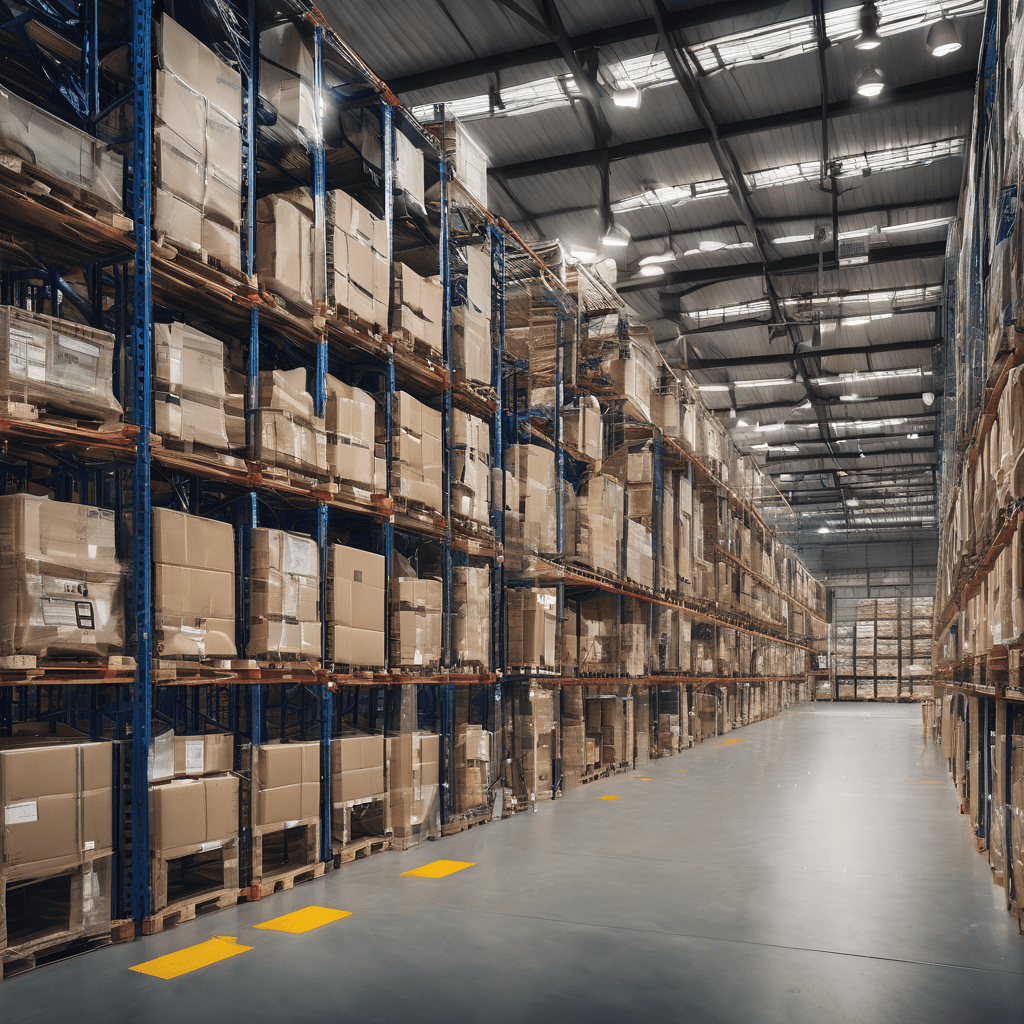
Struggling with warehouse capacity or sky-high logistics costs? You're not alone. Many European businesses are hitting a wall with their domestic storage solutions. Poland has emerged as a powerhouse, with its logistics market projected to grow by over 8% annually. Imagine a German e-commerce company, overwhelmed by peak season demand, seamlessly scaling operations across the border without capital investment. That's the strategic advantage Polish outsourced warehousing offers. It’s not just about cheap space; it's about accessing a dynamic hub with skilled labor and unparalleled EU connectivity. Let’s explore how this central European gem can solve your distribution headaches and actually drive growth.
Why Poland is a European Logistics Powerhouse
Strategically positioned at the heart of Europe, Poland has cemented its role as a critical logistics hub for companies looking to streamline their supply chains. Its unique geographic and economic advantages make it an exceptionally compelling location for outsourced warehousing, offering a blend of accessibility, cost efficiency, and modern infrastructure that's hard to beat on the continent.
Central European Location & Market Access
Poland’s biggest draw is its location. Acting as a genuine gateway, it provides seamless access to both the mature markets of Western Europe and the high-growth economies to the east. A warehouse in central Poland can serve a market of over 500 million consumers within a single day's drive. This central position drastically cuts transit times and transportation costs for pan-European distribution, a fact logistics managers consistently leverage to optimize their networks. In practice, a shipment from Wrocław can reach Berlin in under 4 hours or the Ukrainian border in roughly 6, showcasing remarkable flexibility.
Cost-Effective Operations & Skilled Workforce
The financial argument for Poland is powerful. Operational and labor costs remain significantly lower than in Western Europe, while quality and productivity stay high. You're looking at savings that can reach 30-50% on warehouse labor compared to Germany or the Benelux, according to local industry reports. But it's not just about cost. The country boasts a large, well-educated talent pool. Universities produce a steady stream of logistics, engineering, and business graduates, many fluent in English, German, and other languages, ensuring your operation is run by capable professionals.
| Cost Factor | Poland (Approx.) | Western Europe (e.g., Germany) |
|---|---|---|
| Average Monthly Warehouse Labor Cost | €1,200 - €1,800 | €2,800 - €3,500+ |
| Industrial Space Rent (prime logistics cities, per m²/month) | €3.5 - €5.5 | €6.5 - €9.0+ |
| Utilities & Operational Overheads | Generally 20-30% lower | Benchmark |
Modern Infrastructure & EU Integration
Poland’s infrastructure has undergone a transformative upgrade, funded in part by EU membership. The dense and growing network of highways (like the A2 and A4 corridors), coupled with modern rail connections and intermodal terminals, ensures reliable inbound and outbound logistics. This EU membership is a cornerstone benefit: it means no customs duties on intra-community trade, full regulatory alignment, and a stable business environment. Goods move smoothly from a Polish warehouse to a store in France or a customer in Italy without border delays. The continuous investment, often cited by PAIH (Polish Investment & Trade Agency), guarantees this infrastructure keeps pace with future demand, making Poland a long-term strategic play.
Core Services of Polish 3PL Warehousing Providers
Poland’s 3PL providers deliver a robust suite of services that transform storage into a strategic asset. They go far beyond simple shelf space, offering integrated solutions that enhance supply chain visibility, speed, and flexibility for businesses across Europe.
Storage & Inventory Management
At the foundation lies secure, flexible storage. You’ll find everything from vast ambient warehouses to specialized temperature-controlled spaces for sensitive goods like pharmaceuticals or food. A key advantage is bonded warehousing, which allows for deferred customs duties and VAT, a massive cash-flow benefit for non-EU imports. The real magic, though, is in the software. Advanced Warehouse Management Systems (WMS) are standard, providing real-time inventory tracking down to the individual item level. This tech-driven approach slashes error rates and provides clients with a live dashboard view of their stock. According to local industry reports, modern Polish facilities leveraging WMS can achieve inventory accuracy rates exceeding 99.8%.
Order Fulfillment & Value-Added Services
This is where efficiency meets the customer. Providers handle the entire order lifecycle: picking items, custom packing (including branded materials), and shipping. They expertly manage the different rhythms of B2B pallet shipments and fast-paced B2C e-commerce parcels. The value-adds are where they truly customize support. Common services include:
- Kitting & bundling: Combining products into ready-to-sell promotional packages.
- Labeling & repackaging: Adapting products for specific markets or retailers.
- Returns management (reverse logistics): Processing, inspecting, and restocking returns—a critical but often cumbersome part of e-commerce.
- Light assembly: Final product configuration before dispatch.
Transportation & Last-Mile Logistics
Storage and fulfillment are seamlessly linked to movement. Most Polish 3PLs offer integrated transportation management, acting as a single point of contact. They optimize freight through consolidation and offer cross-docking services—where inbound goods are immediately sorted and transferred to outbound vehicles with minimal storage. This drastically cuts transit times and costs. For the final leg, they coordinate with a network of carriers to handle last-mile delivery across the EU. The choice of partner here depends on your needs; a provider near the German border, for instance, might have stronger delivery routes into Western Europe.
| Service Feature | Typical Benefit / Spec | Common Client Use-Case |
|---|---|---|
| Bonded Storage | Defer customs duties & VAT | Non-EU importers storing goods for EU distribution |
| E-commerce Fulfillment | Same-day dispatch for orders before 2 PM | Online retailers needing fast delivery promises |
| Temperature-Controlled | +2°C to +8°C or +15°C to +25°C ranges | Pharmaceutical, health & beauty, specialty foods |
| Cross-Docking | Goods dwell time reduced to <24 hours | Retailers needing rapid stock redistribution |
In practice, the best providers bundle these core services into a customizable package, letting you scale up or down as your business demands. For more insights on navigating the Polish market, check out our Blog.
Key Benefits of Outsourcing to a Polish Partner
Partnering with a Polish warehousing provider transforms a fixed cost into a variable, strategic asset. You gain the agility to respond to market demands without the burden of long-term leases or massive upfront investment in real estate and equipment. This model is particularly powerful for e-commerce brands facing seasonal spikes or companies testing new European markets.
Scalability & Flexibility
The core advantage here is operational elasticity. Need 5,000 extra pallet spaces for a Q4 campaign? Your partner can typically allocate it within weeks, not months. Conversely, if you need to downsize, you're not left with empty, costly square meters. This pay-as-you-use approach means capital stays in your business. For instance, leasing and equipping a medium-sized warehouse can require €500,000+ in capital expenditure, whereas outsourcing converts this to a predictable operational cost.
Focus on Core Business & Reduced Risk
Outsourcing logistics liberates your team's time and your company's capital. Instead of managing warehouse staff, dealing with union negotiations, or navigating complex Polish tax and employment law (which aligns with stringent EU standards), you can channel energy into innovation and growth. You also mitigate significant risks: the partner absorbs the impact of local labor shortages, ensures compliance, and buffers your operations from regional market fluctuations. It's a hands-off way to secure a robust supply chain foothold in the EU.
Enhanced Efficiency & Technology Access
Top Polish logistics hubs are modern and tech-driven. By partnering, you instantly leverage systems you might not justify on your own scale. We're talking about advanced Warehouse Management Systems (WMS), automated sortation, and robotics. This directly translates to fewer errors and faster processing. The geographic payoff is huge, too. Strategically located near major transport arteries, Polish warehouses enable next-day delivery to key European markets.
| Destination | Typical Transit Time from Poland | Service Level Impact |
|---|---|---|
| Germany, Czech Republic | 1-2 days | Enables competitive next-day offers |
| France, Netherlands | 2-3 days | Cuts average delivery times significantly |
| Scandinavia, Italy | 3-4 days | Improves customer satisfaction in wider EU |
In practice, this means a German customer can order from your UK-based brand and receive their parcel just as quickly as from a local seller. That’s a game-changer for conversion rates. According to local industry reports, over 85% of Poland's modern warehouse stock is built to high specifications, ready to deploy these efficiencies for your brand. For more insights on navigating the European market, check out our Blog.
How to Choose the Right Warehousing Partner in Poland
Selecting an outsourced warehousing partner in Poland is a strategic decision that can make or break your supply chain efficiency. Getting it right means moving beyond just comparing price per pallet and digging into the operational and cultural fit.
Defining Your Requirements & KPIs
Start by getting crystal clear on your own needs. This isn't just about current pallet volume; you need to forecast peaks, like the 25% surge many e-commerce businesses see around Q4. Detail product specifics—are you storing electronics requiring ESD protection, cosmetics needing controlled temperatures, or bulky furniture? Define your must-have services: value-added tasks like kitting, a required 24-hour dispatch window, or specific packaging standards. These details become your benchmark and form the basis of your Key Performance Indicators (KPIs), such as order accuracy rates (aim for 99.9%+) and inbound processing times.
Evaluating Provider Capabilities & Infrastructure
Once you have a shortlist, scrutinize their technical and physical capabilities. Their Warehouse Management System (WMS) is the brain of the operation—ask about real-time stock visibility and API integration with your e-commerce platform or ERP. Security should be robust, with monitored access, alarm systems, and often TAPA certification for high-value goods. Location is paramount. A warehouse near the A2 corridor towards Berlin offers different advantages than one near the port of Gdańsk for sea freight. Check their connectivity:
| Transport Link | Key Advantage |
|---|---|
| A2 Motorway (E30) | Direct route to German & Western European markets |
| A4 Motorway (E40) | Connects industrial Silesia with Dresden & Ukraine |
| Port of Gdańsk | Access to deep-sea container traffic & Baltic Short Sea Shipping |
Site Visits & Contractual Considerations
Never skip the on-site audit. You'll spot what a brochure won't show: the actual cleanliness, how safely staff operate equipment, and the general organization. Chat with floor managers to gauge their problem-solving skills. This visit builds the trust needed before negotiating the Service Level Agreement (SLA). The SLA is your safeguard. It must transparently break down all costs (watch for hidden handling fees), define liability for damaged goods, and tie fees to the KPIs you defined. Crucially, include clear exit clauses and notice periods—you want a partner, not a prison. For deeper insights on navigating the Polish market, explore our Blog.
Real-World Applications and Industry Fit
Poland's outsourced warehousing isn't a one-size-fits-all solution; its real power lies in tailored applications across diverse industries. The country's central European location, modern infrastructure, and skilled workforce create a logistics hub that adapts to specific operational demands, from fast parcel dispatch to highly regulated storage.
E-commerce & Retail Fulfillment
For direct-to-consumer brands, Polish 3PLs are a launchpad for EU growth. They handle the entire order-to-door cycle: receiving bulk imports from Asia, managing dynamic inventory, and executing lightning-fast picking and packing. This translates to next-day delivery to major German cities and 2-3 day delivery across most of Western Europe. Crucially, they consolidate shipping volumes to negotiate better carrier rates, often reducing last-mile costs by 15-25% compared to shipping from a brand's home country. In practice, this means a UK-based brand can store goods in a Polish fulfillment center and still offer cheaper, faster delivery to a customer in Italy than shipping from London.
Manufacturing & Industrial Supply Chains
Manufacturers leverage Poland for sophisticated supply chain support. A key service is acting as a Supplier Consolidation Hub, where components from multiple global suppliers are gathered, inspected, and kitted before a single, timed shipment to the assembly line. This Just-in-Time sequencing slashes factory-side inventory and minimizes production stoppages. For automotive or machinery sectors, providers often manage complex pick-by-light systems and sequenced loading of trailers to match the production schedule exactly, a common requirement we see with clients supplying German or Czech plants.
Specialized Sectors: Pharma, Food, Automotive
Here, compliance and specialization are non-negotiable.
- Pharma & Medical Devices: Certified partners offer EU GDP-compliant warehousing with full audit trails, ambient/controlled rooms, and dedicated quarantine areas. Security and documentation are paramount.
- Food & Beverage: The cold chain is fully maintained. Facilities provide multi-temperature zones (chilled, frozen, ambient) with 24/7 monitoring and HACCP protocols. This allows ice cream producers, for example, to store goods at -25°C and distribute across Central Europe without risk.
- Automotive: Beyond sequencing, services include aftermarket parts logistics—managing vast SKU ranges for spare parts, with same-day dispatch capabilities for urgent dealer orders to keep vehicles on the road.
| Sector | Key Service | Typical Compliance/Standard | Primary Benefit |
|---|---|---|---|
| E-commerce | Parcel Fulfillment | IOSS, VAT handling | Cost-effective EU-wide delivery |
| Pharma | GDP Storage | EU GDP, Serialization | Audit-ready, risk-mitigated distribution |
| Food & Beverage | Cold Chain Logistics | HACCP, BRC | End-to-end temperature integrity |
| Automotive | Parts Distribution | IATF 16949 often supported | JIT sequencing & aftermarket speed |
According to PAIH and local industry reports, these specialized services are a major driver behind the over 12% annual growth in Poland's modern warehouse space. The flexibility to scale operations up or down without capital investment makes it a strategic, rather than just a tactical, choice for companies across the spectrum.
Conclusion: Strategic Advantages for Growth
Ultimately, outsourcing warehousing to Poland isn't just a logistical decision; it's a strategic growth lever. By tapping into the country's central European position, skilled workforce, and modern infrastructure, businesses unlock a powerful formula for regional success.
Summarizing the Competitive Edge
The core advantage lies in a unique convergence of factors that directly impact your bottom line and service levels. You're not just renting space; you're accessing a holistic ecosystem designed for efficiency.
| Advantage | Typical Impact | Example / Data Point |
|---|---|---|
| Geographic Location | Reduced transit times & costs across EU | Reach 80% of European consumers within 48 hours (PAIH). |
| Cost Efficiency | Lower operational expenditure vs. Western EU | Total warehousing costs can be 25-40% lower than in Germany or France (local industry reports). |
| Labor Quality & Cost | High productivity at competitive rates | Average monthly gross wage in logistics is around €1,800 (Eurostat 2024), significantly below Western averages. |
This blend transforms a traditional fixed cost center into a variable, scalable asset that directly drives customer satisfaction through faster, more reliable deliveries.
Future-Proofing Your Supply Chain
A reliable Polish 3PL partner provides the agility you can't easily build in-house. Market demands shift—sudden e-commerce spikes, new regulatory hurdles, or expansion into Eastern markets. In practice, a good partner absorbs these fluctuations, allowing you to scale operations up or down without capital investment. This flexibility is the bedrock of a resilient, future-proofed supply chain, letting you seize new opportunities while mitigating risks. It's a proven model for companies aiming to consolidate and truly optimize their European distribution network, turning complexity into a clear competitive advantage.
Taking the Next Step
So, where do you begin? The process starts with a clear assessment of your specific needs: required storage volume, peak seasonality, value-added services like kitting or returns processing, and target markets. With that blueprint, you can shortlist providers who not only have the right infrastructure but also the proven expertise in your sector. The final phase involves initiating detailed consultations—site visits are highly recommended—to discuss operational workflows, IT integration capabilities, and, crucially, the cultural fit. This due diligence ensures your chosen partner becomes a true extension of your team, ready to execute your growth strategy on the ground. For more insights, explore our Blog.
Frequently Asked Questions (FAQ)
How much does outsourced warehousing in Poland typically cost?
There's no single price, as it really depends on what you need. Costs typically break down into three parts: a monthly storage fee (e.g., €8-€15 per pallet), a handling charge for each order processed (maybe €5-€10 per pick), and extra fees for services like labeling or returns. For a rough idea, a small operation using 50 pallets might see monthly costs starting around €600-€900, plus those per-order fees. The best move is to share your specific requirements—like order volume and services needed—with a few providers to get tailored quotes.
What is the typical lead time to set up operations with a Polish 3PL?
For a standard setup with a Polish 3PL, you should plan on roughly 4 to 8 weeks from signing the contract to being fully operational. This covers the main steps: finalizing paperwork, getting your IT systems (like your online shop) talking to their warehouse software, and physically shipping your initial stock to their facility. If your products need special handling or a complex tech integration, it can take longer. To move faster, have your product data and inventory lists ready to go as soon as you choose a partner.
Can I integrate my e-commerce platform (like Shopify or Magento) with a Polish warehouse?
Yes, you definitely can. Most modern Polish 3PL warehouses are built for this. They offer direct API integration with platforms like Shopify, Magento, and WooCommerce, as well as marketplaces like Amazon and Allegro. This means your orders flow automatically to the warehouse, and your inventory levels update in real-time on your store. It’s a seamless setup—once connected, you can manage everything from your familiar admin panel while they handle the Polish storage, packing, and shipping. Just ask potential providers about their pre-built connectors for your specific platform.
How do Polish warehouses handle returns and reverse logistics?
In Poland, outsourced warehouses usually have a dedicated returns zone. They'll receive your item, check its condition, and update your inventory system within 24-48 hours. Then they handle the next steps: sending a refund, organizing an exchange, or deciding if it goes back to stock, needs refurbishment, or disposal. For example, a good partner can process a return and get a replacement item back out the door in under 3 days. It's key to ask potential providers about their specific process and speed to keep your customers happy.
Is my inventory insured while stored in an outsourced warehouse in Poland?
Your inventory is likely not fully insured by the warehouse's basic liability policy. That insurance often covers their negligence only and has low limits—sometimes as little as 8.40 PLN per kilo—which won't cover your goods' full value. To be safe, you should get your own cargo insurance. It's a common and smart move. Just ask your warehouse for their insurance certificate, check the limits and exclusions, then arrange a separate policy to cover the total value of your stock.
Related Articles
Understanding the Cost of Warehouse Services in Poland
Navigating warehouse costs in Poland feels like a maze. You're not alone. With e-commerce booming, logistics space is at a premium. Prime warehouse vacancy r...
Central Europe Warehouse Hub: A Strategic Logistics Guide
Struggling with supply chain bottlenecks and soaring costs? You're not alone. The logistics map of Europe is being redrawn, with Central Europe emerging as t...
European Warehouse Services in Poland: Your Strategic Hub
Struggling with warehouse delays and spiraling logistics costs? You're not alone. Poland has rapidly become the beating heart of European distribution, with ...