
Production Outsourcing in Poland: Key Benefits & Strategic Advantages
Production Outsourcing in Poland: Key Benefits & Strategic Advantages
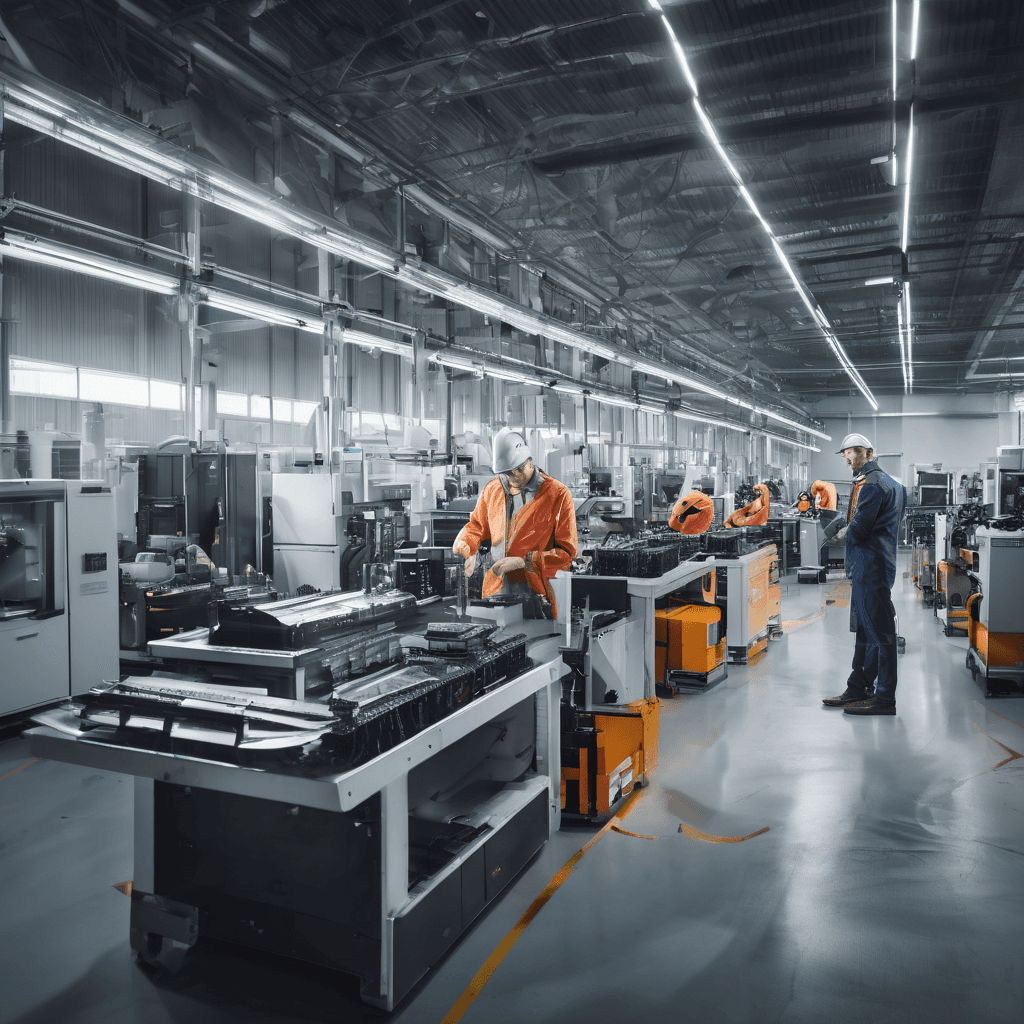
Is your supply chain stretched thin, squeezing margins and delaying time-to-market? You're not alone. Many European manufacturers are hitting a wall. Yet, a strategic shift eastward is unlocking remarkable resilience. Poland, for instance, has become the EU's undisputed outsourcing powerhouse, with its industrial output soaring by over 40% in the past five years. Imagine a German automotive supplier seamlessly ramping up component production in Wrocław, leveraging a skilled workforce at competitive costs while staying firmly within the single market. This isn't just about cutting expenses; it's about gaining a strategic partner that fuels growth. Let's explore how the Polish advantage can become your operational breakthrough.
Introduction: Why Poland is a European Manufacturing Powerhouse
Introduction: Why Poland is a European Manufacturing Powerhouse
For companies looking to streamline operations and boost European market competitiveness, Poland has emerged as a top-tier destination for production outsourcing. It's not just about lower costs—though that's a significant factor. The real draw is Poland's powerful combination of geographic advantage, deep-rooted industrial expertise, and a business environment that actively welcomes foreign investment. This isn't a new player trying to build a reputation overnight; it's a mature, stable economy with a proven track record of delivering high-quality manufacturing. From automotive giants to electronics leaders, a diverse range of industries have tapped into Poland's potential, transforming their supply chains and securing a strategic foothold in the heart of Europe.
Poland's Strategic Position in Europe
Location is everything, and Poland's central European position is a logistical dream. Sharing borders with Germany, the Czech Republic, and seven other countries, it sits at the crossroads of major East-West and North-South transport corridors. This translates into direct and efficient access to the massive consumer markets of Western Europe, as well as growing economies to the east. In practice, this means a truck leaving a factory in Wrocław can reach Berlin in under 4 hours and Frankfurt in about 8. Major seaports like Gdańsk provide Baltic Sea access, and a well-developed network of railways and highways connects key industrial hubs. For businesses, this central location slashes transportation times and costs, making just-in-time delivery to EU customers not just possible, but reliably efficient.
A Legacy of Industrial Excellence
Poland's manufacturing strength isn't an accident—it's built on decades of engineering tradition, particularly in sectors like machinery, metalworking, and automotive. The country has a large, highly skilled talent pool, with over 1.5 million people employed in industry and a robust pipeline from hundreds of technical universities and vocational schools. This legacy means you're not just finding workers; you're accessing engineers, technicians, and craftsmen with a genuine aptitude for complex production. The workforce is known for strong problem-solving skills and adaptability. Commonly seen in Special Economic Zones, this expertise is a key reason why global automotive suppliers and aerospace companies have established sophisticated R&D centers alongside their production lines here.
Beyond skills, Poland offers a remarkably stable platform for investment. As a committed EU member since 2004, it operates under familiar regulatory frameworks, ensuring legal certainty and free movement of goods. The economy has shown impressive, consistent growth for decades, even during global downturns. This stability is supercharged by government support. Poland has established 14 Special Economic Zones (SEZs) offering attractive incentives, which can include:
- Corporate income tax exemptions of up to 55% of investment costs.
- Real estate tax relief for businesses locating within zone boundaries.
- Comprehensive administrative support to streamline the setup process.
The exact value of incentives depends on the project size, location, and jobs created, but the proactive approach is clear. This supportive ecosystem, combined with the fundamental strengths of location and labor, solidifies Poland's role as a true European manufacturing powerhouse.
Cost-Efficiency and Competitive Operational Economics
Cost-Efficiency and Competitive Operational Economics
Choosing Poland for production isn't just about finding a lower-cost location; it's about securing a sustainable and predictable economic advantage. The country delivers a powerful combination of talented human resources and a business environment designed to keep your operational expenses in check, directly boosting your bottom line.
Labor Cost Advantages
You get access to a deep pool of highly skilled engineers, technicians, and production line specialists whose salaries are typically 40-60% lower than in Germany or France. This isn't a trade-off in quality. Poland's strong technical education system, with its focus on STEM fields, consistently produces capable graduates. In practice, this means you can staff a sophisticated automation line or a dedicated R&D team for a fraction of the Western European cost, allowing for significant reinvestment or improved product margins.
Favorable Overhead and Tax Structures
Beyond labor, day-to-day running costs remain competitive. Industrial energy prices, while subject to global market fluctuations, are generally lower than in Western Europe. Warehousing and logistics costs within Poland are efficient, thanks to continuous infrastructure development. The real kicker, though, is the fiscal landscape.
- Corporate Tax Incentives: The standard CIT rate is a flat 19%, but the real opportunity lies in Poland's 14 Special Economic Zones (SEZs). Companies investing here can benefit from 0% corporate income tax for up to 15 years, depending on the region and investment value. This can translate into millions saved.
- Stable Financial Ground: The Polish Złoty (PLN), while a floating currency, has shown remarkable resilience and stability against the Euro and USD over the past decade. This stability is a big deal for long-term budgeting and contracts, as it dramatically reduces the currency risk and nasty financial surprises that can plague offshore production. You get cost predictability.
A Highly Skilled and Adaptable Workforce
A Highly Skilled and Adaptable Workforce
At the heart of Poland's manufacturing success lies its people. The country offers a compelling blend of deep technical expertise and a business culture that Western partners find refreshingly familiar. This isn't just about filling positions; it's about partnering with a workforce that actively drives innovation and quality.
Engineering Talent and Technical Education
Poland’s strength in production starts in the classroom. The country boasts a dense network of respected technical universities, like Warsaw University of Technology and Wrocław University of Science and Technology. These institutions are talent factories, churning out a steady and impressive stream of over 100,000 STEM graduates annually. The result? A deep and readily available pool of mechanical, electrical, automation, and software engineers. Companies setting up production lines in Poland commonly find they can staff complex projects locally without needing to import core engineering talent. This solid educational foundation means engineers here aren't just executors; they're problem-solvers who can adapt designs for efficiency and contribute to continuous improvement right on the shop floor.
Multilingual Capabilities and Work Ethic
Communication barriers? Rarely an issue. English proficiency is exceptionally high, especially among professionals and the younger generation, with Poland consistently ranking near the top of global English skills indexes for non-native speakers. Widespread German language skills add another layer of advantage for DACH market projects. This multilingual capability smooths every step—from initial contract negotiations and technical documentation review to daily production management and quality control reporting. What you see in practice is a workforce with a strong, direct work ethic that aligns neatly with Western European and North American expectations on deadlines, quality standards, and professional conduct. Teams are productive, show a notable knack for pragmatic problem-solving when hiccups occur, and take genuine pride in their output. This cultural and communicative alignment drastically reduces the hidden management costs and frustrations often associated with offshore production.
Robust Infrastructure and Supply Chain Integration
Robust Infrastructure and Supply Chain Integration
A major draw for production outsourcing to Poland isn't just cost—it's the country's exceptional logistical backbone and deeply integrated industrial networks. Getting components in and finished goods out is remarkably efficient, minimizing delays and keeping supply chains fluid.
Modern Transportation Networks
Poland's geographic position is a strategic asset, but its real value comes from the billions invested in modernizing its infrastructure. The road network, including a dense and expanding web of highways like the A2 and A4 corridors, provides seamless trucking routes across Europe. Rail freight is getting a serious upgrade, too, with key routes being electrified and speeds increased to better compete with road transport. For urgent shipments, major international airports like Warsaw (WAW) and Kraków (KRK) offer extensive cargo handling. Perhaps the game-changer, though, is the Baltic coast. The deep-sea container terminals in Gdańsk and Gdynia have become pivotal hubs. Gdańsk, in particular, has seen container handling capacity skyrocket, now processing over 3 million TEUs annually and offering direct maritime connections to global markets without the need for rerouting through Western European ports.
Established Industrial Clusters
Beyond moving goods, Poland excels at making them. The country has nurtured specialized, regional supplier ecosystems that create powerful synergies for foreign investors. You'll find dense clusters of expertise in specific sectors. The automotive cluster in Silesia and Lower Silesia is a textbook example, hosting hundreds of Tier 1 and Tier 2 suppliers for global carmakers. Similarly, the electronics and appliance sector around Poznań and Wrocław benefits from a deep talent pool and component suppliers. In practice, this means a manufacturer setting up shop can often source complex sub-assemblies locally with shorter lead times.
These clusters are also where Poland's tech adoption shines. There's a noticeable push towards Industry 4.0, especially in larger factories and special economic zones. Think automated production lines, integrated IoT sensors for predictive maintenance, and widespread use of digital twins for process optimization. This tech integration, combined with the physical infrastructure, creates a production environment that's far more sophisticated and resilient than the low-cost label might suggest. The result is a supply chain that's not just connected, but intelligent and responsive.
Quality Standards and EU Regulatory Compliance
Quality Standards and EU Regulatory Compliance
Choosing Poland for production outsourcing isn't just about cost—it's a strategic move for guaranteed quality and seamless market access. You get a partner operating within the EU's legal and technical ecosystem, which slashes headaches for your supply chain.
Adherence to EU Manufacturing Norms
The standout advantage is automatic regulatory alignment. Products manufactured in Poland are made under the same strict frameworks required for the entire EU market. This means compliance with CE marking for product safety, RoHS for hazardous substance restrictions, and REACH for chemical management is baked into the production process. For companies targeting European customers, this is a massive win. It eliminates the complex, costly process of retrofitting products to meet EU standards after they've been made elsewhere. In practice, this built-in compliance drastically reduces legal risks and speeds up your time-to-market, since you're not navigating a regulatory minefield.
Certifications and Quality Control Culture
Polish industry doesn't just meet baseline EU rules; it often exceeds them through a deeply ingrained quality culture. You'll find a high concentration of factories with top-tier certifications.
- Widespread Standards: ISO 9001 for quality management is commonplace. For automotive sectors, the stringent IATF 16949 is the norm—Poland is a European hub for component manufacturing.
- Sector-Specific Certs: Many plants also hold industry-specific certifications like ISO 13485 for medical devices or ISO 22000 for food safety, depending on their niche.
Beyond certificates on the wall, there's a real operational mindset focused on continuous improvement. Principles of Lean Manufacturing and Kaizen are commonly seen on the shop floor, driving efficiency and reducing waste. This isn't just theory; it translates into measurable outcomes like lower defect rates and more consistent output. The workforce is trained in these methodologies, creating a proactive environment where problems are solved systematically, not just patched over. This cultural focus on getting it right builds incredible reliability into your supply chain.
Strategic Considerations for Successful Outsourcing
Strategic Considerations for Successful Outsourcing
Jumping into outsourcing without a solid game plan is a recipe for headaches. To truly capitalize on Poland's potential, you need a strategic approach that goes beyond just finding the cheapest bidder. Getting the fundamentals right from the start turns a simple vendor relationship into a genuine competitive advantage.
Choosing the Right Partner and Location
This is your make-or-break decision. Don't just evaluate a potential partner on capacity alone. Dig into their industry specialization—a factory used to high-volume automotive components might struggle with low-volume, complex aerospace machining. Always check references and audit their financial health; a stable partner prevents disruptive mid-project collapses.
Location matters immensely. Poland's regions have developed powerful, specialized clusters. Leverage these regional strengths. You’ll find deep expertise in automotive in Silesia, where a dense network of Tier 1 and 2 suppliers thrives. For aerospace and advanced composites, the Podkarpacie region (the "Aviation Valley") is unmatched, hosting giants like Pratt & Whitney and hundreds of specialized SMEs. Meanwhile, Warsaw and its surrounding area have become a major hub for electronics manufacturing and R&D. Placing your project in these ecosystems gives you access to a skilled talent pool and streamlined logistics.
In practice, a phased approach works wonders. Start with a pilot project—a limited production run or a specific component. This validates capabilities, builds trust, and iron out communication kinks without betting the entire farm. It's a low-risk way to test the partnership's real-world viability.
Managing Communication and IP Protection
Clear contracts are non-negotiable. Your agreement must have robust IP protection clauses that explicitly state ownership of designs, processes, and any jointly developed innovations. Polish law is EU-aligned and strong, but you need these terms detailed in the contract. Don't assume anything is implied.
Then there's the human element. Plan for cultural integration. While Polish engineers and managers are highly proficient, direct communication styles and a proactive approach to problem-solving are commonly seen. Establish clear, frequent communication channels from day one. Schedule regular video calls and plan site visits. Using collaborative project management tools helps, but there's no substitute for face-to-face interaction, especially at the project's kickoff. This builds the rapport needed to navigate challenges smoothly. Remember, you're building a partnership, not just hiring a remote workshop.
Conclusion: Building a Competitive Edge with Polish Manufacturing
Conclusion: Building a Competitive Edge with Polish Manufacturing
Choosing Poland for production outsourcing isn't just a simple cost-cutting exercise. It's a strategic decision that builds a formidable competitive edge. You get a powerful blend of significant cost savings—labor rates can be 30-50% lower than in Western Europe—alongside a deep-seated culture of quality and engineering precision. This balance is tough to beat. Add in Poland's central European location, with over 80% of European consumers reachable within a 24-hour drive, and you have a recipe for agile, responsive supply chains.
Future-Proofing Your Supply Chain
The recent global disruptions exposed the fragility of long, complex supply chains. Poland offers a compelling solution for de-risking. By nearshoring here, you dramatically shorten logistics routes, gain greater oversight, and tap into a stable, EU-aligned economy. It's about resilience. The market itself is rapidly evolving beyond basic assembly. We're seeing a strong shift towards high-value manufacturing in sectors like electric vehicle components, aerospace, and specialized electronics. In practice, this means you can partner with factories that aren't just workshops, but innovation hubs with serious R&D capabilities.
Taking the Next Steps
So, where do you start? Don't just rely on top-line reports. The real insight comes from direct engagement.
- Conduct a detailed feasibility study. Benchmark total landed costs against your current model, including logistics, tariffs (or lack thereof within the EU), and productivity rates, which can vary.
- Visit potential partners. There's no substitute for walking the factory floor, meeting engineers, and gauging the operational culture firsthand. Plan a multi-stop tour across different Polish regions, as specialization depends on the cluster.
The time to seriously explore Polish outsourcing is now. The country's infrastructure is modernizing fast, its workforce is highly skilled, and its integration into Europe's industrial core is deepening. Delaying means your competitors might just lock in the best partners first.
Najczęściej zadawane pytania (FAQ)
What are the main industries for production outsourcing in Poland?
Poland is a major hub for manufacturing outsourcing, especially in automotive, electronics, and furniture. The automotive sector is huge, with many global brands running plants there. Electronics and household appliances are also strong, thanks to skilled engineers. Light industry, like furniture and clothing, is another traditional strength, offering high-quality craftsmanship. For example, Poland is one of Europe's top furniture exporters. If your business is in these areas, it's definitely worth looking into Polish partners for a good mix of skilled labor and cost efficiency.
How do labor costs in Poland compare to Germany or the UK?
Labor costs in Poland are significantly lower than in Germany or the UK, which is a major driver for outsourcing. For example, the average gross monthly salary for a manufacturing worker in Poland is roughly €1,500-€2,000. In Germany, it's often €3,000-€4,000+, and in the UK, it's similarly higher. This means you could see labor cost savings of 50% or more. When calculating, remember to factor in Poland's strong productivity and skilled workforce—you're not just getting a cheaper rate, but good value. It's a key reason so many European companies set up production there.
Is it difficult to manage quality control when outsourcing to Poland?
Actually, it's generally very manageable. Poland has a strong culture of engineering precision and adheres to EU quality standards, which provides a solid baseline. The key is choosing the right partner. I recommend starting with a clear, detailed specification and scheduling regular video audits—even a weekly 30-minute check-in can make a huge difference. Many companies find defect rates drop significantly after the initial磨合期 (run-in period) because Polish teams are typically proactive about process improvement. It’s about clear communication, not constant oversight.
What are the challenges of outsourcing production to Poland?
Outsourcing to Poland is great, but be ready for a few speed bumps. The main challenge is navigating language nuances in technical or legal documents—while English is common on the shop floor, precise details can get lost. Also, the initial setup and finding the right partner can take 3-6 months, longer than you might expect. Cultural differences in business communication, like a more direct style, can sometimes surprise Western European partners. My advice? Budget extra time for partner vetting and always use a local legal expert for contracts to smooth everything out.
How does Poland's EU membership benefit foreign companies outsourcing there?
For foreign companies, Poland’s EU membership means you avoid customs duties and tariffs when shipping goods across the EU single market. You also get a big regulatory win: your products only need to meet one set of EU standards, not 27 different national ones. This cuts compliance costs and complexity. Legally, you’re protected by stable EU trade laws and courts, which reduces risk. For example, a German auto parts maker can outsource production to Poland and ship freely to France or Italy with no extra paperwork or tariffs, simplifying their whole European supply chain.
Podsumowanie
Poland’s strategic location, skilled workforce, and cost-competitive manufacturing offer a compelling blend of quality and value for production outsourcing. Companies gain not just operational savings but also a reliable gateway to the EU market. To truly capitalize, businesses must conduct thorough due diligence on Polish special economic zones and local partners. The evolving landscape presents a prime opportunity; those who engage now will be best positioned to build resilient, efficient supply chains for the future.
Related Articles
Understanding the Cost of Warehouse Services in Poland
Navigating warehouse costs in Poland feels like a maze. You're not alone. With e-commerce booming, logistics space is at a premium. Prime warehouse vacancy r...
Central Europe Warehouse Hub: A Strategic Logistics Guide
Struggling with supply chain bottlenecks and soaring costs? You're not alone. The logistics map of Europe is being redrawn, with Central Europe emerging as t...
European Warehouse Services in Poland: Your Strategic Hub
Struggling with warehouse delays and spiraling logistics costs? You're not alone. Poland has rapidly become the beating heart of European distribution, with ...