
Production Support Warehousing in Poland: A Strategic Guide
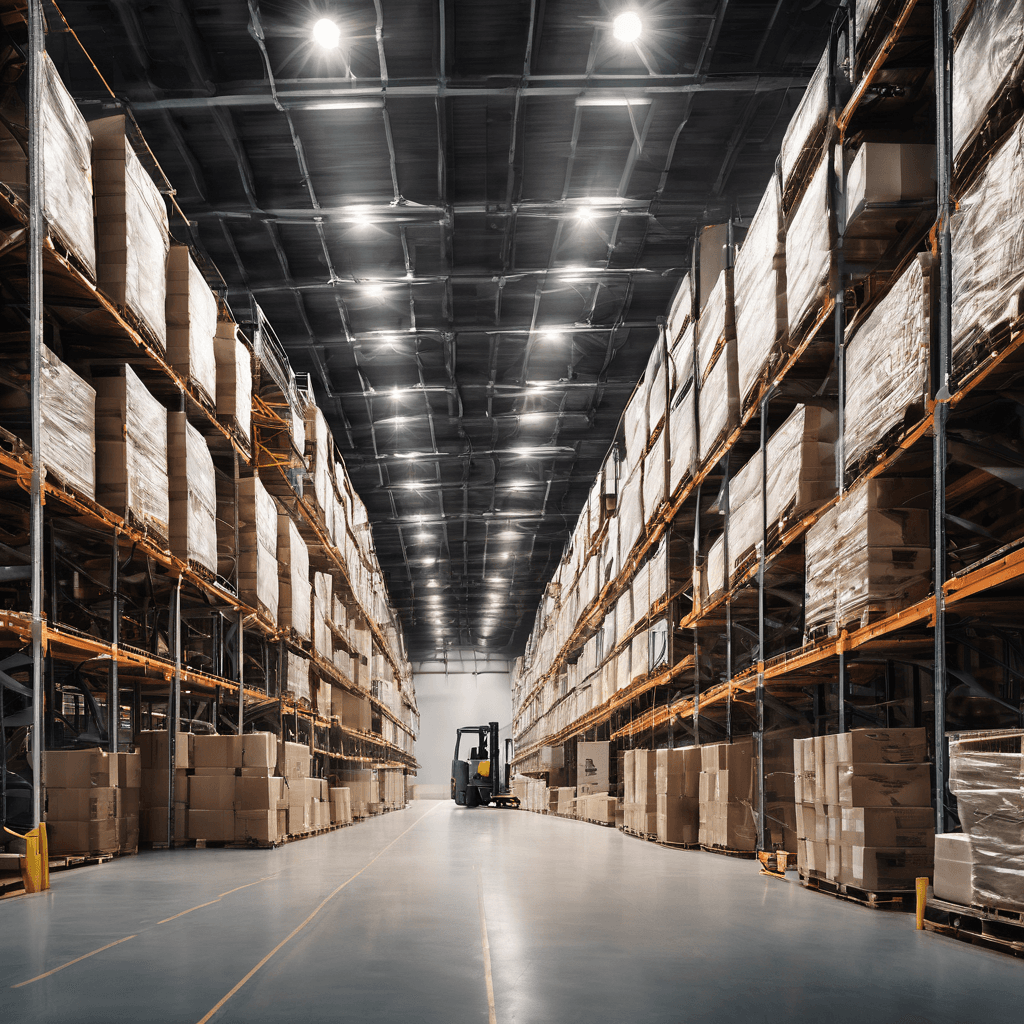
Your Polish production line just halted because a critical component is stuck in a warehouse. This isn't a minor hiccup; it's a costly logistical failure. Poland's manufacturing sector is booming, with output growing over 8% annually, yet many firms are shackled by outdated support warehousing. Picture a major appliance manufacturer near Wrocław: their just-in-time assembly falters daily due to poor inventory visibility and slow reaction times from their logistics partner. They're losing thousands per hour in downtime. Modern production support isn't about storage; it's a strategic, integrated extension of your factory floor. The right partner turns your supply chain from a constant headache into a competitive weapon—here’s how to spot the difference before your next line stoppage.
What is Production Support Warehousing?
Production support warehousing is the behind-the-scenes engine that keeps modern assembly lines humming. At its core, it’s a specialized logistics service focused on delivering the exact materials, components, and sub-assemblies to a manufacturing line at the precise moment they are needed. Think of it less as a static storage unit and more as a dynamic, integrated extension of the factory floor itself.
Core Definition & Function
The primary function is to act as a synchronized buffer and flow regulator, ensuring continuous production without costly stops. This is absolutely critical for efficient Just-in-Time (JIT) and Just-in-Sequence (JIS) manufacturing models, which dominate sectors like automotive and electronics. In JIT, parts arrive right before use, minimizing factory inventory. JIS takes it further, delivering components in the exact order they will be installed on a moving line. A hiccup here means the whole line stops, costing thousands per minute. The support warehouse mitigates this risk by holding safety stock and managing complex inbound logistics from multiple suppliers, consolidating everything into a seamless flow for production.
Beyond Simple Storage: The Value-Add
Unlike traditional warehousing focused on long-term storage and bulk movement, production support is all about speed, precision, and deep integration with the manufacturer’s systems. The activities are highly value-added. In practice, you’ll commonly see:
- Kitting: Gathering all parts for a specific product or assembly into one ready-to-use kit.
- Sequencing: Arranging components (like car seats or dashboard modules) in the exact sequence of the production schedule.
- Pre-production Labeling & Repackaging: Preparing items for direct line-side presentation.
- Real-time Inventory Management: Using barcode/RFID systems to provide live stock visibility, often triggering automatic replenishment.
The difference is stark, as shown in this comparison of key operational focuses:
| Operational Aspect | Traditional Warehousing | Production Support Warehousing |
|---|---|---|
| Primary Goal | Long-term storage, bulk handling | Line-side delivery, flow synchronization |
| Cycle Speed | Slower (days/weeks) | Very fast (hours/minutes) |
| Process Complexity | Lower (receive, store, ship) | High (sequence, kit, integrate with MES) |
| Inventory Turnover | Lower | Extremely high |
For manufacturers in Poland, leveraging this service is a strategic move. It allows them to focus capital and floor space on core assembly while relying on logistics experts to handle the complex material flow. With Poland's manufacturing output growing—industrial production rose by a reported 6.9% year-on-year in early 2024 according to Eurostat—the demand for such precise logistics support only intensifies. You can explore more on the broader logistics landscape in our Blog.
Why Poland is a Hub for Production Support Logistics
Nestled at the heart of the continent, Poland has become a powerhouse for production support warehousing, acting as the critical backbone for manufacturers across Europe. The synergy of its location, thriving industrial sectors, and cost efficiency creates an environment where just-in-time and just-in-sequence logistics don't just work—they excel.
Strategic Geographic Location
Poland’s central European position is its prime logistical asset. A warehouse in, say, Wrocław or Poznań can reach major industrial hubs in Germany, the Czech Republic, and Slovakia within a single day’s drive. This allows companies to serve the high-demand markets of Western Europe, the growing economies of Central Europe, and the emerging markets further east from a single, consolidated hub. The result is a dramatic reduction in lead times and transportation costs, making supply chains far more resilient and responsive. In practice, this centrality means a parts supplier can deliver to a German automotive plant in the morning and a Hungarian one in the afternoon, all from a Polish warehouse.
Economic & Infrastructural Advantages
Beyond location, Poland offers a compelling mix of modern infrastructure and economic stability. The manufacturing base is robust and diverse, led by automotive, electronics, and home appliance giants. This creates inherent, high-volume demand for sophisticated production support services like kitting, sequencing, and returnable packaging management. To support this flow, the country boasts a continuously upgraded network of highways and rail corridors, complemented by Baltic Sea ports like Gdańsk and Gdynia, which handled over 65 million tons of cargo in 2023 according to Eurostat.
Operational costs remain highly competitive. When you compare key warehousing expenses to Western Europe, the difference is clear and allows for significant reinvestment or savings.
| Cost Component | Poland (Approx.) | Western Europe (e.g., Germany) |
|---|---|---|
| Warehouse Labour (monthly) | €1,200 - €1,800 | €2,800 - €3,500+ |
| Industrial Space Rent (prime, p.a.) | €4.5 - €6.5 / sqm | €7.5 - €12+ / sqm |
| Utilities & Overheads | Generally 20-30% lower | Higher baseline |
Coupled with a large, skilled logistics workforce and Poland’s stable EU membership—ensuring seamless trade, predictable regulations, and access to development funds—the business case is strong. Companies aren't just finding a warehouse; they're plugging into a fully integrated support ecosystem. For more insights on optimizing logistics in this region, check out our Blog.
Key Services in Polish Production Support Warehouses
Modern production support warehousing in Poland goes far beyond simple storage, acting as a critical extension of the manufacturing floor to enhance efficiency and lean operations. These facilities are strategically positioned, often within industrial clusters like Upper Silesia or the "Polish Automotive Belt" around Poznań and Wrocław, to provide just-in-time and just-in-sequence support.
Core Logistics Operations
The backbone of these services involves streamlined inbound and outbound processes designed for speed and precision.
- Inbound Logistics & Cross-Docking: Materials are received and sorted for immediate outbound shipment, often bypassing long-term storage entirely. This slashes handling time and costs, a crucial advantage for time-sensitive production lines.
- Milk-Run Collections: Instead of dealing with dozens of individual deliveries, warehouses deploy scheduled "milk-run" routes to collect materials from multiple local and regional suppliers. This consolidates freight into full truckloads, cutting transportation costs by up to 25% and reducing the plant's carbon footprint and traffic congestion.
- Real-Time Inventory & VMI: Leveraging advanced WMS (Warehouse Management Systems), providers offer real-time visibility into stock levels. Through Vendor Managed Inventory (VMI), the warehouse assumes responsibility for maintaining agreed inventory levels at the plant, proactively replenishing to prevent costly production stoppages.
Advanced Value-Added Services
Here's where Polish warehouses truly add value, transforming components into ready-to-install kits. The table below outlines common pre-production services and their typical impact on assembly line efficiency.
| Service | Key Activity | Typical Benefit for Production |
|---|---|---|
| Pre-Production Kitting | Gathering all parts for a specific assembly (e.g., a dashboard module) into one kit. | Reduces line-side clutter and picking errors, boosting worker productivity. |
| Sequencing | Arranging parts in the exact order they will be installed on the moving assembly line. | Enables true just-in-sequence manufacturing, essential for automotive customization. |
| Pre-Assembly & Labeling | Light sub-assembly, re-packaging, and applying client/GS1-compliant labels. | Offloads non-core tasks from the OEM, ensuring full EU standard compliance. |
In practice, these services are almost always bundled. A warehouse might receive parts via milk-run, perform immediate quality checks (a non-negotiable step given stringent EU standards), then kit and sequence them for the next shift's production. According to a local industry report, manufacturers using integrated support warehousing in Poland have reported a reduction in line-side inventory holdings by 40-60%. This lean approach not only frees up capital but also creates a more agile and responsive production environment. For more insights on optimizing your supply chain, explore our Blog.
Benefits for Manufacturing Companies
For manufacturing companies in Poland, leveraging dedicated production support warehousing isn't just about storage; it's a strategic move that directly boosts competitiveness and the bottom line. By outsourcing the complex logistics of raw material and component management, manufacturers can focus their capital and expertise on their core competency: production itself.
Operational & Cost Efficiency
This model delivers immediate financial and operational advantages. First, it drastically reduces the capital tied up in on-site inventory. Instead of purchasing and storing months of materials, you can operate on a just-in-time or just-in-sequence basis, freeing up significant cash flow. Second, it lowers fixed overhead costs. You eliminate expenses for warehouse space, internal handling equipment like forklifts, and the dedicated staff to manage it all. A typical mid-sized manufacturer might see annual savings in the range of €50,000 to €150,000 by avoiding these fixed investments, depending on scale and location.
- Constant material availability is the linchpin. Professional logistics providers ensure materials are pre-staged, kitted, and delivered to the production line exactly when needed. This minimizes costly stoppages—every minute of downtime can cost thousands.
- The scalability is a game-changer. Ramping up for a seasonal surge or a new project becomes a simple conversation with your logistics partner, not a capital-intensive scramble for more space and staff.
Risk Mitigation & Flexibility
Modern production support warehousing builds crucial resilience into your supply chain. It acts as a strategic buffer, safeguarding your operations from unpredictable disruptions. By holding safety stock managed by experts, you create a buffer against supplier delays, which, according to local industry reports, still affect over 30% of manufacturers in the region annually.
This setup provides unmatched flexibility to respond to both problems and opportunities. If a key supplier in Germany is delayed, your buffer stock in a Polish warehouse keeps the line running. Conversely, if a large, unexpected order comes in, your logistics partner can scale storage and handling rapidly, often within days. This agility transforms your supply chain from a fixed cost center into a dynamic, responsive asset. For a deeper look at logistics trends shaping Polish industry, explore our insights on the Blog.
| Efficiency Aspect | Traditional On-Site Storage | Production Support Warehousing |
|---|---|---|
| Capital Commitment | High (owned inventory & assets) | Low (operational expense) |
| Cost Structure | Fixed, inflexible overhead | Variable, scales with activity |
| Response to Demand Spike | Slow, requires new CAPEX | Rapid, operational adjustment |
| Risk Buffer | Limited by own space/cost | Professionally managed safety stock |
In practice, the benefits compound. The freed-up factory space is often repurposed for additional production lines or automation, directly increasing output. It’s a clear shift from simply storing parts to actively managing the flow of materials as a strategic advantage.
Choosing the Right Partner in Poland
Selecting a production support warehouse in Poland is a strategic decision that directly impacts your manufacturing efficiency and supply chain resilience. Getting it right means finding a partner who acts as a seamless extension of your own operations, not just a space to store goods.
Essential Selection Criteria
First up, geography is everything. A warehouse's location must balance proximity to your production plant with connectivity to key transport corridors. Being within a 50-100 km radius of your factory can drastically cut milk-run costs and reaction times. Check access to the A2 (Berlin-Warsaw) or A4 (German-Ukrainian) motorways, and rail sidings if you use intermodal transport.
Next, dig into their tech stack. A modern Warehouse Management System (WMS) capable of real-time integration with your ERP is non-negotiable. Demand transparency through EDI for advanced shipping notices and live dashboards for inventory tracking. In practice, partners with strong IT can often provide picking accuracy rates above 99.5%, which is crucial for keeping your assembly line running.
Industry-specific expertise is another major divider. A warehouse serving the automotive sector must be adept with sequencing, kitting, and have strict protocols for handling VDA-standard packaging. Meanwhile, an FMCG partner focuses on high-volume cross-docking and fast SKU rotation. Always ask for case studies from your own sector.
Finally, never skip the site visit. You'll see firsthand if the facility meets 5S standards, has adequate fire suppression systems, and enforces strict safety gear rules. Speaking directly to their current clients offers insights no brochure can.
Red Flags to Avoid
Watch out for vague Service Level Agreements (SLAs). A robust SLA must detail specific metrics, liabilities, and escalation procedures. If key performance indicators (KPIs) like order fulfillment times or damage rates aren't explicitly defined and measurable, walk away.
| Critical SLA Metric | Industry Benchmark in Poland | Why It Matters |
|---|---|---|
| Order Picking Accuracy | > 99.5% | Prevents production stoppages due to missing/wrong parts. |
| Dock-to-Stock Time | < 3 hours | Maintains inventory accuracy and speeds up material availability. |
| Incident Reporting Time | < 1 hour | Ensures proactive communication and rapid problem-solving. |
Be wary of operators who are overly rigid or lack scalability. Your needs will change, and a partner should discuss flexible space options and have a clear plan for peak periods. According to a local industry report, leading logistics providers in Poland now commonly offer scalable contract terms, with some allowing adjustments to leased space with a notice period of just 30 days. Also, consistently evasive answers about their financial health or insurance coverage are a major warning sign. You need a partner built to last, not one that might cut corners. For more insights on the Polish market, check out our Blog.
Future Trends & Technology Integration
The landscape of production support warehousing in Poland is rapidly evolving, driven by a need for resilience and efficiency. To stay competitive, forward-thinking operators are integrating cutting-edge technologies that transform static storage facilities into dynamic, intelligent logistics hubs. This shift isn't just about automation; it's about creating a connected, data-rich environment that supports complex manufacturing supply chains with greater precision and sustainability.
Automation & Robotics
Gone are the days of purely manual picking. The adoption of Autonomous Mobile Robots (AMRs) is accelerating, handling repetitive transport and goods-to-person tasks. This allows human workers to focus on complex value-added services, a key aspect of production support. In practice, a typical AMR deployment for a mid-sized warehouse can involve 10-20 units, slashing internal travel time by up to 70%. Alongside AMRs, IoT sensor networks are becoming standard. These tiny devices provide continuous, real-time monitoring of critical inventory conditions—think temperature for pharmaceuticals or humidity for electronics components—directly feeding data into management platforms to prevent costly spoilage.
Data-Driven Warehousing
The true power of modern warehousing lies in data synthesis. Advanced Warehouse Management Systems (WMS) now leverage AI and machine learning, moving beyond simple tracking to predictive analytics. These systems can forecast demand spikes, optimize stock levels, and even pre-plan efficient picking routes. For traceability, some operators are piloting blockchain integration, creating immutable records for every item in a complex supply chain—a game-changer for automotive or aerospace sectors. Sustainability is also a major data point. New facilities, often supported by PAIH, are built to stringent standards, featuring solar panels and EV charging stations for warehouse fleets.
| Technology Trend | Primary Application in Production Support | Example Benefit in Poland |
|---|---|---|
| Autonomous Mobile Robots (AMRs) | Picking, internal transport | Reduces manual travel, boosts order accuracy |
| IoT Sensor Networks | Condition monitoring (temp/humidity) | Ensures quality for sensitive production inputs |
| AI-Powered WMS | Demand forecasting, slotting optimization | Can lower inventory holding costs by 15-25% |
| Blockchain | Component & material provenance | Enhances compliance for EU-regulated industries |
Ultimately, the future is about seamless integration. These technologies don't operate in isolation; an AMR's route is optimized by the WMS, which is fed by IoT data, all within an energy-efficient building. This tech stack makes Polish production support warehouses not just a storage link, but a strategic, intelligent asset for manufacturers across Europe. For more insights on the local logistics landscape, explore our Blog.
Conclusion
Ultimately, production support warehousing in Poland is far from a simple line-item expense. It’s a strategic investment that directly fuels manufacturing efficiency and builds crucial supply chain resilience. For companies operating in or sourcing from Central and Eastern Europe, leveraging Poland’s logistics ecosystem is a powerful competitive lever.
Strategic Imperative for Modern Manufacturing
Treating warehousing as a tactical cost center is a missed opportunity. In practice, the right setup acts as a dynamic shock absorber for your production line. This model ensures a seamless flow of components, manages buffer stock for just-in-sequence delivery, and handles urgent kitting or last-minute customizations. The payoff is tangible: reduced line stoppages, lower overall inventory carrying costs, and the agility to respond to demand spikes. In today's market, where disruptions are commonplace, this operational stability isn't just nice to have—it's essential for protecting your revenue and customer commitments.
Final Recommendations
Choosing a provider is the critical step. Look beyond square meter rates and focus on capabilities that mirror your production needs.
- Seek Industry-Specific Expertise: A partner familiar with automotive sequencing handles materials differently than one specializing in fast-moving consumer goods. Their processes should be tailored.
- Demand Integrated Technology: Real-time visibility is non-negotiable. Your Warehouse Management System (WMS) must communicate seamlessly with your Enterprise Resource Planning (ERP). Look for providers offering a customer portal for live tracking and analytics.
- Evaluate the Full Value Chain: Can the partner handle inbound cross-docking, returnable packaging management, and outbound milk runs to your plant? This end-to-end service transforms them from a landlord into a true extension of your operations.
Poland’s strength lies in its compelling combination of factors, making it a top-tier European hub. Consider the comparative advantage:
| Factor | Advantage in Poland | European Context |
|---|---|---|
| Labor Cost | Highly skilled logistics workforce at costs significantly lower than Western Europe. | Can be 30-50% lower than in Germany for similar roles (local industry reports). |
| Geographic Location | Central crossroads for EU and Eastern markets. | Within a ~1000 km radius of major industrial centers like Berlin, Prague, and Warsaw. |
| Infrastructure | Continuous motorway (A2, A4) and rail network development, supported by EU funds. | Six strategic intermodal terminals connecting to China-EU rail routes (PAIH). |
By partnering with a logistics expert that aligns with these principles, manufacturers embed agility and cost-effectiveness directly into their supply chain. This isn't just about storing parts; it's a foundational strategy for staying competitive. For more insights on optimizing your supply chain, explore our Blog.
Frequently Asked Questions (FAQ)
What is the difference between production support warehousing and traditional warehousing?
Think of traditional warehousing as long-term storage for finished goods before they go to stores. Production support warehousing is a dynamic, short-term partner to a factory floor. It holds raw materials, components, and sub-assemblies, delivering them to the production line exactly when needed—often within hours. For example, in Poland, a car plant might use a production support warehouse right next door to sequence thousands of specific parts for each day's assembly, minimizing factory floor space and keeping the line running smoothly.
How much can production support warehousing in Poland reduce my operational costs?
Using production support warehousing in Poland can significantly cut your costs, primarily through much lower labor and operational expenses compared to Western Europe. You also save on shorter, cheaper logistics routes within the EU. For example, companies often see warehouse operational cost reductions of 20-30%. To get your specific number, start by auditing your current spending on storage, handling, and last-mile transport—then compare quotes from a few Polish providers. The difference is usually clear and actionable.
What industries benefit most from this service in Poland?
In Poland, manufacturing and e-commerce benefit the most from production support and warehousing. If your company makes things—like automotive parts, electronics, or furniture—you can use these services for assembly, kitting, and storing components right next to your factory. For example, many businesses in Silesia or Greater Poland use local logistics hubs to handle seasonal peaks or store goods for EU distribution without building their own warehouse. It’s a practical fit if you need flexible space and hands-on help to streamline your supply chain.
Is it difficult to integrate a Polish support warehouse with my existing ERP/WMS system?
It's usually straightforward, especially if your ERP/WMS is a common platform like SAP, Oracle, or Microsoft Dynamics. Most modern Polish warehouses have pre-built connectors or APIs for these systems. The main effort is aligning your data fields and processes, which a good local partner will handle. A typical technical integration project can take 4-8 weeks. The key is choosing a warehouse that has done this before—just ask for case studies with your specific ERP to be sure.
What are the typical contract terms for production support warehousing in Poland?
Typical contracts for production support warehousing in Poland often start with a 12-month commitment, but 24 or 36 months is common for better rates. You'll usually see a notice period of 3 months for termination. Be prepared for a setup fee and monthly charges based on the space you actually use (pallet positions or square meters). For example, a standard deal might be a 2-year contract with a 3-month notice, charging a fixed monthly fee plus a variable cost per pallet handled. Always negotiate flexibility clauses for scaling volume up or down.
Related Articles
Understanding the Cost of Warehouse Services in Poland
Navigating warehouse costs in Poland feels like a maze. You're not alone. With e-commerce booming, logistics space is at a premium. Prime warehouse vacancy r...
Central Europe Warehouse Hub: A Strategic Logistics Guide
Struggling with supply chain bottlenecks and soaring costs? You're not alone. The logistics map of Europe is being redrawn, with Central Europe emerging as t...
European Warehouse Services in Poland: Your Strategic Hub
Struggling with warehouse delays and spiraling logistics costs? You're not alone. Poland has rapidly become the beating heart of European distribution, with ...