
Quality Control Warehousing in Poland: A Strategic Guide
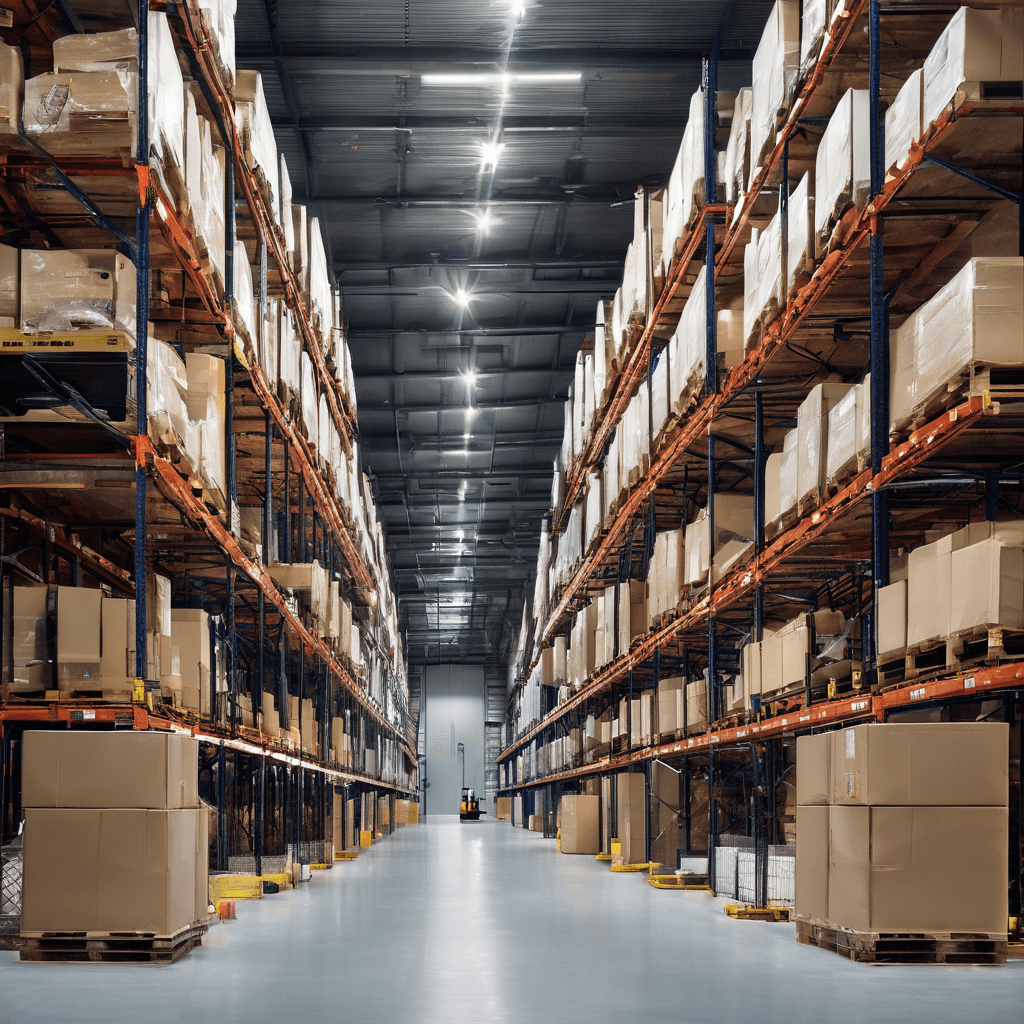
Is your Polish warehouse a bottleneck, not a benefit? Many companies find their Central European hub underperforms, plagued by picking errors and delayed shipments that erode hard-won customer trust. The Polish warehousing sector is booming, with over 40 million sqm of modern space, yet the real competitive edge now lies in advanced quality control protocols. Picture this: a major electronics distributor slashed its return rate by 30% not by moving locations, but by implementing AI-powered visual inspection systems right here in Wrocław. It’s a stark reminder that superior logistics isn't just about square footage. The true game-changer is integrating precision quality processes into the very fabric of your storage and distribution. Let’s examine how the leaders are transforming their Polish facilities from cost centers into pillars of brand reputation.
Why Quality Control Warehousing is Critical in Poland
Poland's position at the heart of Europe isn't just a geographical fact; it's a massive logistical advantage. This centrality, however, comes with heightened expectations. As a critical node for distribution across the EU and beyond, the warehouses here must operate with precision. A single quality lapse can ripple through the entire supply chain, turning a strategic asset into a liability.
The Role of Poland in European Supply Chains
Acting as a primary gateway for goods moving east-west and north-south, Poland handles immense volumes for sectors like automotive, electronics, and fast-moving consumer goods. Major manufacturers rely on Polish logistics centers not just for storage, but for value-added services like kitting, labeling, and final assembly. The country's well-developed infrastructure supports this, but the real competitive edge lies in operational excellence. In practice, a warehouse here isn't a passive endpoint—it's an active quality checkpoint safeguarding products before they reach end consumers in Berlin, Prague, or Warsaw itself.
Risks of Poor Quality Control in Logistics
Cutting corners on QC is a fast track to major headaches and financial loss. Consider the domino effect: incorrect labeling leads to customs delays, damaged goods result in costly returns, and a failure to catch a defective batch can trigger a full-scale recall. The financial hit is one thing; the long-term brand reputation damage is often far worse. For example, a recall in the automotive sector can easily run into millions of euros and erode years of built-up trust. It's a risk that simply isn't worth taking in today's transparent market.
The Business Case for Investment
Smart companies view quality control warehousing not as a cost, but as a strategic investment. The upfront spend on trained personnel, systematic processes, and technology like warehouse management systems (WMS) pays for itself many times over. You see fewer returns, lower insurance premiums, and minimized risk of contractual penalties. Most importantly, it directly boosts customer satisfaction and loyalty. For international clients choosing between multiple logistics providers, a certified QC operation is a key differentiator.
| QC Investment Area | Typical Cost Range | Primary Benefit |
|---|---|---|
| WMS with QC Modules | €50,000 - €200,000+ | Real-time tracking & error reduction |
| Staff Certification Training | €500 - €2,000 per employee | Standardized processes & expertise |
| ISO 9001 Certification | €10,000 - €30,000 (initial) | Market credibility & compliance proof |
Ultimately, compliance with stringent EU regulations and international standards like ISO is non-negotiable. It's the baseline. According to PAIH, Poland's appeal for high-value manufacturing is growing, and those investors consistently prioritize partners with demonstrable quality systems. Building that trust through rigorous warehousing protocols is what secures long-term contracts in a fiercely competitive landscape. For more insights on optimizing your supply chain, explore our Blog.
Core Components of a Quality Control Warehousing System
The backbone of any reliable logistics operation in Poland is a robust quality control (QC) warehousing system. This isn't just about storing goods; it's a proactive, integrated process designed to catch defects, ensure compliance, and protect brand reputation from the moment a pallet arrives until it leaves the gate. A modern Polish warehouse leverages both stringent procedures and smart technology to deliver this.
Inbound Goods Receipt & Inspection
Everything hinges on the initial check. A thorough dock audit is non-negotiable. Teams immediately verify shipment integrity against the purchase order, checking for visible damage, correct labeling, and proper documentation like certificates of analysis for chemicals or food. For detailed inspection, systematic sampling plans like AQL (Acceptable Quality Level) are deployed. For instance, inspecting 15 randomly selected units from a batch of 500 is a common practice. Any discrepancies trigger a hold. Using a Warehouse Management System (WMS), these items are digitally flagged and moved to a designated 'Quarantine' zone, physically preventing them from entering live inventory until approved.
In-Process Storage & Handling
Once cleared, proper storage protocols take over to preserve quality during the warehousing cycle. For sectors like food, pharmaceuticals, or automotive components, FIFO (First-In-First-Out) and FEFO (First-Expired-First-Out) are critical. The WMS automatically tracks batch numbers and expiry dates, directing pickers to the oldest stock first. This is especially vital in Poland's growing cold chain sector, where mismanagement can lead to massive spoilage losses. Environmental monitoring—tracking temperature and humidity in real-time—is now standard. A good system also includes periodic cycle counts to audit stock accuracy, catching issues like shrinkage or misplacement that could later cause an order error.
Outbound Verification & Dispatch
The last line of defense is a rigorous pre-shipment check. This step confirms that the right product, in the correct quantity and configuration, is leaving the building. It goes beyond simple picking; teams validate packaging integrity for the journey, ensure hazard labels are present for dangerous goods, and attach the correct shipping documentation. In practice, many Polish 3PLs use a final audit station where a certain percentage of orders, say 10%, undergo a full re-check before loading. This final verification, often supported by barcode scanning integrated with the WMS, ensures the customer receives exactly what they ordered, every single time.
| QC Stage | Key Action | Typical Tool/Standard |
|---|---|---|
| Inbound | Sampling Inspection | AQL (Acceptable Quality Level) |
| In-Process | Inventory Rotation | FIFO / FEFO WMS Rules |
| Outbound | Order Accuracy Check | Barcode Scan & Visual Audit |
Adopting this layered approach is why Poland remains a competitive logistics hub in Central Europe. According to local industry reports, warehouses with integrated QC modules in their WMS can reduce shipping errors by over 25%, directly impacting customer satisfaction and reducing costly returns. For more insights on logistics trends, check out our Blog.
Key Technologies and Methodologies Driving QC in Poland
The landscape of quality control in Polish warehouses is rapidly evolving, moving far beyond simple visual checks. Modern facilities are leveraging a powerful mix of technology, lean principles, and specialized protocols to ensure goods meet exacting standards before they reach the customer.
Automation and Digital Tools
At the core of this shift is real-time data capture. Barcode and RFID scanning are now standard, creating a digital thread that tracks every item from receipt to dispatch. This isn't just about speed; it’s about absolute traceability. Inspectors armed with mobile devices and tablets log findings—from damaged packaging to batch discrepancies—directly into Warehouse Management Systems (WMS). This eliminates paper trails and instantly flags non-conforming goods. The real power, however, comes from integrating this data into analytics platforms. By analyzing trends, managers can pinpoint recurring defects, like a specific supplier consistently delivering 5% damaged pallets, and address the root cause proactively.
Lean Warehousing and 5S Principles
Technology is supported by a foundation of organizational discipline, often through the 5S methodology (Sort, Set in order, Shine, Standardize, Sustain). A clean, logically organized warehouse is inherently more error-proof. When everything has a designated place and work areas are kept clear, the chance of mixing SKUs or overlooking damaged items plummets. In practice, implementing 5S can lead to a 15-20% reduction in time spent searching for items, according to local industry reports, directly boosting QC efficiency. It’s about creating an environment where quality is built into the daily workflow.
Specialized QC for Different Industries
Poland’s role as a logistics hub for sensitive sectors demands highly tailored QC measures. For pharmaceuticals and food, continuous temperature monitoring with automated alerts is non-negotiable for GDP compliance. Electronics warehouses, meanwhile, commonly feature dedicated anti-static (ESD) zones to prevent microscopic damage to components. The investment in these specialized areas varies significantly based on the required protection level.
| Industry | Key QC Focus | Typical Technology/Standard |
|---|---|---|
| Pharma | Temperature Integrity | IoT Sensors, GDP Compliance |
| Electronics | Static & Moisture Control | ESD Zones, Humidity Loggers |
| Automotive | Part Sequencing & Zero Defects | High-Precision Scanning, Andon Systems |
Ultimately, the goal is a seamless blend of smart tools, disciplined processes, and deep industry knowledge. This integrated approach ensures Polish warehouses don’t just store goods—they actively guarantee their quality. For more insights on logistics trends, visit our Blog.
Choosing a Quality Control Partner in Poland: What to Look For
Selecting the right quality control (QC) partner in Poland is a strategic decision that directly impacts your brand reputation and bottom line. While the market is competitive, focusing on a few critical areas separates the best from the rest.
Certifications and Compliance Track Record
Start by scrutinizing their formal credentials. A valid ISO 9001 certification is the baseline for a structured quality management system. For specific sectors, non-negotiable standards come into play: ISO 13485 for medical devices, Good Distribution Practice (GDP) for pharmaceuticals, and IFS Logistics for food and consumer goods. Don't just check the certificate; ask for audit reports and how they handle non-conformities. A partner with a clean track record in recent audits, as noted in local industry reports, is a strong indicator of operational discipline.
Infrastructure and Technological Capability
The physical setup must enable precise inspections. Look for dedicated, well-lit QC zones separated from regular storage to prevent mix-ups. For sensitive products, climate-controlled areas with documented monitoring are essential. Security, from access controls to CCTV, protects your goods. Crucially, their Warehouse Management System (WMS) must integrate with your ERP or platform. Seamless data flow means real-time visibility into inspection results, non-conformance reports, and inventory status, turning raw data into actionable insights.
Industry-Specific Experience and Flexibility
A partner experienced in your sector understands the nuances. An inspector checking automotive parts for OEM standards uses a different lens than one verifying the expiration dates and packaging of FMCG goods for a major retailer. Ask for case studies and client references in your field.
| Industry | Typical QC Focus Areas | Common Volume Handling |
|---|---|---|
| E-commerce | Visual inspection, packaging integrity, pick accuracy | High-volume, seasonal peaks (+300% during holidays) |
| Automotive | Dimensional checks, material certificates, batch tracing | Lower volume, high-value items |
| Pharma | Temperature log review, label compliance, serialization | Strictly controlled batch quantities |
Finally, ensure they offer scalable solutions. Your needs might grow from inspecting 10% of inbound shipments to a full 100% during a product launch. A good partner adapts their protocols and resources to your unique requirements, providing a truly tailored service. For more insights on the Polish logistics landscape, explore our Blog.
The Future of Quality Control in Polish Logistics
The landscape of quality control (QC) in Polish logistics is shifting from a reactive checkpoint to a proactive, intelligent nerve center. Driven by e-commerce demands and technological leaps, warehouses are evolving to ensure product integrity with unprecedented speed and scope. This transformation is fundamentally reshaping how goods are verified, tracked, and prepared for the end customer.
AI, Machine Learning, and Predictive Analytics
Gone are the days of purely manual inspections. AI-powered visual systems now scan items at high speed, detecting defects—from torn packaging to subtle product flaws—with accuracy rates exceeding 99% in controlled settings. These systems learn from each inspection, constantly improving. Beyond the warehouse walls, predictive analytics crunch data from weather, traffic, and supplier performance to flag potential disruptions before they compromise quality. For instance, a forecasted customs delay might trigger an early QC check on a sensitive shipment, preventing spoiled goods from ever entering storage.
Sustainability and Quality Intersection
Quality now extends beyond the product itself to encompass its provenance. There's a growing, non-negotiable demand from EU consumers and retailers for verified sustainable and ethical sourcing. Polish QC hubs are responding by integrating processes that check and document credentials like organic certifications, recycled material content, and fair labor practices. This isn't just paperwork; it involves audits and sometimes even blockchain-based tracking. A warehouse might now reject a shipment not for damage, but for lacking the proper FSC (Forest Stewardship Council) documentation, a scenario becoming more common.
The Impact of E-commerce and Omnichannel
The pressure from online retail is immense. To meet same-day delivery promises, QC must be hyper-fast yet flawless. This speed is achieved through automation and smart process design, often segregating high-turnover e-commerce stock for prioritized checking. Simultaneously, the boom in returns—with Polish e-commerce return rates estimated between 20-30% according to local industry reports—has made reverse logistics a QC frontier. Every returned item undergoes rigorous inspection to determine its fate: restock, refurbish, or recycle. This process protects brand value and recovers maximum asset value.
| QC Challenge | Traditional Approach | Future-Focused Solution in Poland |
|---|---|---|
| Defect Detection | Manual, sample-based inspection | AI visual systems with >99% accuracy |
| Returns Processing | Lengthy, manual triage | Streamlined stations with barcode/condition scanning |
| Sourcing Verification | Paper certificate checks | Digital audit trails & blockchain ledger |
In practice, the most advanced Polish logistics centers are blending these elements. They use AI to sort returns at speed, predictive models to manage seasonal inventory quality risks, and digital platforms to provide clients with real-time QC data and sustainability scores. The future is a fully integrated, data-driven quality ecosystem. For more insights on logistics trends, visit our Blog.
Conclusion
Ultimately, integrating quality control warehousing in Poland is a strategic investment that directly safeguards brand reputation and ensures stringent compliance with EU regulations. This proactive approach prevents costly recalls and protects the hard-earned trust of your customers. In today's market, a single quality failure can spiral into a major reputational crisis, making these warehousing services not just a logistical function but a critical brand shield.
Strategic Imperative, Not Just a Cost
Businesses must reframe their perspective: quality control is a critical enabler for growth, not a line-item expense. The upfront cost of a detailed inspection pales in comparison to the financial and brand damage of a product recall or consistent customer returns. In practice, we see companies that invest here actually reduce total costs by catching defects before they escalate, turning a potential loss into a reliable safeguard for market trust.
Building a Resilient Supply Chain
A robust QC system is the very foundation of a resilient and customer-centric supply chain. It creates a feedback loop where data from inspections informs manufacturing and procurement, continuously improving product integrity. This means fewer disruptions, predictable inventory quality, and the ability to consistently meet delivery promises. Think of it as building supply chain immunity.
Poland's Competitive Edge
By leveraging advanced technology and deep expertise, Polish logistics providers offer a compelling value proposition for European operations. The combination of skilled labor, strategic geography, and modern infrastructure allows for high-value services at competitive rates. For instance, a typical tech or consumer goods client might see a QC structure like this:
| Service Tier | Typical Cost per Inspection Hour | Key Technologies Used | Common Turnaround |
|---|---|---|---|
| Standard Compliance Check | €25-€35 | Barcode scanners, digital checklists | 24-48 hours |
| Advanced Technical Audit | €40-€60 | Precision measuring tools, connected gauges | 48-72 hours |
| Full Product Lifecycle QC | Custom Quote | IoT sensors, AI-powered visual inspection | Real-time monitoring |
Figures based on local industry reports and can vary by sector and volume.
The evolving landscape, with its emphasis on sustainability and traceability, demands continuous improvement. Partnering with a forward-thinking provider in Poland, where investment in logistics tech is a priority according to PAIH, future-proofs your operations. It's about building a partnership that evolves, ensuring your quality standards not only meet today's demands but anticipate tomorrow's challenges. For more insights on optimizing your European logistics, explore our Blog.
Frequently Asked Questions (FAQ)
What are the main quality control standards for warehouses in Poland?
The main standards to look for are ISO 9001 for overall quality management and the industry-specific Good Distribution Practice (GDP) for pharmaceuticals. For high-value goods, many operators also seek AEO (Authorized Economic Operator) status for secure customs procedures. A practical tip is to ask a potential partner for their certification documents. For example, a warehouse handling electronics or medical supplies should visibly hold ISO 9001 as a baseline, showing they have a controlled, audited process in place.
How does quality control in a Polish warehouse reduce costs for my business?
Think of it as catching problems before they cost you money. For example, a single QC check in a Polish warehouse can spot a mislabeled shipment. Fixing it there costs maybe €50. If it reaches your customer, you face returns, lost trust, and expenses ten times higher. This proactive approach slashes return rates, avoids chargebacks, and prevents you from paying to store or ship defective goods. It turns a small upfront cost into major long-term savings and protects your brand's reputation.
Can quality control processes be customized for different industries in Poland?
Yes, absolutely. Polish quality control and warehousing providers are highly flexible and specialize by industry. For example, a pharmaceutical warehouse will have temperature mapping, validated cold chain processes, and dedicated clean zones, while an automotive parts center focuses on precise barcode scanning and just-in-sequence logistics. The key is to partner with a provider that already has experience in your specific sector—don't settle for a generic operator. They'll know the exact EU and industry standards you need to meet from day one.
What technology is typically used for QC in modern Polish logistics centers?
In modern Polish logistics centers, QC is heavily automated. You'll commonly see barcode and RFID scanning systems for real-time inventory tracking, which drastically cuts down on manual checks. Many top centers also use dimensioning and weighing systems (like cubiscanners) to automatically verify shipment specs against orders. For precision, some implement vision systems or smart cameras to inspect labels and packaging. This tech-driven approach is standard to meet the high accuracy demands of international clients—often targeting 99.9%+ order accuracy. If you're vetting a warehouse, ask specifically about their WMS integration with these automated QC tools.
How does Poland's location in Europe benefit quality control warehousing?
Poland’s central location in Europe is a huge plus for QC warehousing. It means you can receive goods from Asia, inspect them thoroughly, and then dispatch across the EU within 1-3 days. This lets you catch defects before they travel deeper into the continent, saving you from costly returns. For example, a warehouse in Poznań can serve Berlin in under 3 hours. Essentially, you fix quality issues at the EU's doorstep, not in your customer's hands.
Related Articles
Understanding the Cost of Warehouse Services in Poland
Navigating warehouse costs in Poland feels like a maze. You're not alone. With e-commerce booming, logistics space is at a premium. Prime warehouse vacancy r...
Central Europe Warehouse Hub: A Strategic Logistics Guide
Struggling with supply chain bottlenecks and soaring costs? You're not alone. The logistics map of Europe is being redrawn, with Central Europe emerging as t...
European Warehouse Services in Poland: Your Strategic Hub
Struggling with warehouse delays and spiraling logistics costs? You're not alone. Poland has rapidly become the beating heart of European distribution, with ...