
Warehouse and Distribution in Poland: A Strategic Guide
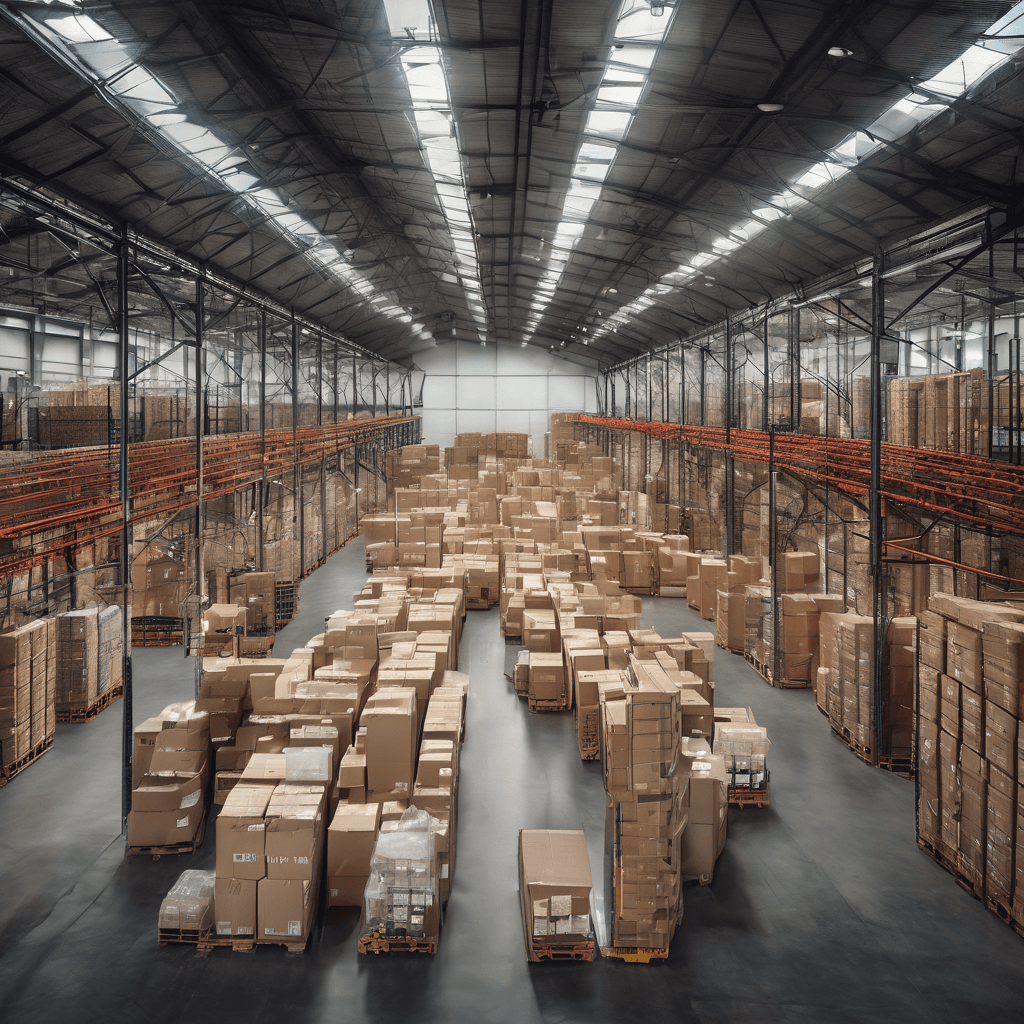
Struggling with supply chain bottlenecks and rising logistics costs? You're not alone. Poland has quietly become Central Europe's undisputed logistics champion, with over 200 million square feet of modern warehouse space. Imagine a major automotive manufacturer slashing delivery times to German factories by 30%—this isn't a hypothetical; it's the daily reality for firms leveraging Poland's strategic pivot. Nestled at the crossroads of the EU, the country offers more than just geography. It provides a resilient, cost-effective solution when traditional routes falter. Let's explore how this dynamic market is rewriting the rules of European distribution and how your operation can benefit.
Why Poland is a European Logistics Powerhouse
Strategically positioned at the heart of Europe, Poland has cemented its role as a critical logistics nexus, connecting East and West with remarkable efficiency. This isn't just about geography; it's a powerful combination of location, economic vitality, and modern infrastructure that creates a compelling case for locating your warehouse and distribution hub here.
Central European Location & Connectivity
Poland’s greatest natural asset is its place on the map. Within a radius of roughly 1000km, you can reach key consumer markets in Germany, the Czech Republic, Slovakia, and beyond, tapping into the spending power of over 500 million EU citizens. This proximity is supercharged by continuous infrastructure investment. Major trans-European transport corridors like the A2 (Berlin-Warsaw) and A4 (Dresden-Krakow-Ukraine) highways are complemented by a rapidly modernizing rail network and intermodal terminals. The game-changer on the horizon is the Central Communication Port (CPK), a massive integrated air, rail, and road project set to become a central logistics hub for the entire region.
Economic Growth and Investment Climate
Two decades of consistent, robust economic growth have built a resilient and predictable environment for business. Poland’s economy has proven its stability, even during broader European downturns. This growth is actively supported by continued EU funding, which finances the very roads, rail upgrades, and digital infrastructure that logistics operations depend on. Companies investing here benefit from a large domestic market and a government, through agencies like PAIH, that is actively pro-investment. In practice, this translates into a lower risk profile for long-term warehouse and distribution commitments.
Skilled and Cost-Effective Workforce
Operational success hinges on people, and Poland delivers a significant advantage. The workforce is not only large but also well-educated, with a strong technical and engineering tradition flowing from its universities. Crucially, labor costs remain competitive compared to Western Europe, directly impacting your bottom line on warehouse operations, management, and logistics planning. When you look at the total cost of operation, the value proposition becomes clear.
| Cost Factor | Poland | Germany | Netherlands |
|---|---|---|---|
| Avg. Warehouse Labor Cost (hourly) | €12 - €18 | €18 - €28 | €20 - €30 |
| Prime Logistics Rent (€/sqm/month) | €4.0 - €5.5 | €6.5 - €8.5+ | €7.5 - €9.5+ |
| Source | Local industry reports, 2024 | BNP Paribas Real Estate | Savills |
This cost efficiency is amplified by Poland’s strong manufacturing base. Housing your distribution center near production plants—common in regions like Upper Silesia or Poznań—enables tightly integrated supply chains and lean, just-in-time delivery models. It’s a synergy that cuts complexity and transit times. For more insights on navigating this dynamic market, check out our Blog.
Key Logistics Hubs and Regions in Poland
Poland's strategic position in Europe has fostered the development of several distinct logistics regions, each with unique strengths. Understanding these hubs is key to optimizing a supply chain.
Central Poland: The 'Big Three' (Warsaw, Łódź, Poznań)
This region is the undeniable core of the country's logistics market. It offers the highest concentration of modern, big-box logistics parks and serves as the preferred location for pan-European distribution centers. The triangle formed by Warsaw, Łódź, and Poznań provides unparalleled access to the national road network and a massive domestic consumer market. Łódź, in particular, has transformed from its industrial past into a major intermodal hub, with its rail terminal handling a significant portion of China-EU rail freight. Rental rates here are typically the highest in Poland, but the connectivity justifies the cost for many major retailers and 3PLs.
Southern Poland: Industrial and Automotive Heartland
Upper Silesia (around Katowice) and Lower Silesia (Wrocław) are the engines of Poland's traditional and advanced industry. This area is crucial for automotive, mining, and heavy industry supply chains, hosting manufacturing plants for global brands and a dense network of suppliers. The A4 motorway acts as the region's backbone, facilitating just-in-time deliveries. Wrocław also serves as a growing alternative to the central region, with strong connections to Germany and the Czech Republic. In practice, logistics facilities here are often tailored for specific industrial needs, including heavy-duty storage and cross-docking.
Western & Southwestern Poland: German Border Advantage
Proximity to Germany, Poland's largest trading partner, defines this zone. Key hubs along the A2 and A4 motorway corridors, such as Poznań (which also fits the central region) and areas near Szczecin, are built for seamless cross-border trade. These locations are prime for companies serving both the German and Polish markets from a single distribution center. The table below highlights key metrics for select western hubs:
| Hub / Region | Primary Advantage | Sample Logistics Park |
|---|---|---|
| Poznań-West | A2 Berlin-Warsaw corridor | Panattoni Park Poznań West Gate |
| Szczecin | Proximity to German ports & Berlin | Port Logistics Center Szczecin |
| Bolesławiec/Legnica | A4 corridor to Dresden & Wrocław | Various parks along the A4 |
Emerging Eastern Gateways and Maritime Hubs
While the west and center dominate, other regions are gaining traction. Eastern cities like Lublin are seeing increased investment, partly driven by growing trade with Ukraine and other Eastern markets, as noted in recent local industry reports. On the coast, port cities are vital gateways. Gdańsk is Poland's primary container port, handling over 2.4 million TEUs annually (Eurostat), and is a key node for Baltic Sea freight. The Szczecin-Świnoujście complex supports project cargo and ro-ro traffic, creating natural logistics backbones in northern Poland. For more on market trends, check our insights on the Blog.
Types of Warehouse and Distribution Services Available
Poland's warehouse and distribution sector has evolved far beyond simple storage, offering a sophisticated menu of services tailored to diverse business needs. From comprehensive outsourcing to highly specialized facilities, companies can find solutions that precisely match their operational and financial goals.
Contract Logistics & 3PL/4PL Providers
For businesses looking to outsource their entire supply chain, full-service Third-Party (3PL) and Fourth-Party (4PL) logistics providers are the go-to solution. These partners offer integrated warehousing, transport management, and a suite of value-added services (VAS) that streamline operations. In practice, this means they handle everything from receiving goods and managing inventory to performing kitting, labeling, and returns processing. A 3PL might run your dedicated e-commerce fulfillment, while a 4PL could manage multiple 3PLs across Europe from a control tower in Warsaw. This model is ideal for companies scaling rapidly or entering the Central and Eastern European market without heavy infrastructure investment.
BTS (Build-to-Suit) and Speculative Developments
The physical infrastructure itself offers remarkable flexibility. Tenants can choose from readily available space in modern speculative developments or commission a custom Build-to-Suit (BTS) facility. Speculative warehouses, often A-class or B-class, provide immediate access to high bay storage (clear heights often exceeding 12 meters), cross-docking capabilities, and solid connectivity. Lease terms have become more adaptable, too. Meanwhile, BTS projects allow major occupiers to design a distribution hub from the ground up, with exact specifications for layout, automation, and energy efficiency. According to local industry reports, BTS accounted for nearly 30% of new supply in 2023, highlighting strong demand for tailor-made solutions.
Specialized Storage: Cold Chain, Hazardous Materials
Certain products demand more than a standard shelf. Poland's market for temperature-controlled logistics is booming, driven by the FMCG, pharmaceutical, and agro-industry sectors. The cold storage capacity is expanding significantly to support these growth areas. Equally critical are secure facilities for hazardous materials (HAZMAT), which require specific certifications, fire protection systems, and trained personnel. For international trade, bonded warehouses and customs warehouses provide a major advantage by allowing deferred duty payments and streamlined customs clearance, optimizing cash flow and simplifying cross-border movements.
| Service Type | Key Features | Typical Clients |
|---|---|---|
| E-commerce Fulfillment | Advanced automation, pick/pack systems, last-mile delivery integration, high-return handling. | Online retailers, D2C brands, marketplaces sellers. |
| Cold Chain Storage | Multi-temperature zones (+15°C to -25°C), monitoring, pharmaceutical GDP compliance. | Food producers, pharma companies, agro-exporters. |
| Bonded Warehousing | Duty suspension, on-site customs control, streamlined import/export. | International manufacturers, traders, automotive. |
The rise of e-commerce has directly fueled the expansion of dedicated fulfillment centers. These hubs are characterized by advanced automation, such as sortation systems and goods-to-person technology, and are tightly integrated with last-mile delivery networks. This specialization ensures next-day delivery to major Polish cities and increasingly across the EU, a capability that's become a standard expectation for consumers.
Critical Factors for Choosing a Logistics Partner
Selecting the right logistics partner in Poland is a strategic decision that directly impacts your cost efficiency, customer satisfaction, and ability to grow. Going beyond simple price comparisons to evaluate these critical operational pillars will safeguard your supply chain.
Technology and IT Integration Capabilities
A partner’s tech stack is the backbone of modern logistics. You need a sophisticated Warehouse Management System (WMS) that does more than track inventory. Look for systems offering real-time visibility into every SKU, advanced pick-path optimization, and seamless API connectivity with your e-commerce platform or ERP. In practice, this means you can see stock levels update instantly, automate reorder points, and push tracking data directly to your customers without manual intervention. Partners investing in these tools typically report picking accuracy rates above 99.5% and can cut order processing times by 30% or more.
Scalability and Network Flexibility
Poland’s central European location makes it a springboard for EU distribution. Your partner must mirror this geographic advantage with a flexible network. Can they quickly scale warehouse space and labor for your peak season, perhaps doubling throughput for Black Friday, and then scale down efficiently? Equally crucial is their ability to support your expansion—whether that’s adding a fulfillment node in Wrocław for the German market or leveraging a partner’s cross-docking hub near the Polish-Ukrainian border for eastern flows. According to local industry reports, leading 3PLs now offer modular contracts allowing clients to adjust their allocated space with a lead time of just 4-6 weeks.
Compliance, Security, and Sustainability
This triad covers your operational, legal, and reputational risk. Strict adherence to EU and Polish regulations is non-negotiable, especially for sensitive sectors. A partner for pharmaceuticals must have EU GDP-certified facilities, while any handling of personal data requires rigorous GDPR protocols. On-site, evaluate security: 24/7 monitoring, access controls, and comprehensive goods-in-transit insurance are standard must-haves. Today, a partner’s commitment to green logistics is also a direct reflection of their operational modernity. Look for concrete investments, not just pledges.
| Sustainability Factor | Basic Provider | Advanced Partner |
|---|---|---|
| Energy Source | Grid electricity | On-site solar panels |
| Fleet | Standard diesel | EV or CNG vehicles for last-mile |
| Waste Management | General recycling | Zero-waste-to-landfill policies |
Finally, scrutinize the Service Level Agreement (SLA). It should define clear metrics, like a 99.9% inventory accuracy or next-day delivery targets for major Polish cities, with tangible penalties for non-compliance. Always ask for client references from your specific sector—a food distributor’s needs differ wildly from an automotive supplier’s—and verify their track record for problem-solving. The right partner acts as a true extension of your own team.
Navigating Legal and Operational Considerations
Establishing a warehouse or distribution hub in Poland requires a clear grasp of the legal and operational landscape. Getting these fundamentals right from the start is what separates a smooth launch from a costly headache. Let's break down the key areas you need to navigate.
Real Estate and Lease Agreements
The Polish logistics real estate market is mature but comes with specific contractual norms. The lease structure is your first major decision. A triple net lease (NNN) is standard, where the tenant covers all operating costs—utilities, insurance, property taxes, and common area maintenance—on top of base rent. Gross leases, where most costs are bundled, are rare. Service charges (czynsz administracyjny) are estimated monthly and reconciled annually; scrutinize these breakdowns. Fit-out responsibility is typically yours, with landlords often offering a rent-free period to offset the capital expenditure. Negotiate this period based on the scale of works needed.
Employment Law and Labor Market Dynamics
Poland's Labor Code provides a robust framework, but flexibility exists. The most common contract types are:
| Contract Type | Key Characteristic | Typical Use |
|---|---|---|
| Employment Contract | Full social benefits, strong termination protection. | Core, permanent staff. |
| Fixed-Term Contract | Maximum total duration of 33 months. | Project-based or seasonal peaks. |
| Mandate Contract | Limited social security, more flexible terms. | Specialized, short-term tasks. |
Unionization in the logistics sector remains relatively low compared to heavy industry, which can simplify operational management. However, competition for skilled forklift drivers and warehouse managers is fierce in major hubs, pushing companies to offer competitive packages beyond the minimum wage.
Customs Procedures and VAT in Poland
Poland's EU membership is a massive advantage for distribution across the continent. Goods move freely to other member states without customs declarations, tariffs, or quotas. This simplifies intra-community trade enormously. For non-EU goods, customs procedures are centralized and modernized. A critical operational point is VAT. While intra-community supplies of goods are generally zero-rated, you must have a valid Polish VAT number and file meticulous EU sales listings (EC Sales Lists). Domestic VAT in Poland stands at 23%, with a reduced 8% rate applicable to some warehousing and transport services. Getting your VAT registration and Intrastat reporting sorted early is non-negotiable for compliance.
Beyond these core areas, two strategic considerations stand out. Investing within a Special Economic Zone (SEZ) can grant significant corporate income tax exemptions—sometimes up to 70%—for meeting investment and job creation criteria. Meanwhile, planning your last-mile strategy is crucial. Major cities like Warsaw and Kraków are implementing stricter access rules for heavier vehicles, and congestion charges are on the horizon. Many operators are now using smaller urban consolidation centers on city fringes, a trend detailed in our Blog.
Future Trends Shaping the Polish Logistics Market
The Polish logistics landscape is undergoing a rapid transformation, driven by technological leaps and shifting global trade patterns. While its central European location and strong workforce remain foundational strengths, the market's future is being shaped by a wave of innovation and strategic repositioning.
Automation, Robotics, and Smart Warehousing
Facing labor shortages and rising wage pressures, warehouse operators are investing heavily in automation. This isn't just about replacing people; it's about augmenting capabilities and achieving new levels of precision. We're seeing a surge in Autonomous Mobile Robots (AMRs) handling goods-to-person picking, which can boost operational efficiency by 20-30% in practice. Automated Storage and Retrieval Systems (AS/RS) are becoming standard in new, high-bay facilities, maximizing cubic storage in a country where land prices are climbing. Behind the scenes, AI and machine learning are crunching data for predictive analytics, optimizing everything from inventory placement to forecasting demand spikes, which slashes overstock and stockouts.
The Rise of Nearshoring and Supply Chain Resilience
Poland has emerged as a primary beneficiary of nearshoring, with companies moving production and logistics closer to core EU markets. The drive for shorter, more secure supply chains post-pandemic and amid global instability has turned Poland's stability and EU membership into a major asset. The Polish Investment & Trade Agency (PAIH) reports sustained high interest from manufacturers, particularly in automotive and electronics. This translates directly into demand for modern, scalable warehouse space, often built-to-suit, with many new projects clustered along the A2 and A4 motorways. In practice, this trend is making Poland less of a cost-only play and more of a strategic logistics hub.
Green Logistics and ESG Imperatives
Sustainability is no longer a niche concern but a core business requirement. Tenants, especially international giants, now demand carbon-neutral or net-zero warehouses equipped with:
- Solar PV installations and smart energy management systems.
- EV charging stations and fleets transitioning to alternative fuels like CNG or, eventually, electric trucks.
- Sustainable building materials and rainwater recycling systems. The push extends to operations, with a sharp focus on reducing waste through reusable packaging and optimizing transport loads. This ESG focus is tightly linked to the next major trend.
Expansion of Multimodal Transport & Urban Logistics To support growing volumes sustainably, Poland is pushing to shift freight from road to rail. Key projects aim to improve intermodal connectivity, reducing both road congestion and carbon footprint. Simultaneously, the e-commerce explosion is forcing a rethink of last-mile delivery. Developers are now looking at smaller, urban logistics hubs or micro-fulfillment centers on city outskirts. These facilities enable faster, cheaper delivery for online orders and help manage inner-city traffic, a balancing act that's crucial for the market's long-term health. For more insights on these evolving dynamics, check out our Blog.
Conclusion
Poland has cemented its position as a central pillar of European logistics, offering a rare blend of geographic advantage, economic resilience, and increasingly sophisticated infrastructure. For businesses aiming to strengthen or redesign their European supply chain, the Polish market delivers a compelling, future-proof proposition. The journey to success, however, depends on strategic navigation from the outset.
Strategic Summary: Poland's Competitive Edge
The country's strength isn't a single factor but a powerful combination. Sitting at the literal crossroads of Europe, it provides unparalleled access to both EU and Eastern markets. This is backed by a decade of heavy investment in roads, rail, and modern warehouse stock, with over 30 million sqm of modern logistics space available according to local industry reports. Economically, stability is key—a large, skilled workforce and consistent growth, even during broader downturns, make it a reliable bet. The numbers speak for themselves when comparing key logistics hubs:
| Location | Avg. Prime Rent (€/sqm/month) | Key Advantage | Labor Cost Index |
|---|---|---|---|
| Central Poland (Łódź) | €4.00 - €4.50 | Pan-European distribution | 100 (baseline) |
| Upper Silesia | €3.80 - €4.20 | Industrial & manufacturing synergy | ~95 |
| Western Poland (Poznań/Wrocław) | €4.20 - €4.80 | German market proximity | ~105 |
Final Recommendations for Market Entry
Jumping in headfirst can be risky in such a dynamic environment. A phased approach is the smart play. Partnering with an experienced 3PL provider lets you test the waters, gain crucial market insight, and scale operations without massive upfront capital. In practice, this mitigates initial risk beautifully. Choosing the right region and a partner isn't just about storage; it's about finding a technologically adept ally whose capabilities—think WMS integration and data visibility—align with your long-term growth, not just your immediate needs.
Looking ahead, staying informed on automation trends and tightening sustainability regulations will be non-negotiable for maintaining long-term efficiency. The market moves fast. For companies ready to optimize their European footprint, Poland isn't just an option; it's a strategic imperative offering a robust platform for growth. Explore more insights on our Blog or return to the Home page for further resources.
Frequently Asked Questions (FAQ)
What are the main advantages of using Poland for warehouse and distribution?
Poland's main advantage is its central European location, which lets you reach major markets like Germany or the Czech Republic within a day. It's significantly more cost-effective than Western Europe for labor and warehouse space. Being in the EU means no customs duties when shipping to other member states, simplifying logistics. You also get a large, skilled workforce—many logistics hubs, like the one near Poznań, are built for this. It's a practical base to grow your European operations efficiently.
Which cities in Poland are the best for logistics centers?
For a major national hub, you can't beat Poland's central "Big Three": Warsaw, Łódź, and Poznań. They offer the best domestic connectivity. If you're focused on southern European manufacturing supply chains, look at the industrial power of Upper Silesia, like Katowice. For seamless access to Germany and the EU market, the western border regions around Wrocław and Zielona Góra are ideal. Seriously, your choice depends heavily on whether your main flow is domestic, from the south, or to the west.
How much does it cost to rent warehouse space in Poland?
Warehouse rental costs in Poland vary a lot. In major logistics hubs like Central Poland (Łódź, Warsaw), you might pay €3.5–€5.5 per sqm/month for a modern Class A warehouse. In less central regions, it can drop to €2.5–€4. This is generally 30–50% cheaper than in Western Europe. The final price depends heavily on the facility's class, location, and lease terms. For a specific idea, check listings on major Polish commercial real estate sites, filtering by your target region.
What is the difference between a 3PL and a 4PL provider in Poland?
A 3PL in Poland is your hands-on operator. They run the day-to-day—like a specific warehouse in Wrocław handling your storage, picking, and last-mile delivery. A 4PL is your strategic manager. They don't own assets but oversee the entire supply chain. Think of them as a single point of contact that manages multiple 3PLs (e.g., your warehousing in Wrocław, transport from a second provider, and customs brokerage from a third). Choose a 3PL to outsource operations; choose a 4PL if you need someone to integrate and optimize your whole logistics network.
Are there bonded warehouses available in Poland?
Yes, Poland has many bonded warehouses, which are great for international traders. They let you store goods from outside the EU without paying customs duties or VAT until the goods are released for sale. This helps a lot with cash flow. You'll find them strategically located near major logistics hubs, like the ports of Gdańsk and Gdynia, and along key border crossings with Germany and the Czech Republic. For a specific option, check out the extensive bonded facilities at the CLIP Logistics Center near Poznań.
Related Articles
Understanding the Cost of Warehouse Services in Poland
Navigating warehouse costs in Poland feels like a maze. You're not alone. With e-commerce booming, logistics space is at a premium. Prime warehouse vacancy r...
Central Europe Warehouse Hub: A Strategic Logistics Guide
Struggling with supply chain bottlenecks and soaring costs? You're not alone. The logistics map of Europe is being redrawn, with Central Europe emerging as t...
European Warehouse Services in Poland: Your Strategic Hub
Struggling with warehouse delays and spiraling logistics costs? You're not alone. Poland has rapidly become the beating heart of European distribution, with ...