
Warehouse Management Services in Poland: A Complete Guide
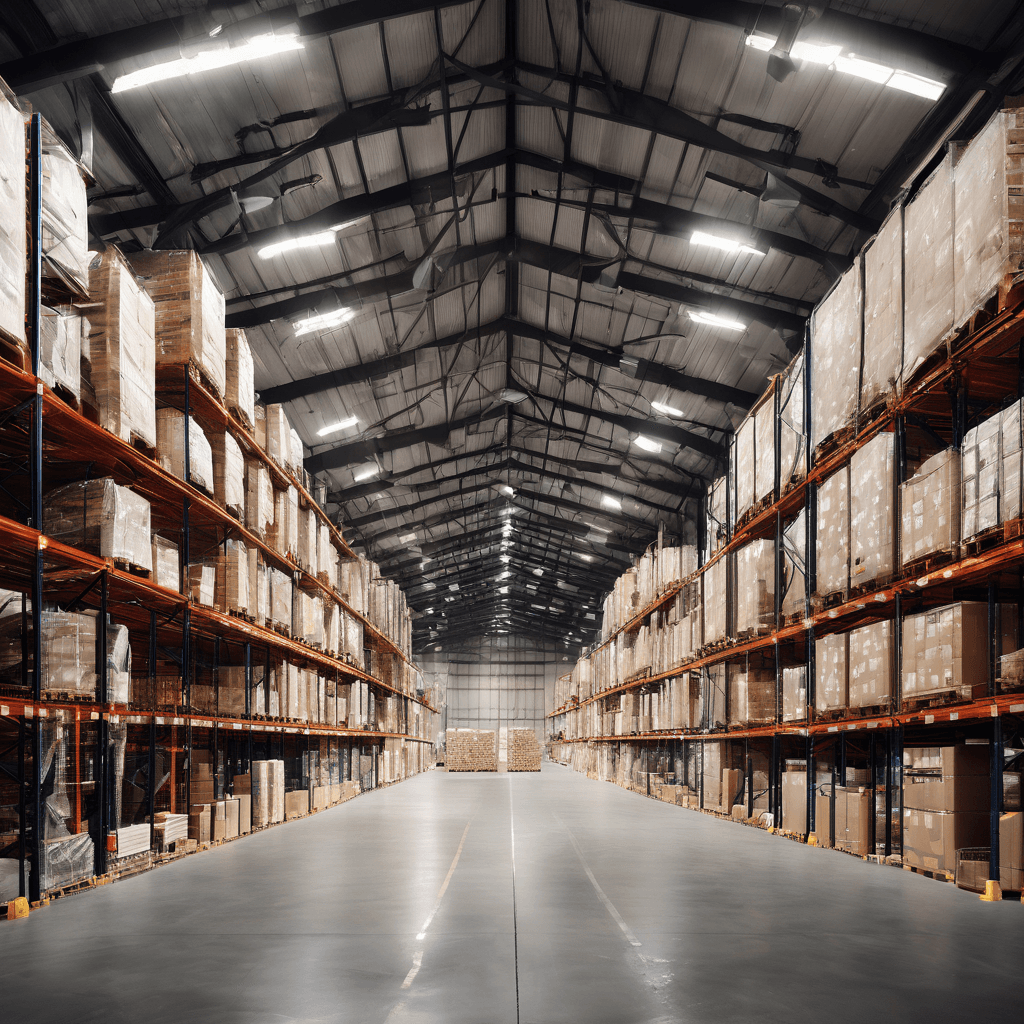
Poland's warehouse space has exploded, growing by over 25% in just two years. Yet, more square meters don't guarantee efficiency. Imagine a perfect order delayed because inventory data was wrong, or a sudden customs snarl halting your Central European distribution. That's the hidden cost of a fragmented logistics operation. Many companies find their Polish warehouse, while cost-effective initially, becomes a bottleneck as sales grow across the EU. It’s not just about storage anymore; it’s about real-time visibility, seamless integration, and navigating complex regional regulations. The right logistics partner transforms this challenge into your greatest competitive edge—here’s how the leaders are doing it.
What Are Warehouse Management Services?
At its heart, warehouse management services (WMS) are a comprehensive suite of logistics and operational solutions designed to handle the entire lifecycle of goods within a storage facility. This goes far beyond just renting four walls and a roof. Think of it as outsourcing the entire warehousing function to a specialist partner who manages everything from receiving and putaway to picking, packing, and shipping, all while providing real-time visibility into your inventory.
Core Definition and Scope
The scope of full-service WMS is broad, integrating three critical pillars: technology, labor, and standardized processes. A true service provider doesn't just offer space; they deploy Warehouse Management Systems (WMS software), barcode/RFID technology, and often integrate directly with a client’s e-commerce or ERP platform. They manage the skilled workforce for day-to-day operations and enforce process excellence to ensure accuracy and speed. This is fundamentally different from a simple lease agreement.
| Aspect | Simple Space Rental | Full-Service WMS |
|---|---|---|
| Control & Responsibility | Client manages all operations | Provider manages operations |
| Technology | Client provides own WMS/software | Provider supplies and manages WMS |
| Labor | Client hires and manages staff | Provider employs and trains the warehouse team |
| Cost Model | Fixed rent + client's variable costs | Variable, often activity-based (cost per pallet, per pick) |
| Scalability | Limited by leased space | Flexible, can scale operations up/down quickly |
Beyond Simple Storage: The Modern Role
Today’s warehouse is a dynamic hub, not a static archive. The evolution from storage to a strategic supply chain function is driven by e-commerce and the demand for faster fulfillment. In practice, modern WMS providers in Poland are actively involved in value-added services that directly impact a client’s bottom line and customer satisfaction. Common examples include:
- E-commerce fulfillment: Managing 500+ daily picks per employee for online orders, including custom packaging and returns processing.
- Cross-docking: Minimizing storage time by transferring goods directly from inbound to outbound trucks, often within 24 hours.
- Light assembly, kitting, and labeling: Preparing products for specific retail or promotional requirements.
The ultimate goal is seamless optimization—maximizing the flow of inventory, utilizing every cubic meter of space efficiently, and ultimately controlling costs. This allows businesses to focus on growth while their logistics partner handles the complexities of the warehouse, a trend strongly supported by the growth of the Polish logistics market, as noted in local industry reports. For more insights on logistics trends, you can explore our Blog.
Key Services Offered by Polish 3PL Providers
Polish third-party logistics (3PL) providers deliver a comprehensive suite of services, making them a central pillar of European supply chains. Their offerings blend rock-solid fundamental operations with advanced technological support and a high degree of flexibility.
Core Logistics Operations
This is the backbone of any warehouse. It starts with the precise receiving and put-away of goods, utilizing diverse storage systems from high-bay pallet racking to dynamic shelf and bin solutions tailored for small items. Order picking—whether piece-pick, carton-pick, or full-pallet—is optimized for speed and accuracy, directly impacting your customer satisfaction. Packing is then adapted to the shipment, ensuring products are secure and presentation-ready, especially crucial for e-commerce clients. Efficient providers here often achieve picking accuracy rates above 99.5%, a real differentiator.
Value-Added Services (VAS)
Beyond storage and shipping, Polish 3PLs excel at customizing the product flow. This includes:
- Cross-docking: Minimizing storage time for fast-moving goods, sometimes turning inventory in under 24 hours.
- Co-packing & Kitting: Bundling products into promotional kits or retail-ready packages.
- Labeling & Re-labeling: Applying local language tags or compliance labels for different markets.
- Returns Management: Handling the entire reverse logistics process—inspection, restocking, or disposal—which is a massive pain point solved efficiently.
Technology and Reporting
Modern warehouses in Poland run on sophisticated Warehouse Management Systems (WMS). This provides real-time inventory visibility, from the moment a pallet is received to its final dispatch. You’re not left in the dark; clients typically get access to a portal showing live stock levels, order statuses, and performance dashboards. Regular KPI reports detail everything from order cycle times to cost-per-unit handled. This data-driven approach allows for continuous optimization.
| Service Customization by Industry | Typical Requirements | Common Polish 3PL Adaptations |
|---|---|---|
| E-commerce & Retail | Peak season surges, single-item picks, returns. | Scalable labor, automated sortation, dedicated returns zones. |
| FMCG | High turnover, strict expiry dates, retail compliance. | FIFO systems, lot tracking, cross-docking facilities. |
| Automotive | Sequence production, high-value parts, Just-in-Time. | Secure cages, integrated transport planning, VMI programs. |
On top of warehouse services, many providers offer integrated transport management. They coordinate last-mile delivery with local carriers and handle freight forwarding for international distribution, creating a seamless door-to-door service. The real advantage lies in how these services are bundled and customized. Whether you're in e-commerce facing wild seasonal swings or in automotive needing just-in-sequence delivery, Polish 3PLs build solutions around these specific needs, not the other way around. For a deeper look at logistics trends, explore our insights on the Blog.
Why Poland is a Strategic Hub for Warehouse Management
Strategically positioned at the heart of Europe, Poland has transformed into a powerhouse for warehouse management services. Its rise isn't accidental; it's the result of a powerful combination of location, modern infrastructure, and economic fundamentals that create a compelling case for logistics operations targeting the European market.
Geographic and Infrastructure Advantages
Poland’s central European location is its foundational strength. It serves as a natural crossroads, offering seamless access to both Western European markets and the growing economies of the East. This connectivity is backed by a dense and modernizing network of highways (like the A2 and A4 motorways), extensive rail lines, and key Baltic Sea ports. The ports of Gdańsk and Świnoujście, for instance, handle massive container volumes and are undergoing continuous expansion, linking sea freight directly to Central European distribution channels.
This geographic advantage is capitalized upon by a booming sector of modern logistics parks. Developers like Panattoni and 7R have built vast, state-of-the-art facilities in strategic clusters around major cities and along transport corridors. Key hubs include:
| Logistics Hub | Key Advantages |
|---|---|
| Central Poland (Łódź, Warsaw) | Central location, largest domestic market, excellent multimodal connections. |
| Western Poland (Poznań, Wrocław) | Prime access to German market, high density of manufacturing and distribution centers. |
| Southern Poland (Upper Silesia, Kraków) | Strong industrial base, proximity to Czech and Slovak markets. |
In practice, this means a warehouse in Poznań can reach over 500 million EU consumers within a day's drive, a logistical reality that makes Poland a true gateway.
Economic and Labor Market Strengths
Beyond location, the economic argument is robust. Operational costs for warehouse management—from labor to utilities and real estate—remain highly competitive compared to Western Europe. While costs have risen, they still offer significant savings, often 20-30% lower than in Germany or the Benelux countries, according to local industry reports. This cost efficiency doesn’t come at the expense of quality.
The workforce is a standout asset. Poland boasts a large, well-educated labor pool with a strong work ethic and a growing number of logistics specialists. In major hubs like Warsaw, Poznań, and Wrocław, it's commonly seen that warehouse staff and managers are often multilingual—fluent in English and frequently in German—which smoothes international operations and management. The presence of numerous technical universities ensures a steady pipeline of talent for more complex supply chain roles. This blend of skill and cost-effectiveness is tough to beat on the continent, making Poland not just a tactical choice but a strategic one for long-term logistics investment. For more insights on market trends, check our Blog.
Choosing the Right Warehouse Partner in Poland
Selecting a warehouse partner in Poland is a strategic decision that directly impacts your supply chain's efficiency, cost, and customer satisfaction. Rushing this choice can lead to logistical headaches and unexpected expenses. A methodical approach, focusing on your specific needs and a provider's proven capabilities, is the only way to secure a partnership that fuels growth rather than hinders it.
Defining Your Requirements
Start by looking inward. A clear understanding of your own operations is non-negotiable. This isn't just about square meters; it's about aligning the warehouse's capabilities with your business reality.
- Volume & Dynamics: Forecast your average monthly pallet movements and be brutally honest about peak season spikes. A partner should handle your December volume being 300% higher than your August low without collapsing.
- Product Profile: Are you storing ambient goods, electronics requiring ESD protection, or chilled food at 2-8°C? Each type demands different infrastructure, which affects cost and provider shortlists.
- Growth Trajectory: Discuss your 2-3 year plan. A good partner will offer scalable solutions, perhaps starting with a dedicated 5,000 sqm zone with a clear path to expansion.
| Requirement Aspect | Key Questions to Answer | Example / Data Point |
|---|---|---|
| Volume & Seasonality | What are your average and peak monthly pallet inflows/outflows? | Peak season volume 2.5x higher than baseline. |
| Product Type | Do goods require temperature control, hazardous material handling, or high-security? | Chilled pharmaceuticals (2-8°C), high-value electronics. |
| Future Growth | What is your expected growth in volume over the next 24 months? | Plan to increase SKU count by 40% within 18 months. |
Evaluation Criteria for Providers
With your requirements mapped, shift focus to vetting potential partners. This moves beyond a simple price comparison to a deep dive into operational and cultural fit.
Facility and Compliance: Location is about more than a dot on a map. Proximity to key motorways like the A2 or A4 and multimodal hubs is critical for national and EU distribution. Inspect, or at minimum demand evidence of, modern fire suppression systems, 24/7 security with CCTV, and relevant certifications. For many industries, holding ISO 9001 (quality), GDP for pharmaceuticals, or AEO status for streamlined customs is a must-have, not a nice-to-have.
Technology and Integration: The backbone of modern logistics is the Warehouse Management System (WMS). Ask for a demo. You need real-time inventory visibility, seamless integration via API or EDI with your e-commerce platform or ERP, and transparent, automated reporting. In practice, the best providers offer a client portal where you can track KPIs like picking accuracy (should be >99.5%) and order cycle times.
Partnership and Agreement: Finally, scrutinize the Service Level Agreement (SLA) and the company behind it. Check references from businesses similar to yours. The SLA should detail everything: costs for storage, handling, and value-added services, with a clear structure to avoid hidden fees. Crucially, it must include flexibility clauses—can you scale space up or down with reasonable notice? Their financial stability and industry experience are your safeguards for a long-term, reliable partnership. For more insights on the Polish market, you can explore our Blog.
Trends Shaping the Future of Warehousing in Poland
The Polish warehousing landscape is undergoing a rapid transformation, fueled by a potent mix of e-commerce growth, shifting supply chains, and technological ambition. To stay competitive, companies are moving beyond basic storage, adopting sophisticated solutions that redefine efficiency and resilience. This evolution is particularly evident in two critical areas: the integration of advanced robotics and a genuine commitment to sustainable operations.
Automation and Robotics
Facing persistent labor shortages and pressure for faster order cycles, warehouse operators are turning to automation as a strategic necessity. It's no longer just about conveyor belts; the focus is on flexible, intelligent systems. Autonomous Mobile Robots (AMRs) are now commonly seen navigating aisles, transporting goods to pickers, which can boost picking efficiency by 25% or more. For high-volume operations, Automated Storage and Retrieval Systems (AS/RS) are game-changers, using towering racks and robotic cranes to maximize cubic space and ensure pinpoint accuracy. The choice of system depends heavily on the specific use case and required throughput.
| Automation Type | Typical Application | Key Benefit |
|---|---|---|
| Autonomous Mobile Robots (AMRs) | Goods-to-person picking, transport | Flexibility, reduced worker travel |
| Automated Storage/Retrieval (AS/RS) | High-density storage of small items | Massive space utilization, speed |
| Automated Guided Vehicles (AGVs) | Repetitive horizontal transport of pallets | Reliability for defined routes |
Sustainability and ESG Focus
Green initiatives have shifted from a marketing bonus to a core operational and economic factor. Investors and clients increasingly demand ESG compliance, making sustainable warehouses more attractive and often cheaper to operate in the long run. In practice, this translates into widespread installation of solar panels on vast warehouse roofs—some new facilities generate over 1 MW of power. On-site EV charging stations are becoming standard, while smart building systems meticulously manage energy for lighting and heating. Waste reduction programs, particularly in packaging for B2C fulfillment, are a major focus area, driven by both cost savings and environmental responsibility.
Beyond these pillars, the market is being reshaped by data and geopolitics. Advanced Warehouse Management Systems (WMS) now integrate AI for predictive analytics, forecasting demand spikes and optimizing inventory placement to cut down on last-minute scrambles. Simultaneously, the nearshoring trend is a massive driver. As manufacturers, especially from the automotive and electronics sectors, relocate operations from Asia to Poland, they require sophisticated logistics hubs nearby. According to PAIH and local industry reports, this has created sustained demand for modern, scalable warehouse space, pushing net absorption rates to record levels. For a deeper look at how these factors influence logistics strategy, explore our insights on the Blog.
Conclusion
Poland has cemented its role as a Central European logistics powerhouse, and for good reason. The combination of its central geography, continuous infrastructure upgrades, and competitive operational costs creates a foundation that's tough to beat. But the real value isn't just in the square meters; it's in the sophisticated warehouse management services that turn static storage into a dynamic competitive advantage. These services are the engine for supply chain resilience and directly impact your customer's experience, from order accuracy to delivery speed.
Strategic Summary
Think of modern warehouse management in Poland as a strategic lever, not a cost center. The market offers a clear progression from basic storage to fully integrated, tech-driven solutions. While basic pallet-in/pallet-out storage might cost from €3.50 to €5.50 per pallet per month, the real transformation happens with value-added services. A partner handling complex e-commerce fulfillment, for instance, manages a completely different set of challenges—returns processing, kitting, and same-day dispatch—which commands a different price structure but delivers immense value. The evolution towards automation and sustainable practices, supported by local industry reports highlighting a 20%+ annual growth in automated storage and retrieval system (ASRS) installations, means your operation can be both efficient and future-proof.
Final Recommendation
Don't rush the selection process. Your choice of a logistics partner in Poland will define your operational agility for years. It boils down to a precise alignment of needs and capabilities.
- Audit your own operation first. Be brutally honest about your peak season volumes, SKU complexity, and growth projections.
- Prioritize technology transparency. The provider's WMS should be a open book, offering you the real-time visibility you need. In practice, the best partners treat their tech stack as a collaborative tool.
- Visit the shortlisted facilities. Seeing the operation, the team, and the safety culture in person reveals more than any brochure.
Investing time here is non-negotiable. The right partnership unlocks Poland's full potential, turning geographical advantage into a seamless, reliable extension of your own business. For more insights on navigating the European logistics landscape, explore our Blog.
Frequently Asked Questions (FAQ)
What is the average cost of warehouse management services in Poland?
The average cost really depends on your specific needs, but to give you a ballpark figure, you can expect storage fees to start around €4-€8 per pallet position per month. Then there's a handling fee, which might be €2-€5 per order line. So for a small operation with 10 pallets and 50 order lines a month, you could be looking at roughly €65-€130 just for those two core services. Always ask for a detailed breakdown, as extra services like labeling or returns processing will add to the final price. Getting quotes from a few providers is the best move.
How do Polish warehouse services handle e-commerce fulfillment?
Polish e-commerce fulfillment centers are really hands-on. They use integrated warehouse management systems (WMS) to handle everything from receiving your stock to shipping individual orders. When a customer buys from your Shopify or Allegro store, the order flows directly to the warehouse. Their teams then pick and pack that specific item, often with a goal of same-day dispatch for orders before a cutoff time, like 3 PM. They also handle the returns process for you, making the whole cycle pretty seamless.
What certifications should I look for in a Polish logistics provider?
When choosing a logistics partner in Poland, prioritize a few key certifications. Look for ISO 9001 for quality management and ISO 14001 for environmental care. If you import/export, an AEO (Authorized Economic Operator) status is crucial for smooth customs. For pharmaceuticals or sensitive goods, GDP certification is non-negotiable. A provider with, say, AEO and GDP clearly handles complex supply chains. Start by asking for their certification list—it’s a quick way to filter for proven, reliable operators.
Can I integrate my company's ERP system with a Polish warehouse's WMS?
Yes, you can definitely integrate your ERP with a Polish warehouse's WMS. Most professional logistics providers in Poland offer this, typically using API or EDI connections. This lets your systems talk in real-time, so your ERP (like SAP or Microsoft Dynamics) automatically gets updates on stock levels, order statuses, and shipping details from their warehouse. It eliminates manual data entry and cuts errors. When you're looking at potential partners, just ask them directly: "Do you provide API or EDI integration with my ERP system?" It's a standard service for modern operations.
Is Poland a good location for storing goods destined for other EU countries?
Yes, Poland is an excellent choice. Its central location in Europe means you can reach major markets like Germany or the Czech Republic quickly, often within a day. The country has a huge network of modern, EU-compliant warehouses, and logistics costs are very competitive. For example, many companies use a warehouse in Poland to handle all their EU distribution, saving up to 20-30% on storage compared to Western Europe. It’s a practical, cost-effective hub to store your goods and then easily ship them across the single market.
Related Articles
Understanding the Cost of Warehouse Services in Poland
Navigating warehouse costs in Poland feels like a maze. You're not alone. With e-commerce booming, logistics space is at a premium. Prime warehouse vacancy r...
Central Europe Warehouse Hub: A Strategic Logistics Guide
Struggling with supply chain bottlenecks and soaring costs? You're not alone. The logistics map of Europe is being redrawn, with Central Europe emerging as t...
European Warehouse Services in Poland: Your Strategic Hub
Struggling with warehouse delays and spiraling logistics costs? You're not alone. Poland has rapidly become the beating heart of European distribution, with ...