
Warehouse Services in Poland: A Strategic Guide for Businesses
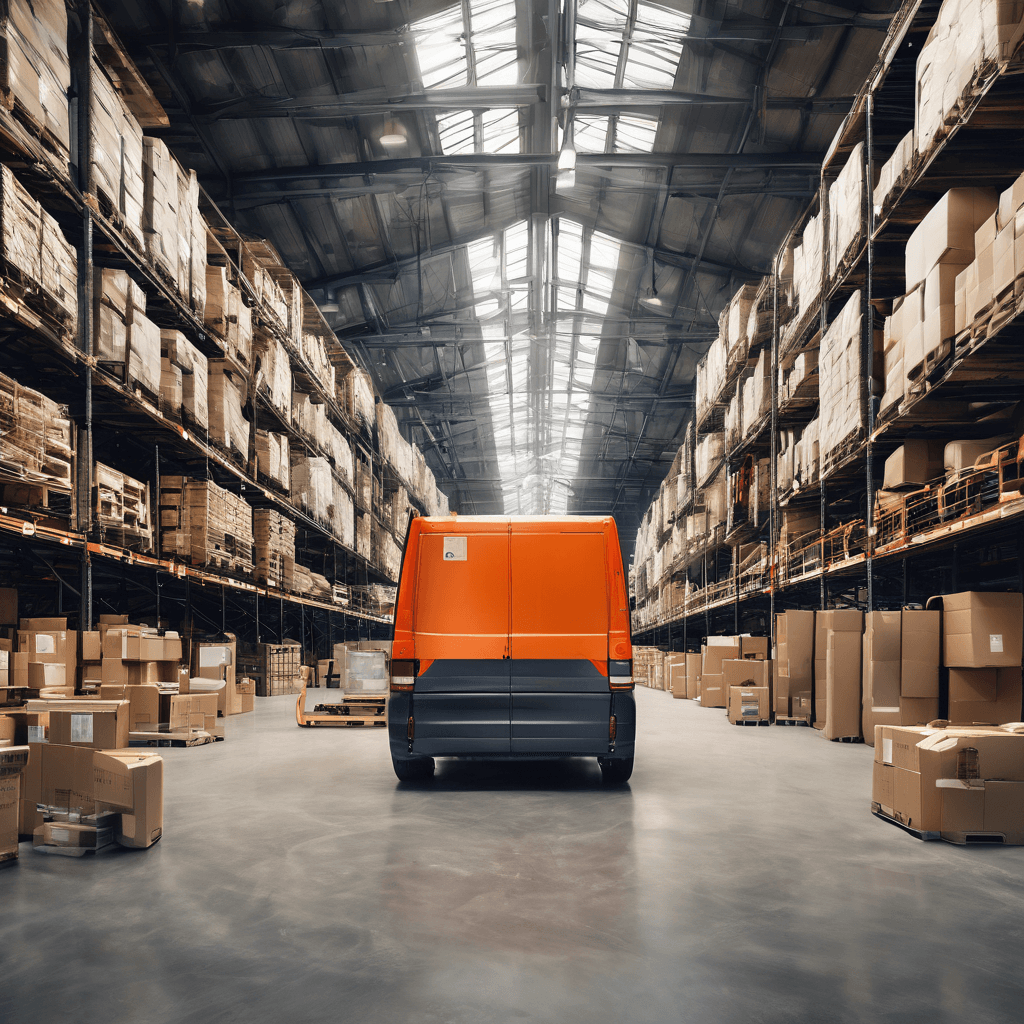
Struggling to get your products from Central Europe to the rest of the continent efficiently? You're not alone. Poland has rapidly become the logistics heart of Europe, with its warehouse market growing by over 20% annually. Imagine a client who needed to slash delivery times to Germany; by leveraging a strategic fulfillment center in Wrocław, they cut transit from five days to just 48 hours. This isn't just about storage—it's about smart, scalable solutions that turn geographical advantage into a competitive edge. The real question is whether your current logistics partner is keeping pace with this transformation, or if you're leaving money on the table. Let's examine how the right Polish warehouse strategy can redefine your supply chain.
Why Poland is a European Logistics Powerhouse
Strategically positioned at the heart of Europe, Poland has cemented its role as a critical logistics nexus. Its central location offers unparalleled access to a consumer base of hundreds of millions, making it a launchpad for distribution across the continent. This geographic advantage, paired with a robust economic climate and a wave of modern development, creates a compelling case for locating your warehouse operations here.
Strategic Geographic Location
Poland isn't just in Europe; it's at the crossroads of major economic regions. Within a single day's drive, you can reach key markets in Germany, the Czech Republic, and the Baltic states. This proximity translates into tangible savings on fuel and reduced transit times. For companies eyeing expansion eastward, Poland serves as the perfect gateway to Ukraine and other Eastern European markets, while its northern ports like Gdańsk provide efficient sea links to Scandinavia and beyond. In practice, this means a single distribution center in Poland can effectively serve a diverse and sprawling customer base.
Economic Stability & Growth
A stable, EU-member state with a consistently growing economy provides the secure foundation necessary for long-term logistics investment. Poland has been a top destination for foreign direct investment in Central and Eastern Europe, with a significant portion flowing into the industrial and logistics sector. This confidence is backed by massive, ongoing investment in infrastructure. The government and EU have funded extensive upgrades to the road network, including the crucial A2 and A4 motorways, and are revitalizing rail corridors for efficient intermodal transport. According to PAIH, Poland's investment agency, the country boasts over 4,600 km of modern motorways and expressways, a network that's still expanding.
Skilled Workforce & Infrastructure
The engine of this logistics powerhouse is its people. Poland boasts a large, well-educated pool of logistics professionals, from warehouse managers and supply chain analysts to truck drivers and IT specialists. Universities across the country offer specialized courses in logistics and international trade, ensuring a steady pipeline of talent. This workforce operates within a rapidly modernizing landscape of industrial real estate. Developers are continuously delivering state-of-the-art warehouse spaces that meet high specifications.
| Feature of Modern Polish Warehouses | Typical Specification |
|---|---|
| Clear Height | 12m or more |
| Floor Loading Capacity | 5-7 tons/m² |
| Docking Gates | 50-100+ for larger facilities |
| ESG Compliance | Widespread solar panels, BREEAM/LEED certification |
These facilities, often built on speculative basis, are readily available in key logistics hubs like Warsaw, Poznań, Wrocław, and Upper Silesia. For a deeper look at market trends, check out our insights on the Blog. The combination of skilled labor and cutting-edge infrastructure means operations can scale quickly and efficiently, a fact that global logistics giants have leveraged to great success.
Core Types of Warehouse Services Available
Businesses looking to optimize their supply chain in Central Europe will find a mature and highly segmented warehouse market in Poland. The range of services goes far beyond simple storage, allowing companies to tailor logistics operations precisely to their needs, whether they're an e-commerce startup or a global manufacturer.
Public vs. Contract Warehousing
Choosing the right storage model is foundational. Public warehousing, also known as multi-client, offers flexible, short-term agreements where space, labor, and equipment are shared among multiple clients. It's a fantastic, low-commitment solution for seasonal peaks, startups testing the market, or companies needing immediate overflow space. Contract warehousing flips the script, providing dedicated space and a fully customized operation for a single client, typically under a longer-term agreement (3-5 years is common). This model allows for complete integration with the client's systems and processes, offering greater control and often lower per-unit costs at high volumes. The choice, in practice, boils down to a trade-off between flexibility and customization.
| Feature | Public Warehousing | Contract Warehousing |
|---|---|---|
| Contract Length | Short-term, flexible (month-to-month) | Long-term, fixed (3+ years) |
| Space & Resources | Shared with other companies | Dedicated to your company |
| Customization | Limited to available services | Highly tailored to your processes |
| Cost Model | Variable, pay-as-you-use | Fixed + variable, often volume-based |
Value-Added Services (VAS)
Modern logistics providers in Poland understand that storage is just the beginning. To truly add value, they bundle a host of ancillary services that streamline the final leg to the customer. These VAS can include:
- Product preparation: Kitting (creating bundles), labeling, tagging, and light assembly.
- Order fulfillment: Pick-and-pack, customized packaging, and direct-to-consumer shipping.
- Returns management: Full reverse logistics, including inspection, restocking, or disposal.
By outsourcing these tasks, companies can focus on core activities while their logistics partner handles the complexities of last-mile readiness.
Specialized Storage Solutions
Poland's warehouse infrastructure caters to demanding product categories with specialized facilities. Temperature-controlled storage, spanning from chilled (2-8°C) to deep frozen (-25°C), supports the robust food and pharmaceutical sectors. Warehouses with appropriate certifications and security protocols—often featuring 24/7 monitoring, alarmed cages, and restricted access—are available for high-value electronics or luxury goods. Furthermore, operators with ADR certifications provide secure handling for hazardous materials. The growth in these niches, as highlighted in local industry reports, reflects Poland's evolving role as a strategic logistics hub for sophisticated supply chains. For more insights on market trends, you can explore our Blog.
Key Factors When Choosing a Provider
Selecting the right warehouse partner in Poland is a strategic decision that directly impacts your supply chain efficiency and customer satisfaction. Getting it wrong can lead to costly delays and operational headaches. Focus on these three critical areas to make an informed choice.
Location & Connectivity Analysis
This is your top priority. A warehouse's location dictates both your inbound logistics costs and your ability to serve key markets swiftly. Look for facilities with direct access to Poland’s dense motorway network, especially the A2 (Berlin-Warsaw) and A4 (German-Ukrainian border) corridors. Proximity to major intermodal rail terminals, like those in Poznań or Upper Silesia, is a huge plus for cost-effective long-haul transport. If you're importing or exporting via sea, the Tri-City ports (Gdańsk, Gdynia) and Szczecin-Świnoujście are booming, with Gdańsk handling over 55 million tons of cargo annually according to recent port authority data. Ultimately, the ideal spot balances these transport links with being close to your primary customer clusters—Central Poland often serves as a perfect distribution hub for the entire EU.
Technology & Warehouse Management Systems (WMS)
Modern logistics runs on data. A provider’s tech stack isn't just a nice-to-have; it's the backbone of visibility and accuracy. Insist on a robust WMS that offers you real-time inventory tracking—knowing your stock levels down to the last unit should be a given. Crucially, this system must integrate seamlessly with your own ERP or e-commerce platform (like Shopify or Magento) to automate order flows and avoid manual errors. In practice, the best operators are also automation-ready, employing solutions from mobile scanners to autonomous mobile robots (AMRs) to boost picking speeds. This tech foundation directly enables the performance metrics you'll be measured against.
Service Level Agreements (SLAs) & Scalability
Your contract must translate promises into measurable outcomes. Clear SLAs with defined penalties and rewards are non-negotiable. Pin down key performance indicators (KPIs) like:
| KPI | Industry Benchmark in Poland | Why It Matters |
|---|---|---|
| Order Accuracy | 99.5% and above | Minimizes returns and customer service issues. |
| Order Fulfillment Time | Same-day for orders before 2 PM | Critical for e-commerce and competitive advantage. |
| Inventory Count Accuracy | 99.8% (annual cycle count) | Ensures reliable financial and stock reporting. |
Finally, assess their flexibility. Can they easily scale space and labor for your peak season, and conversely, adjust during slower periods without locking you into rigid, long-term commitments? This operational elasticity is what separates a basic storage vendor from a true logistics partner. For more insights on market trends, check out our latest analyses on the Blog.
Understanding Costs and Contract Models
Navigating the financial side of warehouse services in Poland requires a clear understanding of how providers structure their fees. Getting this right is the difference between a predictable operational cost and a budget full of unpleasant surprises.
Pricing Structures Explained
Warehouse contracts in Poland typically follow one of three core models, each suited to different business needs. The choice fundamentally impacts your monthly bill.
| Model | How It Works | Best For |
|---|---|---|
| Cost per Pallet Position | Fixed monthly fee for each pallet space occupied. A standard euro pallet (120x80cm) might cost €4-€8 per month. | Businesses with stable, predictable inventory levels. |
| Cost per Square Meter | You pay for the dedicated floor space you rent, often with a minimum area. Prices range from €3.50-€6.50/m² monthly. | Companies needing flexible space for bulkier goods or varied storage methods. |
| Transaction-Based (Pick/Pack) | Lower base storage fee, but you pay per activity (e.g., €1.50-€3.00 per pick line, €2-€5 per packed order). | E-commerce or businesses with highly fluctuating order volumes. |
In practice, many contracts blend these models, like a base square meter fee plus transactional picking charges.
Hidden Costs to Watch For
The headline storage rate is just the start. Savvy operators always scrutinize the service annex for potential extras. Common additional charges include:
- Handling Special Goods: Items requiring controlled temperatures, hazardous materials, or high-security protocols incur premiums, sometimes adding 15-25% to base handling fees.
- Peak Season Surcharges: Expect higher per-transaction fees during Q4 holiday rushes, a standard but negotiable clause.
- Minimum Throughput Fees: If your activity dips below a contracted monthly level, you’ll still pay for the minimum—a key point for seasonal businesses.
- Other frequent items are fees for pallet in/out handling, mandatory inventory counts, and returns processing. Local industry reports consistently flag these as areas where budgets can leak.
Negotiating a Favorable Agreement
Your leverage depends heavily on contract length and commitment. Long-term contracts (3+ years) lock in rates and are perfect for stable operations, but insist on clear exit clauses and defined rent indexation caps, often tied to Eurostat inflation data. For short-term or flexible needs, you’ll pay a premium of 10-20%, but gain agility.
Always push for performance-based incentives. Tie a portion of the fee to Key Performance Indicators (KPIs) like 99.8% picking accuracy or next-day dispatch targets. This aligns your partner’s goals with your own. And remember, everything is negotiable—from the list price per pallet to the thresholds for peak season surcharges. Do your homework, model different volume scenarios, and never take the first offer. For more insights on market trends, check out our Blog.
Trends Shaping the Future of Warehousing in Poland
The Polish warehousing sector is rapidly evolving, driven by technological leaps and shifting market demands. Companies are moving beyond simple storage, transforming their facilities into dynamic, intelligent hubs that are faster, greener, and more adaptable than ever before.
Automation and Robotics Integration
Facing labor shortages and the need for speed, operators are heavily investing in automation. Automated Storage & Retrieval Systems (ASRS) for high-density storage are becoming commonplace in new developments. On the floor, Autonomous Guided Vehicles (AGVs) and more flexible collaborative robots ("cobots") are taking over repetitive tasks like transporting goods and assisting with picking. The initial investment is significant, but the payoff in accuracy and throughput is undeniable. For instance, a well-implemented ASRS can increase storage density by up to 40% while reducing retrieval times dramatically.
Sustainability and Green Warehousing
Sustainability is now a core business metric, not just a buzzword. This push is visible in two key areas: infrastructure and operations. New facilities almost universally target high BREEAM or LEED certifications, incorporating features like advanced insulation and LED lighting. On-site solar panels are a growing sight, with some large warehouses covering over 50% of their energy needs this way. Inside, the focus shifts to processes—optimizing warehouse management systems (WMS) for efficient routes and swapping out traditional packing materials for recycled and recyclable alternatives.
The Rise of Omnichannel Fulfillment
The line between wholesale and retail logistics has blurred. Modern warehouses must seamlessly handle full pallets for store delivery alongside single-item picks for a customer's online order, all from the same inventory pool. This omnichannel reality requires flexible layouts, advanced WMS software, and adaptable processes. In practice, this often means designated fast-moving zones, scalable packing stations, and integrated IT systems that sync inventory across all sales channels in real-time.
| Trend | Key Driver | Common Implementation |
|---|---|---|
| Automation | Labor costs & accuracy | ASRS, AGVs for pallet movement |
| Sustainability | Regulation & cost savings | BREEAM certification, solar PV |
| Omnichannel | E-commerce growth | Flexible picking zones, unified WMS |
According to local industry reports, these trends are accelerating, with 2024 seeing a record share of new projects incorporating at least two of these elements from the ground up. The market's direction is clear: the future belongs to smart, sustainable, and supremely flexible logistics centers.
Conclusion
Poland has cemented its position as a central logistics hub, offering a compelling blend of strategic location, cost-effectiveness, and increasingly sophisticated services. For businesses eyeing European expansion or optimization, the value proposition is strong. Yet, the real advantage comes from a strategic approach that moves beyond simply finding square meters.
Strategic Summary
The Polish warehouse market isn't just about cheap space; it's about integrated value. Its geographic position at the crossroads of Europe provides unmatched access to major consumer markets, a fact underscored by its dense network of motorways and intermodal terminals. While costs are rising, they remain highly competitive against Western Europe. For instance, average monthly prime warehouse rents in major hubs like Warsaw or Poznań range between €4.0 and €5.5 per sqm, compared to €7.5+ in Germany, according to local industry reports. The service spectrum has evolved dramatically, moving far beyond basic storage.
| Service Feature | Typical Offering in Poland | Strategic Benefit |
|---|---|---|
| Rental Costs | €4.0 - €5.5 / sqm/month (prime logistics space) | Significant OPEX savings vs. Western EU |
| Value-Added Services | Kitting, labeling, returns processing, e-commerce fulfillment | Reduces need for multiple subcontractors |
| Technology Adoption | WMS integration, automation, real-time visibility | Enhances supply chain resilience and data control |
Final Recommendations for Businesses
Success hinges on due diligence and strategic alignment. Don't just pick the cheapest option. Audit potential providers thoroughly—visit their sites, check their client references, and stress-test their IT capabilities. A seamless WMS integration can be worth far more than a few cents saved per pallet spot.
Align your warehouse choice with your long-term business goals. Planning a push into e-commerce? Prioritize providers with proven omnichannel fulfillment and returns management. Expecting rapid growth? Negotiate flexibility for expansion within the same facility or network. The market is dynamic, with trends like nearshoring, green warehouses, and automation accelerating. Staying informed, perhaps by following insights on our Blog, ensures your logistics setup doesn't become a bottleneck. In practice, the most successful partnerships treat the logistics provider as an extension of their own operation, leveraging Poland's strengths to build a truly competitive and agile European supply chain.
Frequently Asked Questions (FAQ)
What are the main benefits of using warehouse services in Poland?
The main benefits are major cost savings and a strategic European location. You get significantly lower operational costs compared to Western Europe, while placing your stock right at the crossroads of key EU markets for faster distribution. Poland also offers a large, skilled workforce and excellent transport links. For example, a logistics park near Poznań can serve both Berlin and Warsaw within a day. It’s a practical move to cut expenses and improve your delivery times across the continent.
How much does warehousing in Poland typically cost?
Warehousing costs in Poland vary a lot based on location, size, and services. For a basic pallet storage space, you can expect roughly €4 to €8 per square meter per month in major logistics hubs like Warsaw or Poznań. For a full-service solution including handling, the cost might be around €12-€20 per pallet per month. Your best move is to get quotes from a few providers, as prices near the German border or in less central areas can be significantly lower. Always clarify what's included to avoid hidden fees.
What is the difference between public and contract warehousing?
Think of it like renting an apartment versus signing a long-term lease. Public warehousing is flexible, short-term space you rent as-needed, like storing seasonal goods for 3 months. It's pay-as-you-go. Contract warehousing is a dedicated, long-term partnership (often 1-5 years) where the provider gives you customized services like specific packaging or dedicated staff. In Poland, if you're testing the market, go public. If you have steady volume and need tailored logistics, a contract warehouse will be more efficient and likely cheaper per unit in the long run.
Which cities in Poland are the best for logistics hubs?
For logistics hubs in Poland, focus on central regions with great transport links. The top cities are Warsaw (central & air cargo), Łódź (geographic center, great road/rail), Poznań (key west-east corridor), and Wrocław (strong connections to Germany/Czechia). The Silesia region (Katowice/Gliwice) is also a major industrial and rail hub. For warehouse services, the area around Łódź, especially near the A1 and A2 motorways, is incredibly popular due to its location—it’s often called the country’s logistics heart.
Can Polish warehouses handle e-commerce fulfillment for the EU?
Absolutely. Yes, Polish warehouses are a top choice for EU e-commerce fulfillment. Their central location means you can reach major markets like Germany or France in 1-3 days, often with lower shipping costs than from Western Europe. Many modern facilities are fully integrated with platforms like Shopify or Amazon. For example, a standard parcel to Berlin often arrives next day and can cost under €5. It's a very practical base—just ensure your chosen provider offers the language support and returns handling you need.
Related Articles
Understanding the Cost of Warehouse Services in Poland
Navigating warehouse costs in Poland feels like a maze. You're not alone. With e-commerce booming, logistics space is at a premium. Prime warehouse vacancy r...
Central Europe Warehouse Hub: A Strategic Logistics Guide
Struggling with supply chain bottlenecks and soaring costs? You're not alone. The logistics map of Europe is being redrawn, with Central Europe emerging as t...
European Warehouse Services in Poland: Your Strategic Hub
Struggling with warehouse delays and spiraling logistics costs? You're not alone. Poland has rapidly become the beating heart of European distribution, with ...