
What Is Contract Warehousing? A Complete Guide
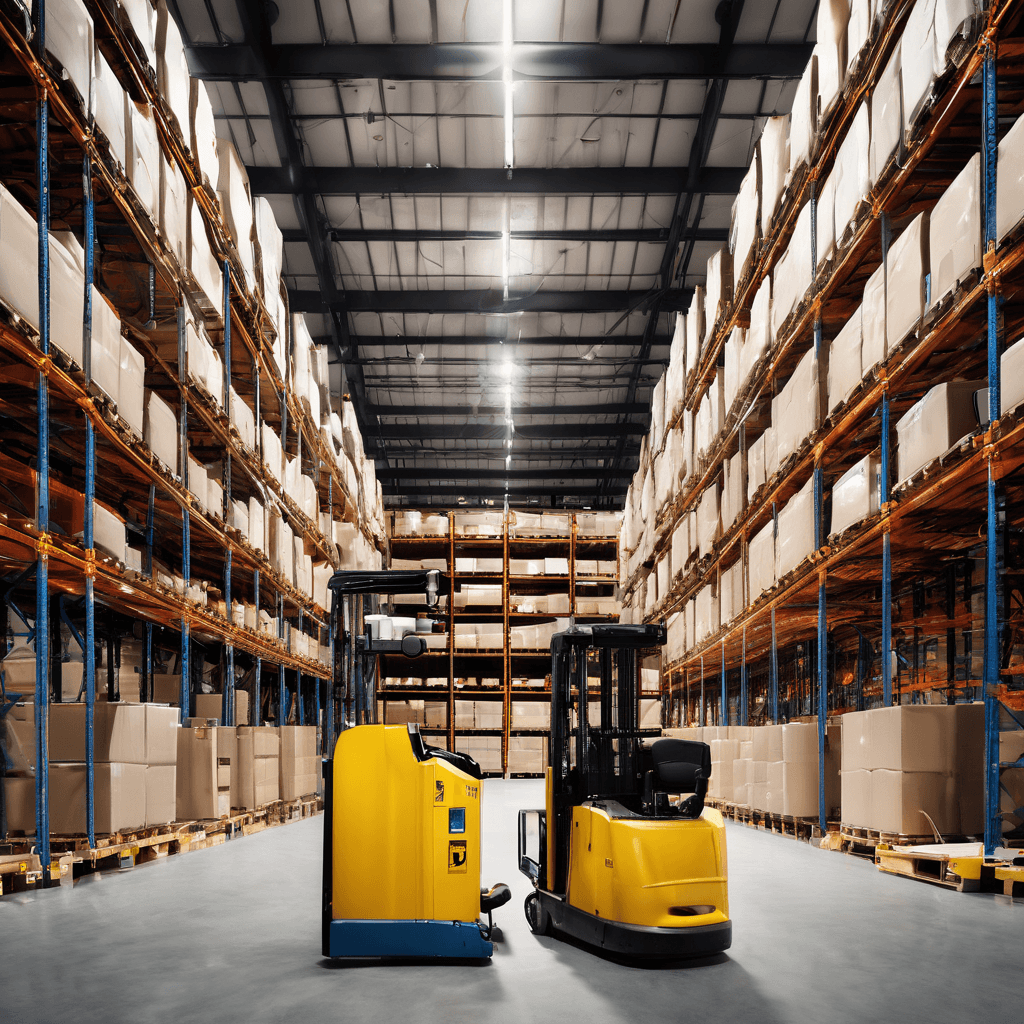
Is your warehouse bursting at the seams, or sitting half-empty? You’re not alone. A recent industry report reveals that nearly 30% of logistics costs are tied to inefficient space utilization. This is the modern supply chain dilemma: scaling up often means a risky, long-term lease for a massive facility you might not fully need. Contract warehousing offers a smarter path. Imagine a major toy company navigating the holiday rush—they don't buy a warehouse; they partner with a specialist for four months of dedicated space, labor, and expertise. It’s a strategic, flexible partnership that turns fixed costs into variable ones. Let’s explore how this model can be your secret weapon for agility in a volatile market.
Contract Warehousing: A Core Definition
At its heart, contract warehousing is a long-term, dedicated partnership where a business outsources its storage and distribution to a specialized logistics provider. This isn't just about renting square footage; it's a strategic, collaborative model where the provider designs and operates a customized logistics solution acting as a seamless extension of the client's own supply chain. Services are tailored and can include everything from bulk storage and pick-and-pack to complex kitting, returns processing, and integrated transportation management.
The Basic Concept
Think of it as a bespoke suit for your logistics needs. A company, say an electronics manufacturer, signs a multi-year contract with a 3PL (third-party logistics) provider. Instead of just getting a shelf, they get a fully dedicated operation. The provider might design a specific warehouse layout for their products, implement a custom Warehouse Management System (WMS) that integrates with the client's ERP, and staff a team trained to handle delicate components. The client pays a recurring fee, often a combination of a fixed management cost and variable activity-based charges, which provides predictable budgeting. In practice, this model is perfect for businesses with steady, high-volume inventory flows that need more control and integration than a simple spot solution can offer.
How It Differs from Public Warehousing
The key difference lies in commitment, customization, and cost structure. Public warehousing is the short-term, flexible option—you pay for the space and services you use each month, much like a hotel room. Contract warehousing is a long-term lease on a custom-built home.
| Feature | Public Warehousing | Contract Warehousing |
|---|---|---|
| Commitment | Short-term (month-to-month) | Long-term (3-5 years is common) |
| Cost Model | Variable, pay-as-you-go | Blended (fixed + variable) for predictability |
| Customization | Standardized, shared services | Highly tailored, often dedicated space & systems |
| Relationship | Transactional | Strategic, integrated partnership |
| Best For | Seasonal peaks, overflow, market testing | Core, steady-volume distribution |
While public warehousing offers great flexibility for sudden demand spikes, contract warehousing focuses on creating efficiency, stability, and deep integration for your primary logistics operations. It's a shift from a tactical cost center to a strategic asset.
How Contract Warehousing Works in Practice
At its core, contract warehousing is a dedicated, long-term partnership between a business and a logistics provider. Unlike shared public warehouses, the provider allocates exclusive space, a dedicated team, and tailored systems to operate what is essentially an extension of the client’s own supply chain. This model hinges on a formal, multi-year agreement—often 3 to 5 years—that meticulously outlines every service, cost structure, and performance benchmark. This contract provides stability and predictability, allowing both parties to invest in a truly integrated operation.
The Partnership Structure
The foundation is a detailed service-level agreement (SLA). This isn't a vague handshake deal; it's a comprehensive document specifying everything from the square footage of dedicated racking to the number of staff on shift. Crucially, it defines Key Performance Indicators (KPIs) that the provider is held accountable for, such as 99.9% order accuracy or same-day dispatch for orders received before 3 PM. This alignment turns the provider from a vendor into a strategic partner with skin in the game. In practice, you'll often see governance structures with quarterly business reviews to assess performance data and adapt to changing needs.
Typical Services Included
A contract warehouse acts as a one-stop hub for a client’s distribution needs. The scope is far broader than simple storage. Standard services almost always include:
- Receiving & Put-away: Unloading shipments, inspecting goods, and storing them in pre-defined locations.
- Inventory Management: Continuous cycle counting and real-time stock visibility, often powered by a integrated Warehouse Management System (WMS).
- Order Fulfillment: Picking, packing, kitting, and shipping out customer orders.
- Value-Added Services: These can include labeling, light assembly, returns processing (reverse logistics), and customized packaging.
Technology integration is non-negotiable. A robust WMS and seamless connection to the client’s Enterprise Resource Planning (ERP) or Transport Management System (TMS) provide the visibility and control required. This tech stack is what enables the tracking of critical metrics like dock-to-stock cycle times, which, according to local industry reports, leading operations aim to keep under 2 hours for standard palletized goods.
| Performance Metric | Industry Standard Target | High-Performance Benchmark |
|---|---|---|
| Order Accuracy | 99.5% | 99.9%+ |
| On-Time Shipment | 98% | 99.5% |
| Inventory Count Accuracy | 99% | 99.95% |
Ultimately, how it works is through a blend of dedicated resources, contractual clarity, and shared goals, creating a scalable and efficient extension of your logistics operation. For more insights on logistics trends, you can explore our Blog.
Key Benefits of Adopting a Contract Warehousing Model
Moving to a contract warehousing model delivers a powerful combination of cost control, strategic focus, and operational agility. It's a shift from a transactional relationship to a dedicated partnership, unlocking advantages that directly impact the bottom line and customer experience.
Strategic and Financial Advantages
The financial predictability is a major draw. Instead of facing the volatile spot rates of public warehouses, you secure a stable, long-term cost structure. This often translates to lower overall expenses. A fixed monthly management fee covers the core operation, while variable costs are tied directly to your activity—you pay for the space and labor you actually use. This model frees up significant capital that would otherwise be tied up in real estate, warehouse management systems, and material handling equipment. That capital can be redirected to R&D, marketing, or other core business functions that drive growth. In practice, businesses commonly see a 15-25% reduction in total logistics costs after transitioning, according to local industry reports.
Operational and Scalability Benefits
You gain immediate access to expert logistics management and technology without the heavy upfront investment or lengthy hiring process. Your partner provides trained labor, seasoned supervisors, and often advanced tech like a WMS or automation. This expertise directly enhances service levels through more accurate orders, faster processing, and optimized storage layouts. The built-in flexibility is perhaps the most critical benefit for today's market. You can scale space and labor up or down based on seasonal peaks, promotional campaigns, or unexpected demand shifts. This agility is a huge competitive edge.
| Aspect | Traditional/Public Warehouse | Contract Warehouse |
|---|---|---|
| Cost Structure | Variable, unpredictable rates | Predictable, often lower long-term cost |
| Technology Access | Self-funded investment | Included as part of service |
| Scalability Speed | Slow, contractual negotiations | Rapid, built into the partnership agreement |
Ultimately, these combined benefits—expertise, technology, and flexibility—create a more reliable and efficient supply chain. This leads to fewer shipping errors, faster delivery times, and better inventory visibility, all of which directly boost customer satisfaction and loyalty. For more insights on optimizing your logistics strategy, explore our Blog.
Potential Challenges and Considerations
While contract warehousing offers significant benefits, it's not a one-size-fits-all solution. The model involves a substantial, long-term commitment—often 3 to 5 years—which inherently reduces your short-term flexibility to pivot operations or respond to sudden market downturns. The initial setup and transition phase itself can be a major undertaking, requiring meticulous planning for data integration, system alignment, and physical inventory transfer, a process that can easily span several months.
Common Drawbacks to Weigh
A poorly structured agreement is a primary risk. Contracts that lack granular detail on service level agreements (SLAs), pricing models, and scope boundaries can lead to disputes and hidden costs. For instance, a contract might quote a base pallet storage rate but add significant fees for value-added services like kitting or returns processing. Success hinges entirely on establishing crystal-clear communication channels, shared KPIs, and robust performance tracking from day one.
| Potential Contract Pitfall | Consequence |
|---|---|
| Vague "Additional Services" Clause | Unbudgeted fees for routine tasks |
| Inflexible Volume Bands | Penalties for falling below committed storage levels |
| Unclear Liability Terms | Disputes over damage or inventory shrinkage |
Choosing the Right Partner
This makes thorough due diligence non-negotiable. Selecting a partner isn't just about rack space and price per pallet; it's about cultural and operational fit. You need a provider whose technology can seamlessly integrate with your systems and whose team proactively communicates. In practice, we commonly see companies spend 6-8 weeks on the RFP and vetting process, evaluating not just facilities but also financial stability, client references, and problem-solving ethos. Visit their sites, talk to their floor managers, and ensure their definition of "partnership" matches yours. For more insights on logistics trends, check out our Blog.
Is Contract Warehousing Right for Your Business?
Determining whether contract warehousing is the best fit requires a hard look at your operational profile and strategic goals. It's not a one-size-fits-all solution, but for the right company, it can be a game-changer, offering a powerful middle ground between the rigidness of public warehousing and the massive commitment of building your own facility.
Ideal Business Profiles
Businesses that thrive with contract warehousing often share several key characteristics. This model is a natural fit for companies with consistent, predictable storage and order volumes, typically moving over 5,000 pallets or handling 10,000+ orders monthly. That stability allows for optimized labor planning and cost forecasting. It also suits brands that demand strategic control over their supply chain—wanting dedicated space, custom processes, and integrated technology—but have zero appetite for the capital expenditure and management headache of owning real estate. Fast-growing companies, or those with complex products like pharmaceuticals requiring cold chain or electronics needing secure, anti-static handling, find the specialized infrastructure and scalability indispensable.
Key Decision Factors
Making the call involves weighing several core factors. First, scrutinize your volume stability; wild monthly fluctuations can erode the value of a fixed-space commitment. Next, consider product complexity and your geographic footprint—do you need a single strategic location or a network of regional hubs? The most critical step is a thorough cost-benefit analysis, looking beyond simple price-per-pallet comparisons to the Total Cost of Ownership (TCO).
| Cost Component | Contract Warehousing | Public (3PL) Warehousing | Owning Your Warehouse |
|---|---|---|---|
| Real Estate Cost | Bundled in monthly fee | Included in service charge | Mortgage/Lease & Property Tax |
| Labor Management | Dedicated team, you control processes | Shared pool, provider's processes | Full in-house HR responsibility |
| Capital Expenditure | Very low (provider's asset) | None | Very high (building, racking, MHE) |
| Scalability Flexibility | High (with contract adjustment) | Very High (pay-as-you-go) | Very Low (physical limits) |
As local industry reports highlight, the tipping point often comes down to control versus flexibility. If your operations are standard and volumes spike unpredictably, a flexible 3PL might be better. But if you've outgrown basic services and need a tailored, scalable extension of your own business, the dedicated partnership of contract warehousing is worth serious consideration. For more insights on logistics strategies, explore our Blog.
Conclusion: Making an Informed Logistics Decision
Ultimately, contract warehousing is a powerful strategic tool for shaping your supply chain, not merely a place to store goods. For businesses with the right profile, it unlocks significant advantages in predictable cost control, deep operational expertise, and flexible scalability that can be tough to replicate in-house.
Weighing the Strategic Fit
This model isn't a universal fix. The decision hinges on a clear-eyed analysis of your operational needs and long-term goals. Companies with complex requirements, like multi-channel fulfillment or strict regulatory handling, often see the greatest benefit. Consider these typical scenarios:
| Business Scenario | Potential Benefit of Contract Warehousing |
|---|---|
| Rapid growth or seasonal spikes | Scalable space & labor, avoiding €500k+ in capital expenditure for a new facility. |
| Need for advanced technology (WMS, automation) | Access to €200,000+ systems without direct investment, as noted in local industry reports. |
| Entering a new geographic market | Immediate local expertise and established infrastructure, slashing launch time by months. |
In practice, the biggest pitfall is a misaligned partnership. Success depends on a strong, detailed contract and a genuinely collaborative relationship built on shared KPIs and transparent communication.
The Path Forward
Making an informed choice requires looking beyond simple price-per-pallet comparisons. Start by auditing your own logistics pain points—are they in cost variability, service failures, or an inability to adapt? Engage potential providers with these specific challenges. Remember, you're not just renting space; you're integrating an extension of your team. By thoroughly understanding this model, you position your business to make a strategic decision that supports not just today's logistics, but your supply chain's future resilience and competitiveness. For more insights on optimizing your operations, explore our Blog.
Frequently Asked Questions (FAQ)
What is the main difference between contract and public warehousing?
The main difference is flexibility and commitment. Public warehousing is like renting a storage unit month-to-month—you pay for the space you use, and it's great for short-term needs or seasonal overflow. Contract warehousing is like signing a longer lease (often 1-5 years) for a dedicated space and custom services. You get a tailored operation—like specialized packing or inventory management—but you're committed. Choose public for flexibility; choose contract for cost control and a custom setup when you have steady, predictable volume.
How long are typical contract warehousing agreements?
Typical contract warehousing agreements usually run for 3 to 5 years. This gives you enough time to build a strong partnership and see real efficiency gains, while also providing more flexibility than owning a warehouse outright. For a shorter test run, you might find a 1-year deal, but the better pricing and commitment often come with a longer term. When negotiating, think about your own business growth cycles—try to align the contract length with your strategic plans.
Is contract warehousing more expensive than owning a warehouse?
It depends on your cash flow and business scale. Owning a warehouse has a huge upfront cost—think millions for the building and systems—plus ongoing maintenance. Contract warehousing turns that into a predictable monthly operational fee, which is often cheaper for small to mid-sized businesses. For example, a company might pay $50,000 a month for a full service contract instead of a $5 million mortgage. If you're growing or demand fluctuates, contracting is usually more cost-effective because you only pay for the space you use.
What types of businesses benefit most from contract warehousing?
Contract warehousing really shines for businesses with fluctuating demand or complex logistics. Think seasonal brands (like a holiday decor company), fast-growing e-commerce stores, or companies launching new products. If you need more space or expertise for a 6-24 month period—but don't want the long-term commitment of leasing your own warehouse—this is a perfect fit. It's also great if you lack in-house logistics staff, as the provider handles the operations, letting you focus on sales and growth.
Can you negotiate services in a contract warehousing agreement?
Absolutely, you can and should negotiate. That's the whole point of a contract warehousing partnership—it's built to be customized to your specific needs. For example, you can negotiate the pricing structure, like moving from a fixed monthly fee to a cost-per-pallet model if your volume fluctuates. Key areas to discuss are the contract length (often 1-3 years), the specific services included (like kitting or returns processing), and performance guarantees, such as a 99.5% order accuracy rate. Don't just accept the standard template; your unique business challenges should shape the agreement.
Related Articles

Understanding the Cost of Warehouse Services in Poland
Navigating warehouse costs in Poland feels like a maze. You're not alone. With e-commerce booming, logistics space is at a premium. Prime warehouse vacancy r...

Central Europe Warehouse Hub: A Strategic Logistics Guide
Struggling with supply chain bottlenecks and soaring costs? You're not alone. The logistics map of Europe is being redrawn, with Central Europe emerging as t...

European Warehouse Services in Poland: Your Strategic Hub
Struggling with warehouse delays and spiraling logistics costs? You're not alone. Poland has rapidly become the beating heart of European distribution, with ...