
Average Manufacturing Wages in Poland: A 2025 Guide
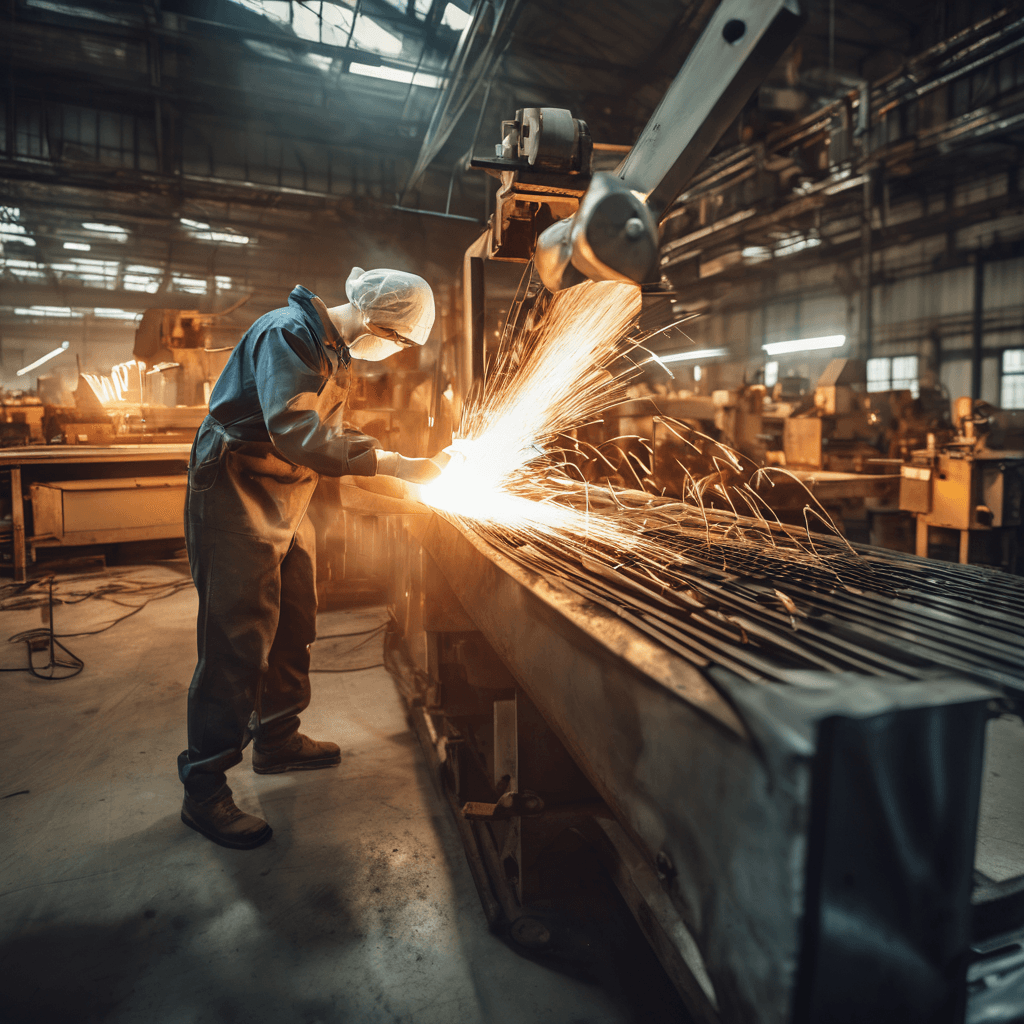
Navigating Poland's manufacturing wage landscape is a constant challenge. Salaries are rising fast, with recent sector agreements pushing entry-level pay toward 7000 PLN monthly. That’s a game-changer for your 2025 budget. Imagine finalizing your production plan, only to discover your cost projections are already outdated. It’s a frustrating and costly reality. Understanding these shifts isn't just about numbers; it's about securing talent and protecting your bottom line in a fiercely competitive market. Let’s decode the regional pay gaps, mandatory cost drivers, and strategic forecasts you need to stay ahead.
Current State: Average Manufacturing Wages in Poland (2024/2025)
Understanding the current wage landscape is crucial for any business considering operations in Poland. As of early 2024, the average gross monthly wage in the Polish manufacturing sector stands at approximately PLN 7,800 (roughly €1,750 based on current exchange rates). This figure is projected to see a steady increase through 2025, likely reaching or exceeding PLN 8,200, driven by inflation adjustments and ongoing competition for skilled labor.
National Averages and Gross vs. Net
Polish manufacturing wages are highly competitive within the EU, yet they remain below the country's overall average. The national average gross wage across all sectors hovers around PLN 8,500, meaning manufacturing salaries are typically about 8-10% lower. This gap reflects the sector's broader workforce base but is narrowing in high-tech areas.
A critical distinction for budgeting is between gross (brutto) and net (netto) pay. The gross salary is the cost to the employer, while the net is what the employee takes home after mandatory deductions for social security (ZUS) and income tax. For a typical manufacturing worker earning the average gross wage of PLN 7,800, the net pay lands around PLN 5,600-5,800, depending on individual circumstances. This significant difference is a key operational cost factor.
Wage Breakdown by Key Manufacturing Subsectors
Wages are far from uniform and vary dramatically by industry specialization and technological intensity. Data from local industry reports and PAIH (Polish Investment & Trade Agency) highlight clear leaders.
| Subsector | Average Gross Monthly Wage (PLN) | Key Drivers |
|---|---|---|
| Automotive | 8,500 - 9,500+ | High automation, foreign investment, complex supply chains. |
| Electronics & Machinery | 8,000 - 9,000 | Technical skills demand, precision engineering requirements. |
| Food Processing | 6,800 - 7,500 | More labor-intensive, larger seasonal workforce. |
Experience and role specialization cause further spread. Entry-level operators might start near PLN 4,500 gross, while certified welders, CNC programmers, or automation technicians can command PLN 10,000-12,000. Supervisory and managerial positions, of course, push earnings considerably higher. This variance underscores the importance of precise Supplier Scouting and Quality Control Services to ensure your partners maintain stable, skilled teams. For a detailed breakdown of how labor costs fit into the broader picture of Production Outsourcing in Poland, including total cost of ownership, exploring dedicated resources is highly recommended.
Regional Wage Analysis: Where Earnings Are Highest
Poland's manufacturing landscape is far from uniform, and neither are the wages. While the national average provides a baseline, earnings can swing dramatically depending on your postcode. The west and major metropolitan areas consistently pull ahead, creating a clear east-west divide that's crucial for any business planning operations.
The Industrial Heartlands: Silesia & Greater Poland
These regions are the traditional powerhouses. Silesia (Śląskie), with its dense automotive and mining heritage, offers wages well above the national average. The presence of global OEMs and a vast supplier network creates intense competition for skilled labor, particularly for engineers and technicians. Similarly, Greater Poland (Wielkopolskie), a hub for machinery, food processing, and the burgeoning electric vehicle supply chain, sees robust wage growth. Cities like Poznań drive demand, pushing manufacturing salaries to premium levels. In both regions, the established infrastructure and deep talent pools justify the higher cost, a key consideration for Production Outsourcing in Poland.
Emerging Hubs vs. Traditional Centers
Meanwhile, specialized clusters are reshaping the map. Podkarpackie, home to an advanced aviation cluster centered in Rzeszów, competes directly with western wages for highly specialized aerospace engineers. Dolnośląskie, particularly the Wrocław area, is a magnet for electronics and IT, blending manufacturing and R&D roles that command top złoty. Contrast this with the regions of Eastern Poland (e.g., Podlaskie, Lubelskie), where wages can be 15-25% lower than in Mazovia, according to local industry reports. However, lower wage pressures here are balanced by other factors like accessibility and infrastructure.
Crucially, higher gross wages don't always mean better living standards. A worker in Warsaw needs a significantly higher salary to achieve parity with someone in Białystok due to steep housing and service costs. Furthermore, Special Economic Zones (SEZs) present a double-edged sword. While they boost investment and create jobs in less developed areas, they can also lead to localized wage inflation as multiple investors compete for the same limited pool of skilled workers in a specific town, a pattern commonly seen around new large-scale plants.
For a snapshot of the disparities, here are projected average gross monthly manufacturing wages for key regions in 2025:
| Voivodeship (Region) | Key Industries | Avg. Gross Monthly Wage (PLN, est. 2025) |
|---|---|---|
| Mazovia (Mazowieckie) | Diverse, R&D, Automotive | ~9,800 - 10,500 |
| Silesia (Śląskie) | Automotive, Mining, Metals | ~9,200 - 9,800 |
| Lower Silesia (Dolnośląskie) | Electronics, Automotive, IT | ~9,000 - 9,600 |
| Greater Poland (Wielkopolskie) | Machinery, Food, EV | ~8,900 - 9,500 |
| Podkarpackie | Aviation, Defense | ~8,700 - 9,300 |
| Lubelskie (Eastern Poland) | Agri-food, Logistics | ~7,800 - 8,400 |
Sources: Estimates based on current trends from Eurostat and Polish Investment & Trade Agency (PAIH) data.
Navigating these regional nuances is where expert Supplier Scouting becomes invaluable, ensuring you match your operational needs with the right location's economic profile.
Key Factors Driving Wage Trends in 2025
The interplay of several powerful forces is shaping manufacturing wage trends in Poland for 2025, creating a complex picture for businesses. While the overall trajectory points upward, the rate of increase and its distribution across roles will be far from uniform.
Labor Market Dynamics & Skill Shortages
The core driver remains a severe supply-demand imbalance in the labor market. Poland’s unemployment rate is among the lowest in the EU, and for specialized roles, the gap is critical. Companies are fiercely competing for a limited pool of skilled professionals. This is especially true for technical experts like senior welders, experienced CNC programmers, and automation engineers. For instance, a seasoned automation engineer in a major industrial hub can now command a gross monthly salary of €4,000 or more, according to local industry reports. This shortage is a primary reason many Western firms opt for comprehensive Supplier Scouting and Production Outsourcing in Poland, leveraging local partners to navigate the tight talent market. Adding consistent pressure is the government's statutory minimum wage hike, which is set to reach PLN 4,626 monthly in 2025, pulling up the entire wage floor. Coupled with inflation, which businesses must account for in compensation packages to retain staff, these factors create a baseline upward push on all wages.
Impact of Automation and Industry 4.0
Automation presents a dual effect on the wage landscape. On one hand, investment in robotics and smart technology, partly fueled by EU recovery funds (the KPO), is gradually suppressing demand and wage growth for repetitive, low-skill assembly tasks. On the other, it is dramatically boosting demand and pay for high-skill roles that can install, program, and maintain these advanced systems. The KPO funds, targeting digitalization and green transformation, are accelerating this shift. Furthermore, the surge in near-shoring and FDI, particularly in electronics, automotive, and clean tech, intensifies competition for the same tech-savvy talent. A company setting up a new automated production line needs not just operators, but integrators and data analysts.
| Role / Factor | Impact on Wage Pressure (2025) | Key Driver |
|---|---|---|
| Automation Engineer | Very High | Industry 4.0, FDI in high-tech |
| CNC Programmer | High | Skill shortages, modernization |
| Assembly Line Worker | Moderate | Statutory minimum wage, inflation |
| Quality Control Tech | High | Quality Control Services demand, complexity |
In practice, this means the wage spread within a single factory is widening. The influx of EU capital and foreign investment is fantastic for modernization, but it directly heats up the competition for a narrow set of technical skills. For businesses, understanding this bifurcation is crucial for accurate budgeting and talent strategy in 2025. Navigating these trends requires local insight; feel free to Contact Us for a detailed discussion.
Comparative Outlook: Poland vs. Other CEE Countries
When evaluating manufacturing locations in Central and Eastern Europe (CEE), wage costs are a primary, but not the sole, factor. Poland's position is nuanced, balancing competitive pay with scale and efficiency that often justifies the investment.
The Czech Republic and Hungary Benchmark
Poland sits in the middle of the regional wage pack. While cheaper than the Czech Republic, it generally offers higher average wages than Hungary, Romania, and Slovakia. However, the raw numbers only tell part of the story. According to recent Eurostat and local industry reports, the 2024 landscape and projections for 2025 look something like this:
| Country | Estimated Avg. Gross Monthly Wage in Manufacturing (EUR, 2025) | Key Context |
|---|---|---|
| Czech Republic | ~€1,800 - €1,900 | Highest in CEE, but with strong productivity and Western integration. |
| Poland | ~€1,550 - €1,700 | Large, skilled workforce; significant regional cost-of-living variations. |
| Slovakia | ~€1,500 - €1,650 | Often closely aligned with Poland, competing for similar automotive investments. |
| Hungary | ~€1,400 - €1,550 | Aggressive incentives can offset slightly lower wage figures. |
| Romania | ~€1,100 - €1,300 | Lowest labor costs in the region, though infrastructure gaps persist. |
Wage growth in Poland has been robust, often outpacing neighbors and slowly narrowing the gap with Western Europe. Yet, this trend is mirrored across the region, driven by tight labor markets and EU cohesion funds. The real differentiator isn't just the hourly rate.
Poland's Competitive Advantage
Poland's resilience as a cost-competitive hub hinges on the productivity-per-wage ratio and non-cost factors. While Czech workers might be more expensive, Polish productivity has shown strong growth, meaning the value output for each euro spent on wages remains attractive. In practice, you're paying for a vast, well-educated workforce—over 5 million strong in industry—coupled with mature logistics corridors and the EU's largest domestic market. This scale reduces supply chain friction, a hidden cost in less developed locations.
Will Poland price itself out by 2025? Unlikely. While low-margin, ultra-labor-intensive work may drift southeast, Poland is successfully moving up the value chain. Companies aren't just coming for cheap labor; they're investing for skilled labor, stability, and proximity to Germany. The focus is shifting from being the cheapest to being the most reliable and efficient. For firms looking to leverage this balance, our Supplier Scouting and Quality Control Services teams are on the ground to ensure your partnership delivers on that promise.
Future Projections and Strategic Implications
Looking ahead, the trajectory of manufacturing wages in Poland is shaped by a complex mix of strong fundamentals and emerging challenges. For companies planning their 2025 operations, understanding these dynamics is crucial for strategic budgeting and talent management.
Forecast for 2025 and Beyond
Most institutional forecasts point to continued, albeit slightly moderated, wage growth. The National Bank of Poland (NBP) and major analysts project annual increases in the 5-7% range for the manufacturing sector in 2025. This is a step down from the high-growth years but still significantly above the EU average, reflecting Poland's persistent labor shortage and solid economic fundamentals. To put recent trends in perspective, here’s a look at average gross monthly wages in manufacturing:
| Year | Average Gross Monthly Wage (PLN) | Approx. in EUR (€1 ≈ 4.3 PLN) |
|---|---|---|
| 2022 | ~7,200 PLN | ~€1,675 |
| 2023 | ~8,000 PLN | ~€1,860 |
| 2024 (est.) | ~8,700 PLN | ~€2,025 |
| 2025 (proj.) | ~9,300 - 9,500 PLN | ~€2,160 - €2,210 |
Sources: Eurostat, PAIH, local industry reports.
Potential headwinds, like a sharper-than-expected EU slowdown or renewed energy price spikes, could dampen these figures. On the flip side, sustained high investment inflows, especially in electric vehicles and advanced electronics, could create even more intense competition for skilled workers, pushing wages toward the higher end of forecasts.
Recommendations for Businesses and Employees
For foreign businesses, smart budgeting is non-negotiable. You should factor in at least a 7-10% annual increase in total labor costs when planning for 2025. Simply paying more isn't a sustainable strategy, though. Investing in employee training and automation to boost productivity is key to offsetting rising wages. Many firms find that a strategic partnership for Supplier Scouting or Production Outsourcing in Poland helps them navigate the cost landscape while maintaining quality, which can be assured through dedicated Quality Control Services.
For job seekers, the highest earning potential lies in specialized roles. Mechatronics technicians, CNC programmers, and automation specialists can command premiums of 20-30% above base manufacturing wages. Geographically, the traditional industrial heartlands of Silesia and Greater Poland remain strong, but the central "Łódź" region and the emerging "Eastern Wall" near the Ukrainian border are hotspots with aggressive hiring.
In practice, with the labor market staying tight, non-wage benefits have become a major differentiator. Companies that offer real flexibility, clear upskilling paths, and comprehensive well-being packages are winning the talent war, often without having to post the absolute highest salary. It’s a total rewards game now. For tailored advice on navigating this evolving market, feel free to Contact Us directly.
Conclusion
The data paints a clear picture: Polish manufacturing wages are on a steady upward trajectory, yet remain a compelling value proposition within the European landscape. This guide underscores that while the headline national average is a useful starting point, the real story lies in the details—significant regional disparities and substantial premiums for specialized skills.
Summary of Key Insights
The core findings for 2025 can be distilled into a few critical points. First, wage growth is persistent, driven by low unemployment and economic momentum, with forecasts from local industry reports suggesting annual increases between 5% and 7%. Second, location matters immensely; an operator in Warsaw can earn 30% more than one in the Lublin region. Finally, expertise commands a major premium. A seasoned CNC machinist or automation engineer can easily earn 50-100% more than an entry-level assembly worker.
| Factor | Low End Impact | High End Impact |
|---|---|---|
| Region | Eastern Poland (Podkarpackie) | Major hubs (Masovia, Silesia) |
| Sector | Textiles, Basic Assembly | Automotive, Aerospace, Pharma |
| Skill Level | Entry-level, repetitive tasks | Certified welders, R&D engineers |
This evolution signals Poland's matured role. It's no longer just a low-cost alternative but a established hub for skilled manufacturing, where higher wages are matched by rising productivity and quality standards. Companies leveraging this ecosystem, perhaps through strategic Production Outsourcing in Poland, gain access to this valuable talent pool.
The Road Ahead for Polish Manufacturing
For business leaders, the final takeaway is straightforward: wages are a key metric, but smart decisions require context on skills and location. Simply chasing the lowest possible wage is a outdated strategy that can backfire. The sustainable approach involves targeting specific regions for your industry and investing in the skilled workforce there, a process where expert Supplier Scouting and rigorous Quality Control Services become invaluable.
Looking forward, Poland's manufacturing sector is built for resilience. The convergence of competitive total operational costs, a deep technical talent pipeline, and increasing investment in automation and Industry 4.0 sets a strong foundation. While wage pressures will continue, they are a symptom of the sector's success and its trajectory toward higher-value, innovative production. For firms ready to engage strategically, the Polish market in 2025 and beyond offers a blend of cost-effectiveness and capability that is increasingly rare in Europe. To discuss how these trends might shape your specific sourcing or investment strategy, feel free to Contact Us for a tailored analysis.
Frequently Asked Questions (FAQ)
What is the average net salary in Polish manufacturing?
The average net salary in Polish manufacturing is around 5,000 to 6,500 PLN per month, but it varies by role and experience. Remember, net is what you actually take home after taxes and social security (which eat up roughly 20-25% of the gross pay). For example, a gross salary of 8,000 PLN typically results in a net pay of about 5,900 PLN. To get a precise estimate for your own situation, use an online Polish salary calculator—just plug in a gross amount to see your specific net.
Which Polish cities offer the highest manufacturing wages?
If you're looking for the highest manufacturing wages in Poland, focus on the major industrial hubs. Warsaw typically leads, with average gross manufacturing salaries often around 7,800 PLN per month. Other top-paying cities include Poznań, Wrocław, and the Katowice region in Silesia, where strong automotive, machinery, and electronics sectors push wages above the national average. For the best opportunities, check job listings in these specific cities, as the presence of large international companies is a key driver for those higher paychecks.
How do Polish manufacturing wages compare to Germany?
Polish manufacturing wages are significantly lower than in Germany. As of recent figures, the average gross monthly wage in Polish manufacturing is roughly one-third to one-half of the German equivalent—for example, around €1,800-€2,200 in Poland compared to €4,000+ in Germany. However, there's still a notable productivity gap, meaning the cost advantage isn't always one-to-one. If you're considering sourcing or investing, calculate the cost per unit, not just the hourly rate, to get the true picture.
Is there a minimum wage for manufacturing workers in Poland?
Yes, there is a minimum wage for manufacturing workers in Poland. Everyone employed on a full-time contract is covered by the national statutory minimum wage, which is the legal floor for pay. For example, as of July 2024, the minimum is 4,300 PLN per month gross. It's important to know this is the absolute minimum, not the average. Actual manufacturing salaries are typically higher. When looking at job offers, always check if the pay is stated as gross or net, as the take-home amount will be lower after taxes and social contributions.
What manufacturing jobs are in highest demand in Poland for 2025?
Based on what we're seeing, the hottest manufacturing jobs in Poland for 2025 are hands-on roles that need tech skills. Automation technicians and robotics specialists are in very high demand, as factories modernize. Skilled CNC machine operators and welders are also consistently needed, often commanding wage premiums of 10-20% above standard rates. To make yourself competitive, focus on gaining certifications in PLC programming or specific machinery. Checking the latest "Average Manufacturing Wages Poland 2025" guide will give you the best current salary numbers for these specific roles.
Related Articles

Understanding the Cost of Warehouse Services in Poland
Navigating warehouse costs in Poland feels like a maze. You're not alone. With e-commerce booming, logistics space is at a premium. Prime warehouse vacancy r...

Central Europe Warehouse Hub: A Strategic Logistics Guide
Struggling with supply chain bottlenecks and soaring costs? You're not alone. The logistics map of Europe is being redrawn, with Central Europe emerging as t...

European Warehouse Services in Poland: Your Strategic Hub
Struggling with warehouse delays and spiraling logistics costs? You're not alone. Poland has rapidly become the beating heart of European distribution, with ...